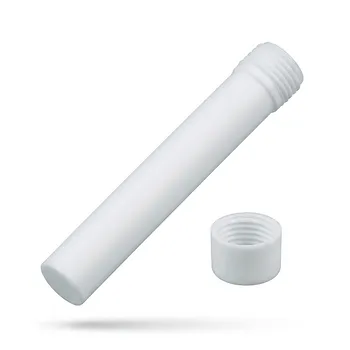
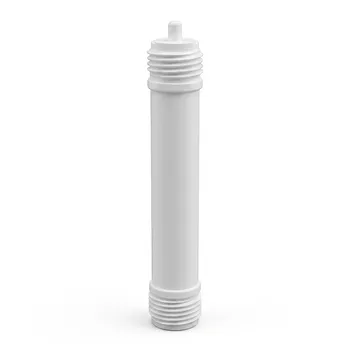
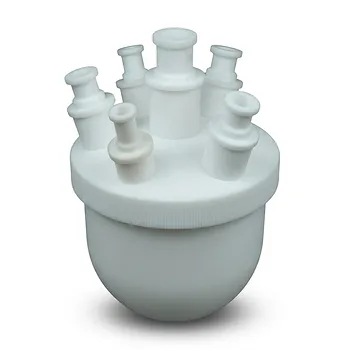
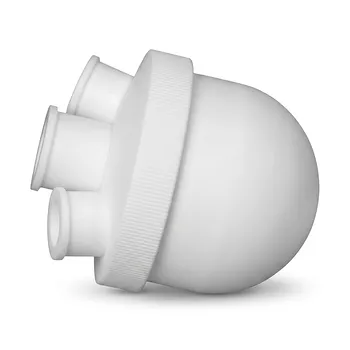
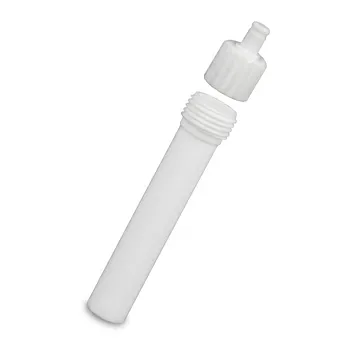
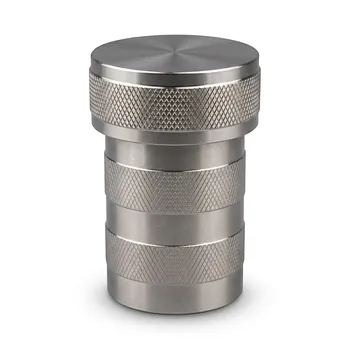
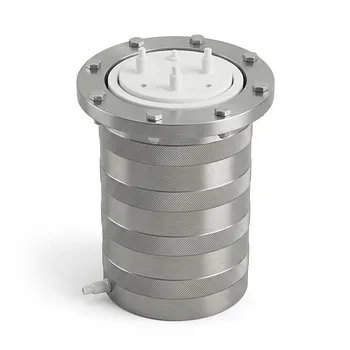
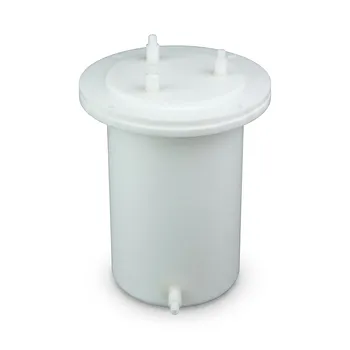
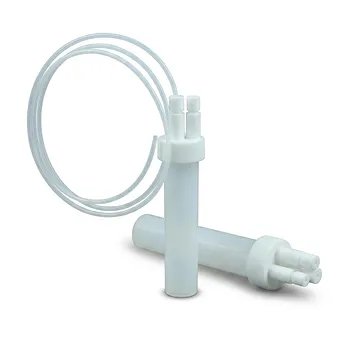
High-purity polytetrafluoroethylene (PTFE) liners are the industry standard for hydrothermal synthesis because they provide an inert, non-contaminating barrier between aggressive chemical precursors and the metal reactor shell. By combining exceptional chemical resistance with thermal stability, these liners ensure the synthesized photocatalytic materials maintain the precise chemical purity and microstructure required for high-performance applications.
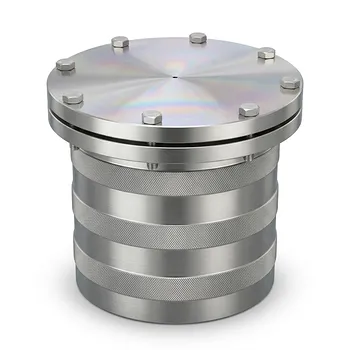
The primary role of a PTFE liner is to isolate corrosive reaction media from the autoclave’s stainless steel body, preventing metal ion leaching and protecting the equipment. This ensures that the resulting nanocomposites are free from impurities that could otherwise compromise their photocatalytic efficiency or experimental reproducibility.
Protecting Reactor Integrity in Extreme Environments
Superior Corrosion Resistance
Hydrothermal synthesis often involves strong acids, alkalis, or organic solvents that would rapidly degrade a standard metal autoclave shell. PTFE acts as a sacrificial but highly durable barrier that prevents these corrosive agents from reaching the structural metal walls.
Managing High-Pressure Thermal Stability
During the reaction, the liner must withstand high temperatures and autogenous pressures—often reaching up to 240°C in specific applications like Titanium Dioxide synthesis. High-purity PTFE maintains its structural integrity under these conditions, providing a stable environment for prolonged reaction cycles.
Extending Equipment Service Life
By shielding the stainless steel outer shell from direct contact with precursors, the PTFE liner significantly reduces the risk of stress corrosion cracking. This protection extends the operational lifespan of the pressure vessel and ensures the safety of the laboratory environment.
Ensuring Material Purity and Performance
Prevention of Metal Ion Leaching
Even trace amounts of iron, nickel, or chromium from a reactor shell can "poison" a photocatalyst and alter its electronic properties. High-purity PTFE has an extremely low impurity leaching rate, which is critical for preparing materials like Bi@Bi2MoO6 that require absolute chemical fidelity.
Controlled Microstructure and Crystal Growth
The chemically inert surface of PTFE does not interfere with the nucleation or growth of nanomaterials. This allows researchers to achieve uniform morphology and precise crystal phases, which are the primary drivers of a material's photocatalytic activity.
Optimization of Experimental Reproducibility
Because high-purity liners do not introduce random variables through contamination, they allow for consistent results across multiple batches. This reliability is essential for the systematic optimization of photocatalytic efficiency.
Operational Advantages and Material Recovery
Exceptional Mold-Release Properties
The naturally "non-stick" characteristic of PTFE ensures that synthesized nanopowders or single crystals do not adhere strongly to the vessel walls. This makes it significantly easier to collect the final product without loss or mechanical contamination during the scraping process.
Ease of Maintenance and Cleaning
The chemical inertness of the liner allows it to be cleaned thoroughly between experiments using aggressive cleaning agents that might damage other materials. This ensures that cross-contamination between different synthesis projects is effectively eliminated.
Understanding the Trade-offs
Temperature and Pressure Thresholds
While PTFE is remarkably stable, it is subject to mechanical deformation (creep) at sustained high temperatures and pressures. Exceeding its thermal limit (typically around 250°C) can cause the liner to soften or "flow," potentially compromising the seal or trapping the liner inside the autoclave.
Potential for Memory Effects
Although highly resistant, PTFE can occasionally absorb small amounts of certain organic molecules or precursors over many cycles. If not meticulously cleaned or replaced, this can lead to trace-level cross-batch contamination, particularly in highly sensitive photocatalytic studies.
Applying These Insights to Your Material Synthesis
Choosing the Right Strategy for Your Goal
- If your primary focus is Maximum Purity: Prioritize high-purity PTFE or PFA liners to eliminate metal ion leaching and ensure the electronic properties of your photocatalyst remain untainted.
- If your primary focus is High-Temperature Synthesis: Ensure your reaction remains below 240°C to prevent liner deformation, or consider alternative materials like PEEK or metal alloys if higher temperatures are strictly required.
- If your primary focus is Material Yield: Leverage the non-stick properties of PTFE to maximize the recovery of fine nanopowders and facilitate easier cleaning between experimental runs.
The use of high-purity PTFE liners is not merely a safety precaution, but a fundamental requirement for the precise chemical engineering of high-performance photocatalytic materials.
Summary Table:
| Key Feature | Benefit for Hydrothermal Synthesis | Impact on Photocatalytic Materials |
|---|---|---|
| Chemical Inertness | Prevents corrosion of the metal autoclave shell | Eliminates metal ion leaching and "poisoning" |
| Thermal Stability | Withstands temperatures up to 240°C-250°C | Enables consistent crystal growth and phases |
| Non-Stick Surface | Facilitates easy material removal/cleaning | High yield recovery and zero cross-contamination |
| Low Impurity Profile | Maintains a clean reaction environment | Ensures high experimental reproducibility |
| Pressure Resistance | Shields reactor from aggressive precursors | Extends the operational life of the pressure vessel |
Elevate Your Synthesis with KINTEK’s High-Performance Fluoropolymers
Precision in photocatalytic research starts with the quality of your labware. KINTEK specializes in manufacturing virtually all imaginable laboratory supplies crafted from high-purity PTFE and PFA, ensuring your experiments remain free from contamination and your equipment stays protected.
Whether you need everyday basic labware (beakers, crucibles, reagent bottles, and digestion tubes), comprehensive fluid transfer components (tubing, valves, fittings), or advanced reaction apparatus like hydrothermal synthesis liners, microwave digestion vessels, and custom electrochemical cells, we have you covered.
Why choose KINTEK?
- End-to-End Customization: Our custom CNC fabrication capabilities allow us to deliver everything from complex non-standard machined parts to high-volume bespoke laboratory setups.
- Material Expertise: An exclusive focus on high-performance fluoropolymers for extreme chemical and thermal environments.
- Comprehensive Range: From sample prep tools like filters and pipettes to specialized battery testing fixtures and microchannel reactors.
Don't let impurities compromise your results. Contact us today to discuss your specific requirements and discover how our high-purity solutions can optimize your laboratory workflow.
References
- Priti Rohilla, Raj Kumar Das. Construction of a Bi-doped g-C <sub>3</sub> N <sub>4</sub> /Bi <sub>2</sub> MoO <sub>6</sub> ternary nanocomposite for the effective photodegradation of ofloxacin under visible light irradiation. DOI: 10.1039/d4ra08493d
This article is also based on technical information from Kintek Knowledge Base .
Related Products
- PTFE Lined High Pressure Digestion Vessel 50ml High Temperature Hydrothermal Synthesis Tank
- High Purity TFM Microwave Digestion Vessels PTFE Acid Evaporation Liners Domestic GT-400 Equivalent Laboratory Reaction Containers
- High Purity PTFE Microwave Digestion Vessel for Soil and Food Analysis Acid Resistant Fluoropolymer Sample Preparation Liners
- Custom Multi Neck PTFE Flask 18L Laboratory Chemical Reactor Vessel for High Purity Synthesis and Stirring Applications
- Custom Multi Neck PTFE Round Bottom Flask for Chemical Synthesis and High Purity Laboratory Research
People Also Ask
- What are the benefits of using a PTFE-lined vessel for carbon-sulfur cathode treatment? Maximize Purity & Performance
- Why are PTFE-lined pressure digestion vessels required for the preparation of Ag/CeO2 catalysts? Purity & Performance
- What safety features are typically incorporated into high-pressure PTFE digestion vessel designs? Ensure Lab Safety
- What is the function of PTFE lined high-pressure vessels in g-C3N4 synthesis? Achieve High-Purity Material Growth
- Role of High-Pressure Digestion Tanks in Perovskite Synthesis: Achieve Superior Stability and Latent Heat