Knowledge Hydrothermal synthesis reactor lining Why use PTFE liners in hydrothermal synthesis? Ensure Purity & Prevent Corrosion in Nanomaterial Production
Author avatar

Tech Team · Kintek

Updated 1 month ago

Why use PTFE liners in hydrothermal synthesis? Ensure Purity & Prevent Corrosion in Nanomaterial Production


High-purity polymer liners are essential for hydrothermal synthesis because they provide a chemically inert barrier that simultaneously protects the reactor vessel from corrosion and prevents metal contaminants from leaching into the synthesized material. Without these liners, the aggressive chemical environments and high temperatures required for nanomaterial production would degrade the stainless steel reactor walls and introduce unwanted metal ions into the reaction, compromising the integrity of the final product.

Core Takeaway: PTFE and PFA liners act as the critical interface in hydrothermal synthesis, isolating reactive precursors from the metal reactor shell to ensure material purity, facilitate product recovery, and maintain the structural safety of the high-pressure system.

The Barrier Against Chemical Degradation

Neutralizing Aggressive Media

Hydrothermal synthesis often requires "mineralizers" such as 3 M sodium hydroxide (NaOH) or strong acids to facilitate crystal growth. These substances are highly corrosive to stainless steel, especially under the elevated temperatures and pressures found inside an autoclave.

Polytetrafluoroethylene (PTFE) and similar fluoropolymers are virtually inert to almost all acids, bases, and organic solvents. This chemical resistance ensures that the aggressive media react only with the intended precursors rather than the container itself.

Maintaining Structural Integrity of the Reactor

The outer shell of a hydrothermal reactor is typically made of high-strength stainless steel to withstand extreme internal pressures. If the reactor walls are exposed to corrosive chemicals, they can undergo pitting or stress-corrosion cracking.

By using a high-purity liner, the structural metal shell is shielded from chemical attack. This protection is a vital safety measure that prevents the catastrophic failure of the high-pressure vessel during operation.

Ensuring High-Purity Nanomaterial Synthesis

Eliminating Metal Ion Leaching

In nanomaterial production, even trace amounts of impurities can significantly alter the electrical, optical, or catalytic properties of the final product. When precursors come into direct contact with metal reactor walls, iron, nickel, or chromium ions can leach into the solution.

Liners prevent this "ion migration," ensuring that synthesized materials—such as TiO2 nanotubes or complex oxides like ZnNixMnxCo2-2xO4—remain free of metallic contamination. This level of purity is non-negotiable for high-performance applications like photocatalysis or energy storage.

Improving Product Recovery with Non-Stick Surfaces

Nanomaterials are notoriously difficult to collect because of their high surface energy and tendency to adhere to surfaces. PTFE possesses exceptional non-stick (mold-release) properties that prevent nanopowders from bonding to the liner walls.

This characteristic simplifies the recovery of synthesized micro- and nano-powders after the reaction is complete. Furthermore, the ease of cleaning these liners ensures that no cross-contamination occurs between different experimental batches.

Understanding the Trade-offs and Limitations

Temperature Constraints

While PTFE is chemically robust, it has a lower thermal threshold than the metal reactor shell. Most PTFE liners are limited to a maximum continuous operating temperature of approximately 250°C.

Exceeding these temperatures can cause the liner to soften, deform, or even release toxic fluorinated gases. For reactions requiring higher temperatures, researchers must often switch to more expensive materials like PFA or specialized ceramic liners.

Pressure Sensitivity and Seal Integrity

The liner itself does not provide the pressure-bearing strength of the system; it relies on the stainless steel shell for support. If the liner is not properly sized or if the temperature rises too quickly, the differential expansion between the polymer and the metal can lead to "creep" or seal failure.

Users must ensure that the liner and the reactor cap are perfectly aligned to maintain a hermetic seal. Any leakage of corrosive vapor past the liner can immediately damage the threads and sealing surfaces of the outer reactor.

How to Apply This to Your Project

Selecting the Right Approach for Your Goal

  • If your primary focus is synthesizing high-purity oxides or nanotubes: Always utilize a high-purity PTFE or PFA liner to prevent metal ion leaching, especially when using NaOH or acidic mineralizers.
  • If your primary focus is maximum product yield and recovery: Prioritize PTFE liners for their superior non-stick properties, which allow for the nearly complete collection of fine nanopowders.
  • If your primary focus is extreme temperature synthesis (above 260°C): Avoid standard PTFE liners and investigate alternative materials like PFA or gold-plated liners, as PTFE will lose structural integrity at these levels.
  • If your primary focus is reactor longevity and safety: Inspect the liner for any signs of deformation or discoloration after every run to ensure the stainless steel shell remains protected from corrosive precursors.

The integration of a high-purity liner is the most effective way to transform a standard pressure vessel into a precision instrument for high-performance nanomaterial synthesis.

Summary Table:

Key Requirement Benefit of High-Purity Liners (PTFE/PFA) Impact on Synthesis
Chemical Inertness Resists aggressive mineralizers (NaOH, strong acids). Prevents vessel corrosion and structural failure.
Contamination Control Eliminates metal ion leaching (Fe, Ni, Cr). Ensures high-purity electronic and catalytic properties.
Product Recovery Superior non-stick (mold-release) surface properties. Facilitates easy collection of fine nanopowders.
Operational Safety Acts as a physical barrier for the steel autoclave. Protects sealing threads and maintains system integrity.
Thermal Threshold Stable up to 250°C (PTFE) or higher (PFA). Suitable for most hydrothermal crystallization routes.

Optimize Your Synthesis with High-Performance Fluoropolymer Solutions

Ensure the integrity of your nanomaterial production with KINTEK’s premium laboratory supplies. As experts in high-performance fluoropolymers, we provide the critical components needed to maintain purity and safety in demanding chemical environments.

From everyday basic labware (beakers, measuring cylinders, crucibles, and reagent bottles) to advanced reaction apparatus—including hydrothermal synthesis liners, microwave digestion vessels, and custom electrochemical cells—KINTEK manufactures virtually every imaginable laboratory tool crafted from PTFE and PFA.

Whether you need comprehensive fluid transfer components (tubing, valves, fittings), sample prep tools (filters, pipettes, tweezers), or high-volume general consumables, our end-to-end custom CNC fabrication ensures we can deliver everything from bespoke machined parts to standard laboratory setups with absolute precision.

Ready to upgrade your lab’s performance? Contact KINTEK today to discuss your specific requirements and see how our fluoropolymer expertise can support your next breakthrough.

References

  1. T. Singha, A. Somdee. Study of spinel ZnNixMnxCo2-2xO4 (x = 0, 0.25, 0.5, 0.75, and 1.0) nanomaterials for supercapacitor electrode applications by hydrothermal synthesis. DOI: 10.15251/jor.2025.212.225

This article is also based on technical information from Kintek Knowledge Base .

Related Products

People Also Ask

Related Products

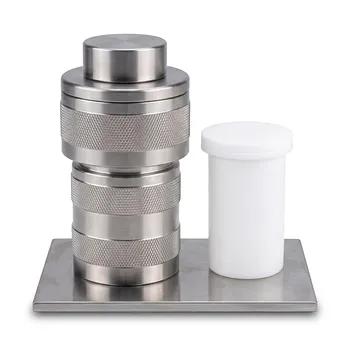
PTFE Lined High Pressure Digestion Vessel 50ml High Temperature Hydrothermal Synthesis Tank

PTFE Lined High Pressure Digestion Vessel 50ml High Temperature Hydrothermal Synthesis Tank

This premium 50ml high pressure digestion vessel features a precision-engineered PTFE lining for superior chemical resistance. Ideal for trace metal analysis and hydrothermal synthesis, this unit ensures high-purity results through robust, fully customizable industrial-grade construction and specialized engineering.

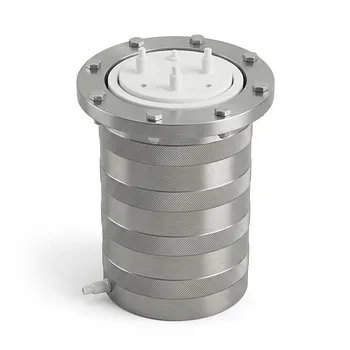
High Pressure Custom TFM Reactor Stainless Steel Outer Vessel PTFE Inner Cup for Corrosive Synthesis

High Pressure Custom TFM Reactor Stainless Steel Outer Vessel PTFE Inner Cup for Corrosive Synthesis

Engineered for extreme chemical resistance, this custom TFM reactor combines a robust stainless steel outer vessel with a high-purity PTFE liner, ensuring safe, durable performance in demanding laboratory and industrial synthesis applications.

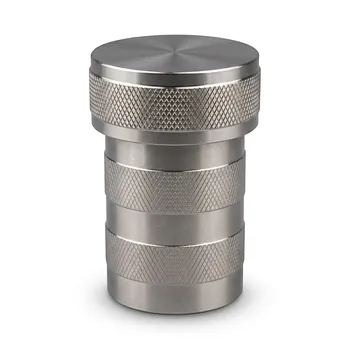
High Temperature Corrosion Resistant Hydrothermal Synthesis Reactor with TFM Inner Liner and Straight Cylinder Design

High Temperature Corrosion Resistant Hydrothermal Synthesis Reactor with TFM Inner Liner and Straight Cylinder Design

Professional grade high-pressure hydrothermal synthesis reactors featuring corrosion-resistant TFM liners and straight-wall geometry. These units are ideal for demanding chemical synthesis, trace analysis, and advanced material research where absolute purity and customizable performance are required for industrial lab excellence.

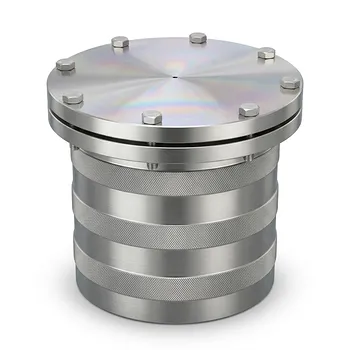
Custom TFM Reaction Vessel with Stainless Steel Jacket and PTFE Inner Cup for High Corrosion Resistance

Custom TFM Reaction Vessel with Stainless Steel Jacket and PTFE Inner Cup for High Corrosion Resistance

Premium custom TFM reaction vessel featuring a stainless steel jacket and PTFE liner for ultimate chemical resistance. This high-pressure system ensures zero contamination in aggressive synthesis environments, providing industrial-grade reliability for critical laboratory applications and advanced materials research.

High Purity TFM Microwave Digestion Vessels PTFE Acid Evaporation Liners Domestic GT-400 Equivalent Laboratory Reaction Containers

High Purity TFM Microwave Digestion Vessels PTFE Acid Evaporation Liners Domestic GT-400 Equivalent Laboratory Reaction Containers

Premium PTFE and TFM microwave digestion vessels designed as high-performance replacements for GT-400 systems ensuring trace metal purity and chemical resistance for demanding laboratory digestion and acid evaporation processes with full custom fabrication capabilities available for unique requirements and specifications.

Large Scale PTFE Double Layer Reaction Tank with Integrated Filter Plate for Chemical Processing

Large Scale PTFE Double Layer Reaction Tank with Integrated Filter Plate for Chemical Processing

Precision-engineered large scale PTFE double layer reaction tanks with integrated filter plates offer unmatched chemical resistance and thermal stability for high-purity industrial applications. Bespoke configurations are available to meet your specific laboratory or production requirements. Custom engineered fluoropolymer solutions.

Custom Multi Neck PTFE Flask 18L Laboratory Chemical Reactor Vessel for High Purity Synthesis and Stirring Applications

Custom Multi Neck PTFE Flask 18L Laboratory Chemical Reactor Vessel for High Purity Synthesis and Stirring Applications

Secure your laboratory operations with our customizable 18L multi neck PTFE reaction flask engineered for ultimate chemical resistance and thermal stability providing a durable alternative to glass for high purity synthesis and complex industrial chemical processing systems today

Custom PTFE Reaction System with Hose Barb Fittings Corrosion Resistant High Sealing 2L 4L Lab Reactor with Separatory Funnel

Custom PTFE Reaction System with Hose Barb Fittings Corrosion Resistant High Sealing 2L 4L Lab Reactor with Separatory Funnel

Enhance laboratory efficiency with our custom PTFE reaction system featuring superior corrosion resistance, high-integrity sealing, and integrated separatory funnels. Designed for demanding chemical synthesis, this modular fluoropolymer apparatus ensures high purity and reliable fluid transfer in extreme environments.

Custom PTFE Continuous Reaction Bottles Virgin Fluoropolymer High Purity Low Background Synthesis Vessels

Custom PTFE Continuous Reaction Bottles Virgin Fluoropolymer High Purity Low Background Synthesis Vessels

High-purity custom PTFE continuous reaction bottles engineered for demanding chemical synthesis. Manufactured from virgin fluoropolymer for low background leaching, these corrosion-resistant vessels offer unmatched reliability for trace analysis and aggressive reagent handling in professional laboratory environments.

Customizable PTFE Reaction Vessel with Electric Stirring Paddle and Buchner Funnel Vacuum Filtration System

Customizable PTFE Reaction Vessel with Electric Stirring Paddle and Buchner Funnel Vacuum Filtration System

High-performance customizable PTFE reaction vessel system featuring integrated electric stirring paddles and Buchner funnel vacuum filtration components designed for demanding laboratory environments requiring absolute chemical inertness, high-purity trace analysis, and bespoke engineering solutions for complex industrial applications.

High Purity PTFE Multi Neck Reaction Flask for Corrosive Chemical Processing and Custom Industrial Laboratory Synthesis

High Purity PTFE Multi Neck Reaction Flask for Corrosive Chemical Processing and Custom Industrial Laboratory Synthesis

Optimize chemical processing with high-purity PTFE multi-neck reaction flasks. Engineered for extreme corrosion resistance and fully customizable configurations, these systems ensure zero-contamination environments for advanced research, pilot-scale synthesis, and demanding industrial laboratory applications. Contact us for custom designs.

High Purity PTFE Reaction Vessel with Electric Stirring System and Customizable 5L Tank including Buchner Funnel Filtration Assembly

High Purity PTFE Reaction Vessel with Electric Stirring System and Customizable 5L Tank including Buchner Funnel Filtration Assembly

Engineered for high-purity chemical processing, this customizable 5L PTFE reaction vessel features an integrated electric stirring system and Buchner funnel filtration, ensuring superior chemical resistance and scratch-proof performance for demanding laboratory research and industrial trace analysis applications.

PTFE 10L Reaction Vessel with Stirring Paddle Customizable Corrosion Resistant High Temperature Reactor for Biopharmaceutical and Chemical Processing

PTFE 10L Reaction Vessel with Stirring Paddle Customizable Corrosion Resistant High Temperature Reactor for Biopharmaceutical and Chemical Processing

Premium 10L PTFE reaction vessel featuring integrated stirring paddles and exceptional corrosion resistance. Designed for biopharmaceutical and chemical applications, this fully customizable unit ensures high-purity results in demanding high-temperature environments. Contact us for custom specifications.

High Performance Customizable PTFE Reaction Vessel and Corrosion Resistant Polytetrafluoroethylene Flask for Chemical Laboratory Use

High Performance Customizable PTFE Reaction Vessel and Corrosion Resistant Polytetrafluoroethylene Flask for Chemical Laboratory Use

Discover high-performance customizable PTFE reaction vessels and corrosion-resistant flasks. Precision-engineered for extreme chemical environments, our bespoke laboratory solutions provide unmatched durability and safety for high-purity trace analysis, industrial processing, and demanding chemical synthesis applications.

Customizable Polytetrafluoroethylene PTFE Reactor and Corrosion Resistant Teflon Flask

Customizable Polytetrafluoroethylene PTFE Reactor and Corrosion Resistant Teflon Flask

Discover high-performance customizable PTFE flasks and corrosion-resistant Teflon reactors engineered for extreme chemical environments. These ultra-pure laboratory vessels offer unmatched thermal stability and chemical inertness for demanding industrial applications and precision trace analysis.

High Purity PTFE Reaction Vessel Polyfluortetraethylene Cylindrical Tank Petrochemical Reaction Container

High Purity PTFE Reaction Vessel Polyfluortetraethylene Cylindrical Tank Petrochemical Reaction Container

Explore our high-purity PTFE reaction vessels and cylindrical tanks, engineered for aggressive petrochemical applications. Featuring 10L, 30L, and 50L capacities with full CNC customization, these corrosion-resistant units ensure absolute chemical inertness and superior durability in demanding laboratory environments.

Custom PTFE Sleeves and Hollow Rods for Advanced Applications

Custom PTFE Sleeves and Hollow Rods for Advanced Applications

High-performance PTFE hollow rods & sleeves for chemical resistance, thermal stability, and low friction. Custom sizes available. Contact KINTEK today!

High Temperature Corrosion Resistant PTFE Reaction Flask Custom Multi Neck Laboratory Vessel with Flat or U Bottom

High Temperature Corrosion Resistant PTFE Reaction Flask Custom Multi Neck Laboratory Vessel with Flat or U Bottom

High-performance PTFE reaction flasks offer unmatched chemical resistance and thermal stability for aggressive laboratory synthesis. These customizable multi-neck vessels ensure high-purity results in pharmaceutical and semiconductor research through precision CNC fabrication and inert fluoropolymer construction.

Custom PTFE Reaction Apparatus Flange Sealed Corrosion Resistant Jacketed Vessel with Stirring Bar and Thermometer Ports

Custom PTFE Reaction Apparatus Flange Sealed Corrosion Resistant Jacketed Vessel with Stirring Bar and Thermometer Ports

Engineering custom PTFE reaction apparatus with flange seals and jacketed designs. These corrosion-resistant systems feature precision-machined stirring bars and thermometer ports, ensuring reliable performance in demanding chemical synthesis and high-purity industrial trace analysis laboratory environments for modern research and development.

High Purity PTFE Corrosion Resistant Reaction Vessel with Luer Fittings and Caps for Trace Analysis

High Purity PTFE Corrosion Resistant Reaction Vessel with Luer Fittings and Caps for Trace Analysis

High-purity PTFE reaction vessels with integrated Luer fittings and secure caps offer ultimate corrosion resistance and zero leaching. These customizable tanks provide a reliable, ultra-clean environment for trace analysis, aggressive chemical synthesis, and precision fluid transfer in demanding labs.


Leave Your Message