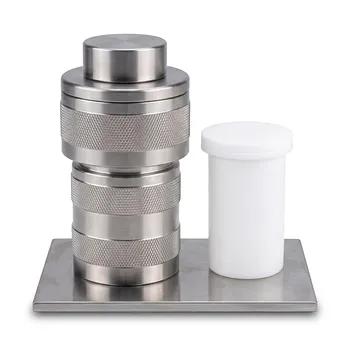
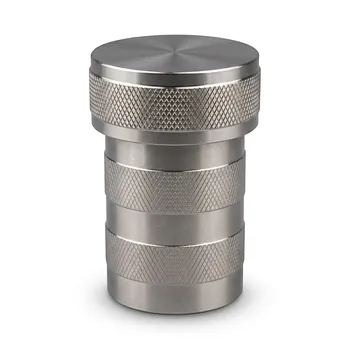
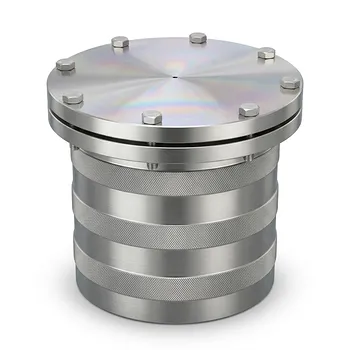
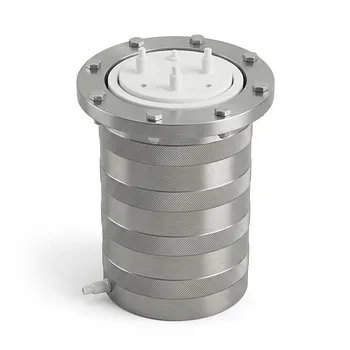
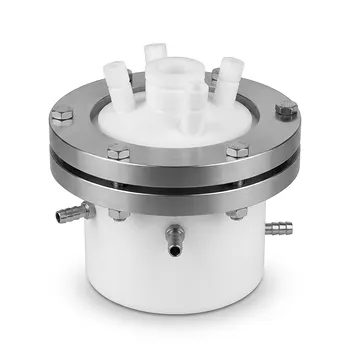
The role of a PTFE-lined hydrothermal synthesis autoclave is to create a controlled, high-pressure environment that facilitates the thermal decomposition of cellulose into carbon. This specialized vessel allows the reaction to reach temperatures well above the boiling point of the solvent, driving the essential processes of dehydration, polymerization, and carbonization required to form nanoscale carbon structures.
Core Takeaway: The autoclave serves as a high-pressure reactor that enables subcritical liquid conditions, allowing cellulose to undergo complex chemical transitions into Carbon Quantum Dots (CQDs) while the PTFE liner ensures the resulting nanomaterials remain free from metallic contamination.
The Mechanics of Hydrothermal Carbonization
Driving the Phase Transformation of Cellulose
The autoclave provides the thermal energy and pressure necessary to break the robust glycosidic bonds within cellulose precursors. Under these conditions, the cellulose undergoes a series of transformations: dehydration, polymerization, and eventual carbonization.
Creating Subcritical Liquid Environments
By sealing the reaction, the autoclave maintains solvents in a subcritical liquid state even when heated above their atmospheric boiling points. This environment significantly enhances the solubility and reactivity of the cellulose, creating a supersaturated state that is vital for the nucleation and growth of high-quality Carbon Quantum Dots.
Facilitating Molecular Cleavage
In many synthesis protocols, the high-pressure environment allows for the oxidative cleavage of complex molecular structures. Whether using pure cellulose or biomass like corncobs, the autoclave ensures that the thermal energy is applied uniformly, resulting in the formation of nanoscale carbon nuclei with desirable photophysical properties.
The Critical Function of the PTFE Liner
Ensuring High-Purity Fluorescence
The Polytetrafluoroethylene (PTFE) liner is used specifically for its extreme chemical inertness. It prevents the reaction medium from coming into contact with the stainless steel walls of the autoclave, which eliminates the risk of metal ion contamination.
Chemical Resistance Against Corrosive Precursors
Synthesis often involves aggressive agents such as strong acids (sulfuric or nitric), strong bases (sodium hydroxide), or ammonia solutions. The PTFE liner possesses excellent corrosion resistance, protecting the structural integrity of the outer steel vessel from erosion while maintaining a stable environment for the reaction.
Maintaining Precise Synthesis Ratios
Because the liner provides a strictly sealed and non-reactive surface, it prevents the loss of reactants through side reactions with the vessel walls. This stability is essential for maintaining the precise stoichiometry required to control the final morphology and fluorescence of the CQDs.
Understanding the Trade-offs
Temperature and Pressure Limitations
While PTFE is highly resistant to chemicals, it has a physical limit; most liners are rated for a maximum of 200°C to 220°C. Exceeding these temperatures can cause the liner to deform or soften, potentially compromising the seal and risking a dangerous pressure release.
Thermal Lag and Cooling Rates
The thick walls of the stainless steel autoclave combined with the insulating properties of the PTFE liner create significant thermal inertia. This means the internal reaction temperature may lag behind the oven settings, and the slow cooling process must be carefully managed to ensure consistent crystal growth and particle sizing.
How to Apply This to Your Project
Making the Right Choice for Your Goal
- If your primary focus is Maximum Optical Purity: Ensure your PTFE liner is thoroughly cleaned with dilute acid between runs to remove any residual carbon that could "seed" and alter the fluorescence profile of your next batch.
- If your primary focus is High-Yield Synthesis: Optimize the filling degree of the autoclave—typically between 60% and 80%—to ensure there is enough headspace for autogenous pressure without risking vessel failure.
- If your primary focus is Precise Particle Size Control: Monitor the cooling rate of the autoclave post-reaction, as slow, controlled cooling often leads to more uniform carbonization and better-defined CQD dimensions.
The PTFE-lined autoclave is the indispensable engine of hydrothermal synthesis, bridging the gap between raw cellulose and high-performance carbon nanomaterials through the precise application of heat and pressure.
Summary Table:
| Feature | Role in CQD Synthesis | Key Advantage |
|---|---|---|
| High-Pressure Vessel | Enables subcritical liquid states | Accelerates cellulose decomposition and nucleation. |
| PTFE Liner | Prevents metallic contact/leaching | Ensures high-purity fluorescence and zero contamination. |
| Thermal Stability | Facilitates uniform carbonization | Produces consistent nanoscale carbon structures. |
| Chemical Resistance | Withstands acids/bases/ammonia | Protects equipment from corrosive synthesis agents. |
Elevate Your Synthesis Precision with KINTEK Fluoropolymer Solutions
Achieving superior fluorescence in Carbon Quantum Dots requires equipment that guarantees absolute purity. KINTEK specializes in high-performance fluoropolymer labware, providing the critical inert environment your research demands.
From everyday basic labware like beakers, crucibles, and reagent bottles to advanced PTFE-lined hydrothermal synthesis liners and custom reaction apparatus, we manufacture virtually every laboratory supply imaginable from high-purity PTFE and PFA. Whether you need standard filtration tools, fluid transfer components, or bespoke CNC-machined parts for complex laboratory setups, our end-to-end fabrication ensures your materials remain free from contamination.
Ready to optimize your hydrothermal protocols? Contact us today to discuss how our custom fluoropolymer solutions can enhance your lab's performance and scalability.
References
- Shabnam Sheshmani, Roya Tarlani. Synthesis, optical, and photocatalytic properties of cellulose-derived carbon quantum dots. DOI: 10.1038/s41598-025-04453-y
This article is also based on technical information from Kintek Knowledge Base .
Related Products
- PTFE Lined High Pressure Digestion Vessel 50ml High Temperature Hydrothermal Synthesis Tank
- High Temperature Corrosion Resistant Hydrothermal Synthesis Reactor with TFM Inner Liner and Straight Cylinder Design
- Custom TFM Reaction Vessel with Stainless Steel Jacket and PTFE Inner Cup for High Corrosion Resistance
- High Pressure Custom TFM Reactor Stainless Steel Outer Vessel PTFE Inner Cup for Corrosive Synthesis
- PTFE Acid Steam Cleaning System HF Resistant Trace Analysis Beaker Digestion Tank Customizable
People Also Ask
- What are the benefits of using a PTFE-lined vessel for carbon-sulfur cathode treatment? Maximize Purity & Performance
- Why are PTFE-lined pressure digestion vessels required for the preparation of Ag/CeO2 catalysts? Purity & Performance
- What is the function of high-pressure PTFE digestion vessels in mineral analysis? Optimize Sample Mineralization
- What safety features are typically incorporated into high-pressure PTFE digestion vessel designs? Ensure Lab Safety
- What is the function of PTFE lined high-pressure vessels in g-C3N4 synthesis? Achieve High-Purity Material Growth