Hydrothermal synthesis autoclaves and PTFE liners are the fundamental tools for the precise assembly of MOF and COF catalytic materials. These components create a sealed, high-energy environment that forces metal ions and organic ligands to coordinate into regular, crystalline structures. Without the specific chemical inertness and pressure-containment these tools provide, the resulting materials would lack the purity, porosity, and structural integrity required for effective catalysis.
Core Takeaway: High-pressure autoclaves provide the thermodynamic energy required for molecular crystallization, while PTFE liners act as a critical chemical barrier that prevents contamination and ensures the reproducibility of the material’s microporous structure.
The Role of High-Pressure Autoclaves in Molecular Assembly
Facilitating Precision Crystallization
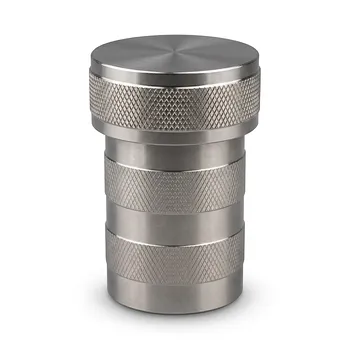
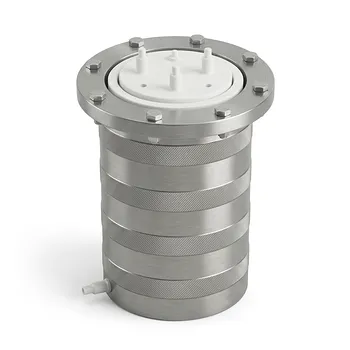
The synthesis of Metal-Organic Frameworks (MOFs) and Covalent Organic Frameworks (COFs) requires precise molecular assembly that cannot occur at ambient pressure. Autoclaves provide a sealed environment where solvents can be heated beyond their boiling points, creating autogenous pressure.
This high-pressure, high-temperature state provides the necessary energy for reactants to overcome activation barriers. This facilitates coordination crystallization, allowing ligands and metal ions to organize into complex, three-dimensional frameworks.
Controlling Nucleation and Growth
The enclosed environment of an autoclave ensures constant temperature distribution, which is vital for the growth of high-entropy metal-organic frameworks (HE-MOFs). This stability promotes slow crystal nucleation, ensuring that multiple metal nodes are distributed evenly within the lattice.
By maintaining these conditions over extended periods, researchers can guarantee the regularity of the microporous structure. This control is what allows for the high specific surface area and consistent pore size necessary for catalytic applications.
The Critical Necessity of PTFE Liners
Preventing Chemical Contamination
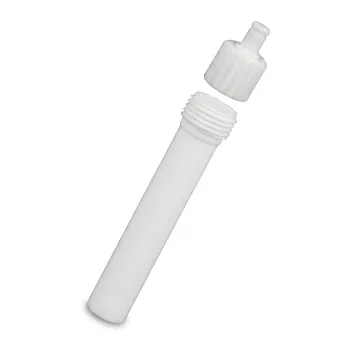
High-purity PTFE (Polytetrafluoroethylene) liners are indispensable because they offer exceptional acid and alkali resistance. During synthesis, aggressive precursor solutions can easily corrode the stainless steel walls of an autoclave.
If the metal shell is exposed, impurity ions leach into the reaction mixture. The PTFE liner prevents this, ensuring that the electronic structure of the catalyst—especially in single-atom catalysts—remains untainted and precise.
Ensuring Material Purity and Phase Transition
PTFE liners provide a non-adhesive, smooth surface that reduces the adhesion of nanosheets to the container walls. This property maximizes material recovery and maintains the reproducibility of the synthesis process.
Furthermore, the chemical inertness of PTFE allows for specific phase transitions, such as moving MoS2 from the 2H phase to the metallic 1T phase. Because PTFE does not react with coordination ligands or metal salts, the synthesized material retains its intended chemical stability and morphological growth.
Understanding the Trade-offs and Limitations
Temperature Constraints
While PTFE is highly inert, it has a functional temperature ceiling, typically between 200°C and 230°C. Exceeding these temperatures can cause the liner to soften or deform, potentially compromising the seal and the safety of the reaction.
For reactions requiring even higher temperatures, researchers must often look toward alternative materials like PFA or specialized metallic alloys. However, these alternatives may lack the same "non-stick" benefits or cost-effectiveness provided by standard PTFE.
Safety and Pressure Management
The use of high-pressure autoclaves carries inherent risks, as the internal pressure increases exponentially with temperature. Users must be diligent about filling degrees (the volume of liquid relative to the liner capacity) to prevent over-pressurization.
Failure to account for the expansion of volatile organic solvents can lead to liner failure or autoclave rupture. This necessitates a strict adherence to safety protocols and regular inspections of the liner's structural integrity.
How to Optimize Your Synthesis Setup
Selecting the Right Approach for Your Goal
- If your primary focus is single-atom catalysis: Prioritize high-purity PFA or PTFE liners with the lowest trace-element leaching characteristics to protect the catalyst's electronic structure.
- If your primary focus is High-Entropy MOFs: Ensure your autoclave provides a highly stable, constant-temperature environment to facilitate the slow nucleation of multiple metal nodes.
- If your primary focus is maximizing material yield: Use PTFE liners specifically for their non-adhesive properties to ensure the bulk of the synthesized nanosheets can be recovered from the vessel.
By mastering the balance between the thermodynamic power of the autoclave and the chemical protection of the PTFE liner, researchers can reliably produce the next generation of high-performance catalytic frameworks.
Summary Table:
| Component | Role in Synthesis | Key Benefit for Catalysts |
|---|---|---|
| High-Pressure Autoclave | Provides autogenous pressure & thermal energy | Enables precise molecular assembly and controlled nucleation. |
| PTFE Liner | Acts as a chemically inert barrier | Prevents metal ion contamination and ensures material purity. |
| Sealed Environment | Maintains constant temperature distribution | Guarantees regular microporous structures and high surface area. |
| Non-stick Surface | Reduces nanosheet adhesion | Maximizes material recovery and ensures process reproducibility. |
Elevate Your Catalyst Research with KINTEK’s Precision Engineering
Precision in MOF and COF synthesis begins with the highest quality materials. At KINTEK, we maintain an exclusive focus on high-performance fluoropolymers to provide the chemical inertness and structural integrity your experiments demand.
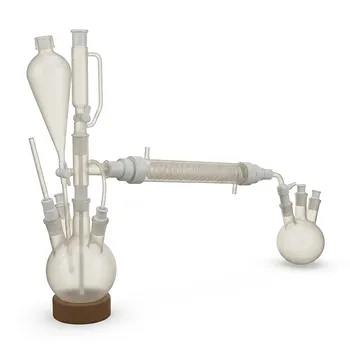
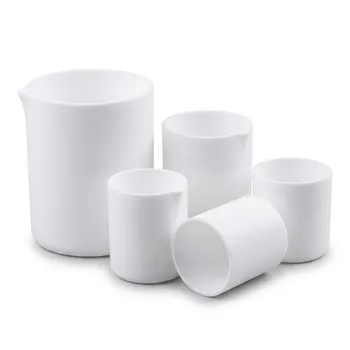
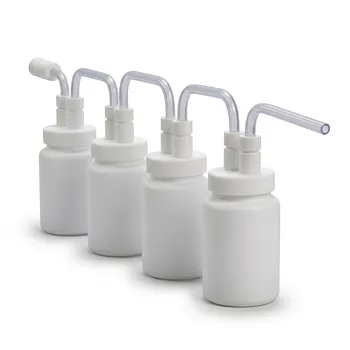
From everyday basic labware (beakers, crucibles, and reagent bottles) to advanced reaction apparatus like hydrothermal synthesis liners, microwave digestion vessels, and custom electrochemical cells, we manufacture virtually all imaginable laboratory supplies crafted from PTFE and PFA. Backed by end-to-end custom CNC fabrication, we deliver everything from complex non-standard machined parts to high-volume orders of tubes, fittings, and filtration tools.
Ready to optimize your synthesis setup with contamination-free, high-performance tools?
Contact KINTEK today to discuss your bespoke laboratory needs and discover how our specialized fluoropolymer expertise can enhance your lab's efficiency and results.
References
- Tao Wang, Yingwei Li. Advances in acidic electrocatalytic CO<sub>2</sub> reduction. DOI: 10.1360/csb-2025-0256
This article is also based on technical information from Kintek Knowledge Base .
Related Products
- PTFE Lined High Pressure Digestion Vessel 50ml High Temperature Hydrothermal Synthesis Tank
- Custom TFM Reaction Vessel with Stainless Steel Jacket and PTFE Inner Cup for High Corrosion Resistance
- High Temperature Corrosion Resistant Hydrothermal Synthesis Reactor with TFM Inner Liner and Straight Cylinder Design
- High Pressure Custom TFM Reactor Stainless Steel Outer Vessel PTFE Inner Cup for Corrosive Synthesis
- High Purity TFM Microwave Digestion Vessels PTFE Acid Evaporation Liners Domestic GT-400 Equivalent Laboratory Reaction Containers
People Also Ask
- What are the benefits of using a PTFE-lined vessel for carbon-sulfur cathode treatment? Maximize Purity & Performance
- Why are PTFE-lined pressure digestion vessels required for the preparation of Ag/CeO2 catalysts? Purity & Performance
- What safety features are typically incorporated into high-pressure PTFE digestion vessel designs? Ensure Lab Safety
- What is the function of high-pressure PTFE digestion vessels in mineral analysis? Optimize Sample Mineralization
- What is the function of PTFE lined high-pressure vessels in g-C3N4 synthesis? Achieve High-Purity Material Growth