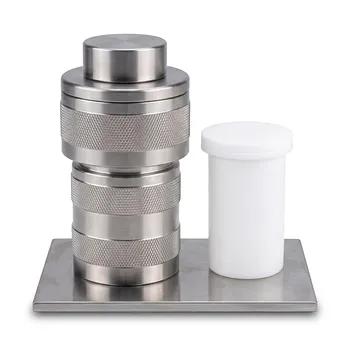
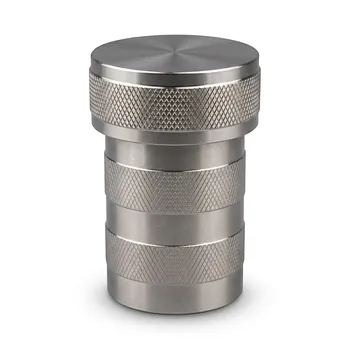
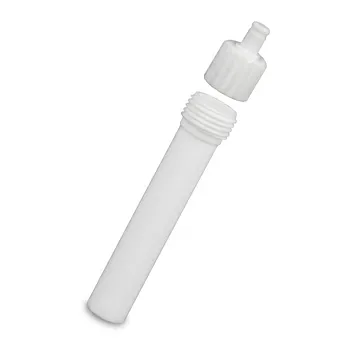
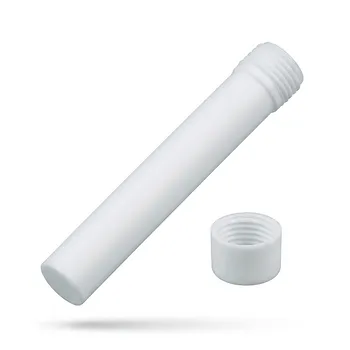
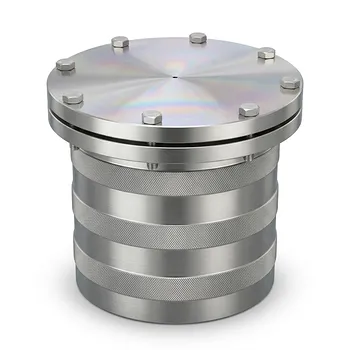
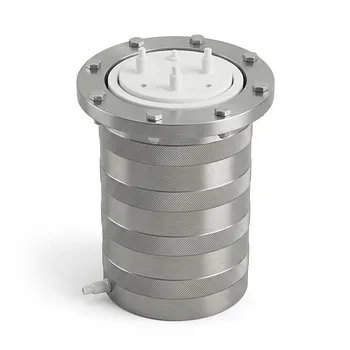
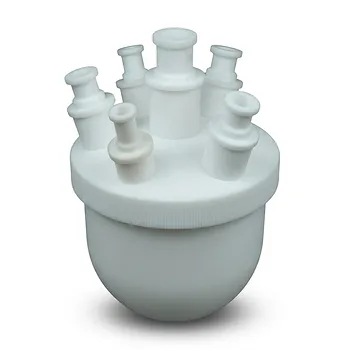
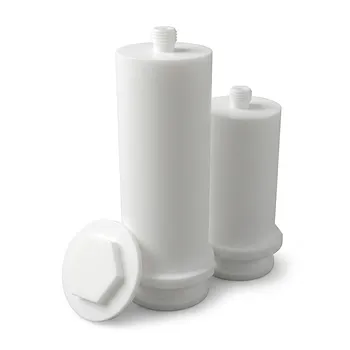
High-performance liners are the essential safeguard for NiFe hydroxide synthesis. These fluoropolymer inserts, typically made from high-purity PTFE or PFA, provide a chemically inert and hermetically sealed environment that isolates reactive nitrate solutions from the reactor's metal walls. By preventing metal ion leaching and resisting corrosion at high temperatures (e.g., 140°C), they ensure that NiFe hydroxides achieve the pure, saturated 3D growth necessary to maximize active surface area and catalytic performance.
Core Takeaway: High-performance liners function as a critical chemical barrier that prevents reactor contamination and ensures the structural integrity of NiFe hydroxides by providing a stable, non-reactive environment under extreme hydrothermal conditions.
Maintaining Chemical Integrity and Purity
Preventing Metal Ion Leaching
The primary role of a PTFE or PFA liner is to isolate the reaction medium from the stainless steel outer shell of the hydrothermal autoclave. Without this barrier, the high-temperature environment would cause metal ions from the steel vessel to leach into the solution, contaminating the NiFe hydroxide and altering its electrochemical properties.
Resisting Aggressive Nitrate Environments
Synthesis often involves corrosive nitrate solutions and precipitants like urea or hexamethylenetetramine (HMT). High-performance liners are chosen for their superior chemical resistance, allowing them to withstand these harsh substances at temperatures of 140°C for extended periods without degrading.
Ensuring a Pure Growth Environment
By eliminating side reactions between the metal ions and the vessel walls, the liner ensures the synthesis occurs in a pure environment. This purity is the foundation for creating high-quality catalysts with the specific chemical composition required for efficient water splitting or other energy applications.
Enabling Controlled Crystal Morphology
Achieving Saturated 3D Growth
The sealed, high-pressure conditions provided by the liner are necessary for the saturated growth of three-dimensional (3D) structured catalysts. This pressure drives the reactants into the pores of substrates like nickel foam, ensuring the NiFe-LDH (layered double hydroxide) nanospheres develop a regular and robust structure.
Facilitating Uniform Precipitation
Under hydrothermal conditions, urea or HMT undergoes slow, controlled decomposition to release hydroxide ions. The stable thermal environment of a high-performance liner ensures this process happens uniformly, leading to the consistent precipitation of nickel and iron salts into high-surface-area nanostructures.
Maximizing Active Surface Area
The ability to control the microstructure through a stable reaction environment directly impacts the catalyst's effectiveness. By providing the precise conditions for directional crystal growth, these liners enable the formation of nanostructures that offer the maximum number of active sites for chemical reactions.
Understanding the Trade-offs
Temperature and Pressure Limitations
While PTFE and PFA are highly stable, they have distinct thermal limits—typically around 220°C to 250°C for PTFE. Exceeding these temperatures can lead to mechanical deformation or "cold flow," which may compromise the seal and damage the outer pressure vessel.
Maintenance and Lifecycle Concerns
Despite their non-stick properties, liners can become stained or slightly porous over multiple high-pressure cycles. Failure to inspect liners for micro-cracks or thinning can result in unexpected contamination or catastrophic vessel failure during a synthesis run.
How to Apply This to Your Project
When selecting or using reaction vessel liners for NiFe hydroxide synthesis, consider your specific experimental parameters to ensure optimal results.
- If your primary focus is maximum material purity: Always utilize high-purity, virgin PTFE liners and implement a rigorous "acid-wash" cleaning protocol between uses to remove trace metal ions.
- If your primary focus is complex 3D nanostructure growth: Ensure your liner provides a perfect hermetic seal to maintain the internal pressure required for the slow, controlled hydrolysis of precipitants like urea.
- If your primary focus is high-temperature synthesis (above 150°C): Monitor the liner for signs of physical deformation and consider PFA if superior clarity or slightly different thermal characteristics are required for your specific nitrate concentration.
Choosing the right liner is not merely a secondary concern, but a fundamental requirement for achieving the high specific surface area and structural regularity that define high-performance NiFe catalysts.
Summary Table:
| Key Feature | Role in NiFe Synthesis | Critical Impact |
|---|---|---|
| Chemical Inertness | Isolates reactive nitrates from metal walls | Prevents ion leaching and contamination |
| Hermetic Sealing | Maintains high internal hydrothermal pressure | Enables saturated 3D crystal growth |
| Corrosion Resistance | Withstands aggressive urea/nitrate environments | Ensures pure growth environment at 140°C+ |
| Surface Stability | Facilitates slow, uniform precipitation | Maximizes active surface area and sites |
Unlock the full potential of your material synthesis with KINTEK, your premier partner for high-performance fluoropolymer laboratory supplies. Whether you are synthesizing NiFe hydroxides or developing advanced energy materials, our high-purity PTFE and PFA liners ensure the chemical integrity and structural precision your research demands.
From everyday basic labware (beakers, measuring cylinders, crucibles, dishes, reagent/wash bottles, centrifuge and digestion tubes) to advanced reaction apparatus like hydrothermal synthesis liners, microwave digestion vessels, and custom electrochemical cells, KINTEK manufactures virtually all imaginable supplies. Backed by end-to-end custom CNC fabrication, we deliver everything from complex non-standard machined parts to high-volume orders, maintaining an absolute focus on high-performance fluoropolymer materials.
Contact us today to discuss your project!
References
- Chi‐Huang Chuang, Yuh‐Jen Cheng. Sonochemical Deposition of a Highly Active NiFe Hydroxide Electrocatalyst for Oxygen Evolution Reaction. DOI: 10.1021/acs.energyfuels.5c04243
This article is also based on technical information from Kintek Knowledge Base .
Related Products
- PTFE Lined High Pressure Digestion Vessel 50ml High Temperature Hydrothermal Synthesis Tank
- High Temperature Corrosion Resistant Hydrothermal Synthesis Reactor with TFM Inner Liner and Straight Cylinder Design
- High Purity PTFE Microwave Digestion Vessel Replacement Liner for Acid Sample Preparation and Trace Analysis
- High Purity PTFE Microwave Digestion Vessel for Soil and Food Analysis Acid Resistant Fluoropolymer Sample Preparation Liners
- High Purity TFM Microwave Digestion Vessels PTFE Acid Evaporation Liners Domestic GT-400 Equivalent Laboratory Reaction Containers
People Also Ask
- What are the benefits of using a PTFE-lined vessel for carbon-sulfur cathode treatment? Maximize Purity & Performance
- Why are PTFE-lined pressure digestion vessels required for the preparation of Ag/CeO2 catalysts? Purity & Performance
- What is the function of high-pressure PTFE digestion vessels in mineral analysis? Optimize Sample Mineralization
- What safety features are typically incorporated into high-pressure PTFE digestion vessel designs? Ensure Lab Safety
- What is the function of PTFE lined high-pressure vessels in g-C3N4 synthesis? Achieve High-Purity Material Growth