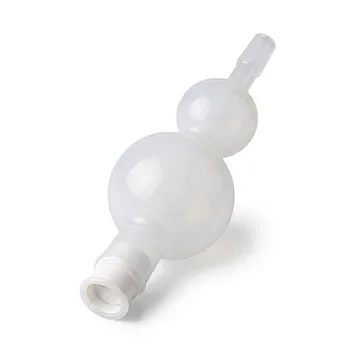
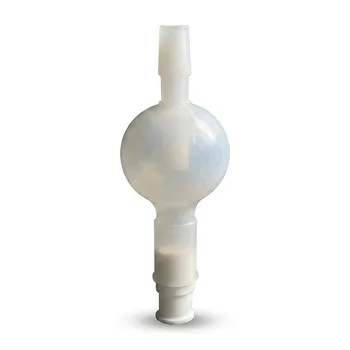
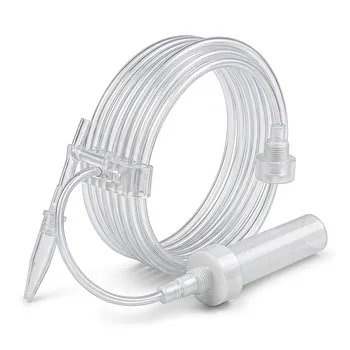
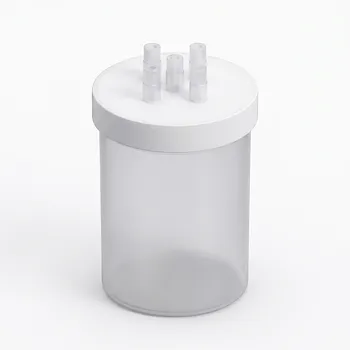
High-performance fluoropolymers are uniquely suited to demanding chemical processing and laboratory applications because they combine exceptional chemical inertness, thermal stability, purity, and low-adhesion surfaces. The strong carbon-fluorine bond helps protect the polymer structure from corrosive reagents, oxidation, and heat, while fluorine atoms shield the carbon backbone from chemical attack. As a result, materials such as PTFE and PFA can maintain structural integrity and minimize contamination in high-temperature digestion, trace analysis, fluid handling, and severe-service processing.
The central advantage of fluoropolymers is not one isolated property, but the combination of chemical resistance, high-temperature performance, cleanability, and low extractables. This combination allows equipment to remain reliable and chemically neutral where conventional plastics or metals may degrade, corrode, contaminate samples, or require extensive maintenance.
Why Fluoropolymer Chemistry Provides Exceptional Resistance
The Carbon-Fluorine Bond Protects the Polymer
The carbon-fluorine bond is exceptionally strong, with a bond dissociation energy of approximately 485 kJ/mol. This gives highly fluorinated polymer structures strong resistance to thermal degradation and chemical attack.
Fluorine is also highly electronegative. In fluoropolymers, it lowers the tendency of the molecular structure to participate in oxidation and other chemical reactions, helping the material remain stable when exposed to aggressive media.
Fluorine Shields the Carbon Backbone
The relatively large size of fluorine atoms creates a protective layer around the polymer backbone. This steric shielding makes it more difficult for corrosive chemicals to reach and react with the underlying carbon structure.
This molecular protection is particularly important in applications involving strong mineral acids, caustic solutions, solvents, oxidizing agents, or reactive process mixtures.
Higher Fluorine Content Increases Inertness
In general, increasing fluorine content improves chemical resistance, solvent resistance, thermal stability, flame resistance, and photostability. Fully fluorinated polymers are therefore selected when maximum chemical inertness and temperature resistance are the primary requirements.
Partially fluorinated materials may be preferable when the design requires a different balance of mechanical strength, rigidity, processability, or cost.
How Fluoropolymers Perform Under Extreme Heat
Resistance to Thermal Degradation
High-performance fluoropolymers can tolerate temperatures that exceed the practical limits of many conventional engineering plastics. Certain laboratory grades support working temperatures up to approximately 260°C, although the allowable temperature depends on the specific polymer, load, geometry, pressure, and exposure duration.
Advanced fluorinated formulations can also demonstrate thermal decomposition temperatures above 450°C, with some fluorinated aromatic structures reaching reported decomposition temperatures of approximately 558°C. Decomposition temperature is not the same as recommended operating temperature, so equipment specifications must still govern the design.
Structural Reliability During Digestion
Microwave and block digestion procedures subject vessels to rapid heating, chemical attack, and thermal cycling. PTFE and PFA containers can retain their functional shape and resistance under these conditions when properly selected and used within their rated limits.
This stability supports repeatable sample preparation and reduces the risk of vessel failure, analyte loss, or contamination during high-temperature digestion.
Stability in Severe Chemical Processing
Chemical processing equipment may encounter corrosive reagents and elevated temperatures simultaneously. Fluoropolymers help resist both forms of degradation, making them suitable for reactor linings, mixing components, transfer lines, impellers, and specialized vessels.
PFA is often used where chemical inertness must be combined with melt-processability, transparency, or the ability to manufacture complex components. PTFE is widely valued for its broad chemical resistance and low-friction behavior.
How Fluoropolymers Protect Purity and Accuracy
Low Risk of Chemical Contamination
Fluoropolymers are highly chemically inert and can minimize extractables and trace-element leaching. This is critical when laboratory containers or process components contact high-purity chemicals or samples containing analytes at very low concentrations.
The material’s resistance to chemical attack also reduces the chance that the vessel itself will introduce reaction products into the process.
Low Adsorption and Cross-Contamination
The smooth, hydrophobic surface of fluoropolymer equipment discourages many substances from adhering strongly to the material. This helps reduce analyte adsorption on container walls and supports more complete sample recovery.
Reduced adhesion also limits carryover between batches, which is especially valuable in trace analysis and high-purity chemical handling.
Easier Cleaning
Fluoropolymers have extremely low surface energy and strong non-stick characteristics. Residues are less likely to form persistent bonds with the surface, making vessels, tubing, and process components easier to rinse and clean.
Simpler cleaning can reduce downtime while lowering the risk that residues from one process will affect the next.
Where These Properties Matter Most
High-Temperature Chemical Digestion
Strong acids such as nitric, hydrochloric, and hydrofluoric acid can severely attack many materials, particularly when combined with heat. PTFE and PFA digestion vessels provide resistance to these environments while helping preserve sample purity.
Their thermal and chemical stability makes them suitable for microwave digestion, block digestion, and other severe sample-preparation procedures.
Ultra-Trace Element Analysis
Ultra-trace analysis requires more than a container that merely survives the reagent. The container must also avoid leaching, adsorption, and contamination that could distort results.
Fluoropolymer labware addresses these risks through chemical purity, low adhesion, hydrophobicity, and resistance to aggressive cleaning and digestion conditions.
Corrosive Fluid Handling
Pipes, tubing, valves, tanks, and custom-machined components may carry acids, bases, solvents, or reactive mixtures. Fluoropolymers can provide a chemically resistant fluid-contact surface that protects the equipment and helps preserve the composition of the handled material.
They are especially useful when corrosion resistance, low friction, and cleanability are required together.
High-Purity Chemical Processing
In high-purity processing, the material must resist both the process chemistry and the temptation to contribute contaminants of its own. PFA and other high-performance fluoropolymers can support this requirement in reactor components, thick-wall linings, storage tanks, and transfer systems.
Their non-stick behavior can also reduce polymer or product build-up, improving process consistency and simplifying maintenance.
Understanding the Trade-offs
Maximum Fluorine Content Can Reduce Mechanical Strength
Greater fluorination generally improves chemical and thermal resistance, but it can reduce certain mechanical properties. Fully fluorinated materials may be less suitable when high stiffness, load-bearing capacity, or dimensional rigidity is the dominant design requirement.
The correct choice therefore depends on the combined chemical, thermal, mechanical, and manufacturing demands.
Temperature Ratings Are Application-Specific
A material’s decomposition temperature does not define its safe continuous operating temperature. Pressure, mechanical load, thermal cycling, wall thickness, creep, and exposure time can all reduce the practical operating limit.
Designers should use the manufacturer’s grade-specific ratings and evaluate the complete component, not only the raw material.
Fluoropolymers Are Not Universally Inert
Fluoropolymers offer unusually broad chemical resistance, but no material should be treated as resistant to every chemical under every condition. Certain highly reactive substances, combinations of chemicals, molten alkali metals, or unusual temperature and pressure conditions require specific compatibility review.
Chemical compatibility tables and application testing remain necessary for critical installations.
Manufacturing and Cost Can Influence Selection
Some fluoropolymers are difficult to process, machine, weld, or join compared with conventional plastics. They may also carry a higher material and fabrication cost.
That cost can be justified when failure, contamination, corrosion, or cleaning downtime would be more expensive, but the design should still select only the performance level the application requires.
Making the Right Choice for Your Goal
The best fluoropolymer is determined by the complete operating envelope rather than by chemical resistance alone.
- If your primary focus is maximum chemical inertness: Select a highly fluorinated material such as PTFE or PFA, then verify compatibility with the specific chemicals, concentrations, temperatures, and pressures involved.
- If your primary focus is high-temperature digestion and trace analysis: Prioritize high-purity PTFE or PFA labware with low extractables, low adsorption, and a documented temperature rating for the digestion method.
- If your primary focus is process cleanliness and reduced maintenance: Use fluoropolymer components with smooth, low-energy surfaces to limit product build-up, cross-contamination, and cleaning effort.
- If your primary focus is mechanical strength or rigidity: Consider a partially fluorinated or reinforced formulation, provided it still meets the application’s chemical and thermal resistance requirements.
- If your primary focus is long-term reliability: Evaluate the finished component’s temperature, pressure, creep, thermal-cycling, joining, and dimensional requirements alongside the polymer’s chemical compatibility.
Fluoropolymers are powerful engineering materials because their molecular structure enables reliable performance at the intersection of heat, corrosion, purity, and demanding laboratory control.
Summary Table:
| Property | Benefit |
|---|---|
| Chemical Inertness | Resists acids, bases, solvents, and oxidizing agents |
| Thermal Stability | Maintains performance at temperatures up to 260°C (continuous) |
| Purity & Low Extractables | Minimizes contamination for trace analysis |
| Non-Stick Surface | Reduces adsorption and simplifies cleaning |
| Durability | Long service life in severe conditions |
Ready to optimize your lab or process with high-performance fluoropolymers? Partner with KINTEK for superior PTFE and PFA solutions. Our expert team provides custom fabrication and comprehensive labware to meet your most demanding requirements. Contact us today to discuss your application and discover how our products can enhance your efficiency, purity, and reliability.
Related Products
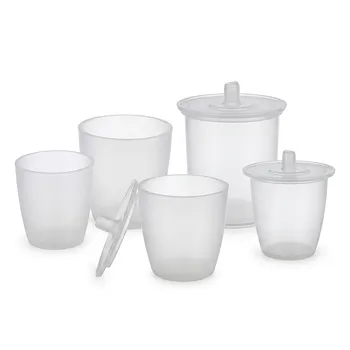
- High Purity PFA Crucible and Corrosion Resistant PTFE Beaker for Trace Analysis and Custom Laboratory Applications
- PTFE PFA Vacuum Filtration System Corrosion Resistant Customizable Shatterproof Laboratory Device
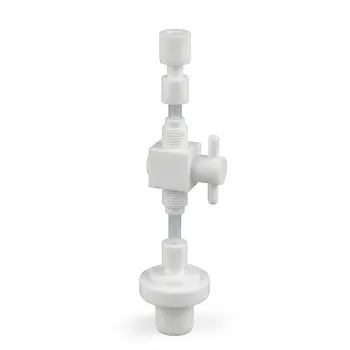
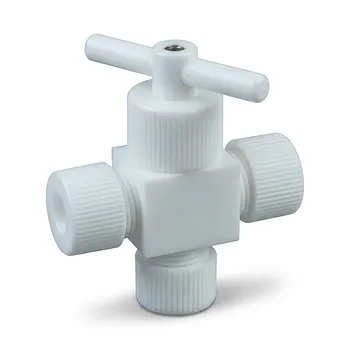
- High Purity PFA PTFE Flare Stop Valves Customizable 2-Way 3-Way Reducing Fluoropolymer Fluid Control Solutions
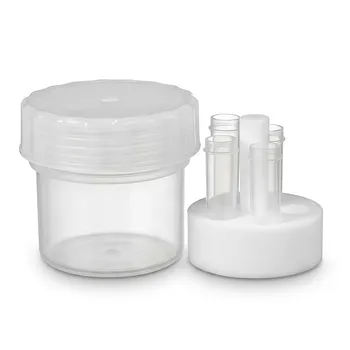
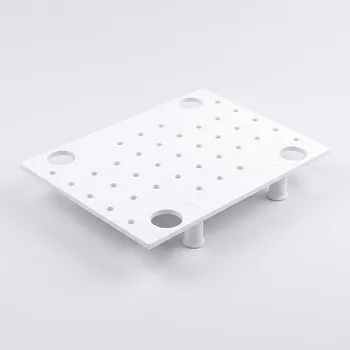
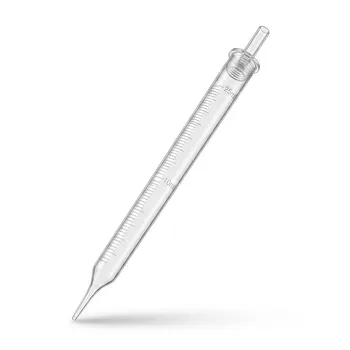
- Corrosion Resistant PTFE Support with PFA Transparent Reaction Tank and High Purity PFA Sampling Tube for Trace Analysis
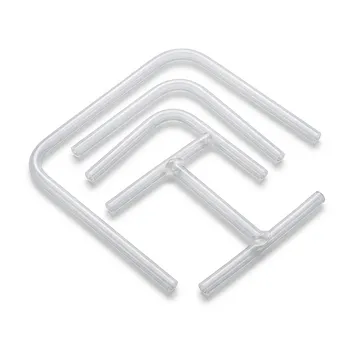
- High Purity PFA Coiled Tubing Custom PTFE Machining PFA Welding and Precision Bending Solutions
People Also Ask
- Why are high-purity vessels critical for BiFeO3 synthesis? Ensuring Phase Purity
- Why is the use of high-purity PFA or PTFE labware critical during TiO2 nanoparticle purification? Protect Sample Purity
- Why is high-purity PFA labware necessary for Znx@LS-2 zeolite ICP-OES analysis? Ensure Trace-Level Precision
- Why is high-purity PFA trace analysis labware used for MXene? Ensure Superior Material Integrity in Research
- What key material characteristics make PTFE and PFA suitable for high-purity laboratory labware, trace analysis containers, and medical microporous tubing? Discover the essential properties that ensure purity.