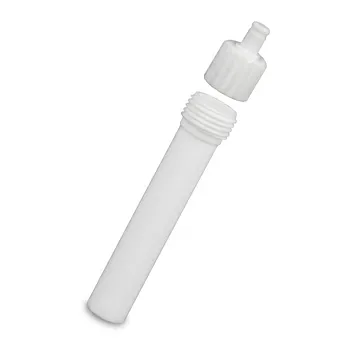
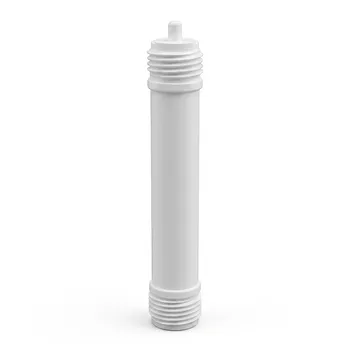
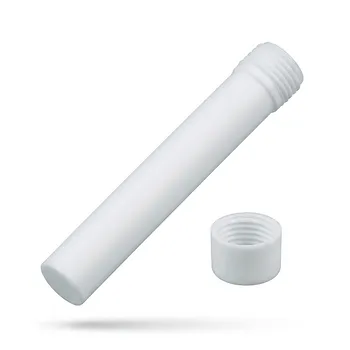
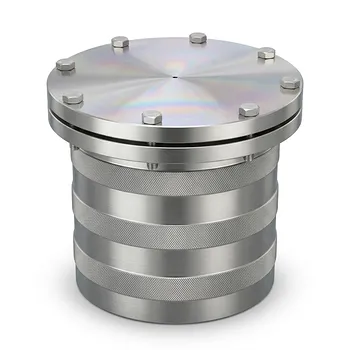
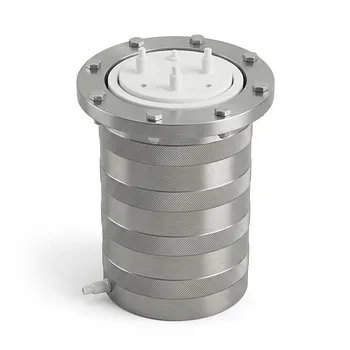
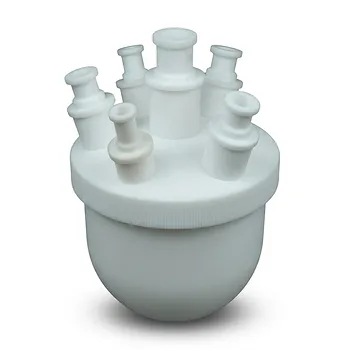
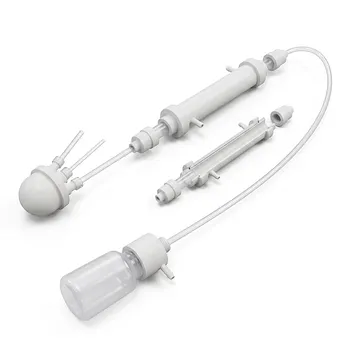
Fluoropolymer liners are the critical barrier in hydrothermal synthesis.
The use of PTFE or PFA liners is mandatory to withstand the high-pressure alkaline environments and organic solvents required to form binuclear Ni(II) complexes. These materials provide a chemically inert reaction chamber that protects the stainless steel autoclave from corrosion while preventing metal ion leaching, which would otherwise contaminate and compromise the purity of the [Ni2(C7H5N4)2(C7H4ClO2)2] crystals.
PTFE and PFA liners provide a chemically inert, high-purity environment that protects the autoclave from corrosive reagents while ensuring the structural integrity and purity of the Ni(II) complexes.
Protection Against Corrosive Environments
Resisting Strong Alkalinity
The synthesis of binuclear Ni(II) complexes often involves pH adjustment using strong bases like 0.1 M NaOH. PTFE and PFA are uniquely resistant to caustic environments that would rapidly degrade standard laboratory glassware or metal surfaces.
Managing Mixed Organic Solvents
Hydrothermal reactions frequently utilize mixed organic solvents that can penetrate or react with lesser materials. Fluoropolymer liners are chosen for their excellent chemical inertness, ensuring the solvents remain contained and do not react with the reactor body.
Protecting the Autoclave Shell
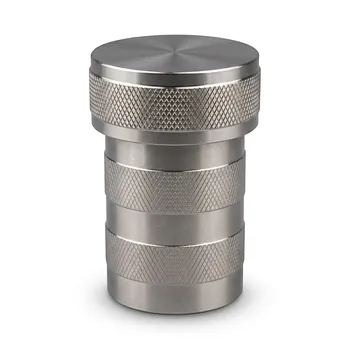
High temperatures and pressures accelerate the corrosive effects of the reaction media. The liner acts as a physical shield, isolating the corrosive liquid from the stainless steel autoclave jacket to prevent structural damage to the vessel.
Maintaining High Chemical Purity
Preventing Metal Ion Leaching
Without a liner, the stainless steel reactor walls can release trace metal impurities like iron or chromium into the reaction system. These "stray" ions can interfere with the coordination chemistry of the Ni(II) complex, leading to failed synthesis or impure products.
Ensuring Crystal Integrity
A clean, non-reactive surface is essential for the growth of high-purity crystals. PTFE/PFA liners prevent the Ni(II) complexes from adhering to the container walls, which is critical for maintaining structural integrity and maximizing the exposure of active sites.
Facilitating Controlled Precipitation
Hydrothermal conditions allow for the slow, controlled release of ions (e.g., from the decomposition of urea or HMT). The inert environment provided by the liner ensures that these delicate chemical steps occur without interference from the vessel's own material.
Understanding Technical Limitations and Trade-offs
Temperature Constraints
While PTFE and PFA are thermally stable, they have upper limits—typically around 200°C to 250°C for hydrothermal use. Exceeding these temperatures can lead to liner deformation or "creep," which may compromise the pressure seal of the autoclave.
Pressure Sensitivity
Fluoropolymers can undergo mechanical deformation under the high autogenous pressures generated during heating. It is vital to match the liner size precisely to the autoclave body to prevent the liner from buckling or failing under load.
Porosity and Cleaning
Although highly inert, these materials can occasionally absorb trace amounts of previous reactants if not cleaned thoroughly. Cross-contamination is a risk in multi-user labs, requiring rigorous cleaning protocols between different synthesis runs.
How to Apply This to Your Project
When selecting or using a liner for hydrothermal synthesis, consider your specific experimental goals:
- If your primary focus is maximum chemical purity: Prioritize high-purity PFA liners, which often offer lower trace-metal backgrounds than standard PTFE.
- If your primary focus is high-temperature stability: Ensure your synthesis remains below 200°C, and monitor the liner for signs of "flaring" or deformation after each run.
- If your primary focus is protection of equipment: Always inspect the liner for cracks or thinning before using strong alkaline or acidic solutions to ensure the stainless steel shell is never exposed.
By maintaining a pure and inert reaction environment, you ensure that the complex chemical architecture of binuclear Ni(II) complexes is achieved with consistency and precision.
Summary Table:
| Feature | Benefit for Ni(II) Synthesis | Technical Consideration |
|---|---|---|
| Chemical Inertness | Resists strong NaOH and mixed organic solvents without degrading. | Stable up to 200°C–250°C; avoid exceeding limits. |
| High Purity | Prevents Fe/Cr leaching from stainless steel to ensure crystal integrity. | Requires rigorous cleaning to prevent cross-contamination. |
| Surface Quality | Non-stick surface prevents complex adhesion and aids crystal growth. | Must be precisely sized to autoclave body to prevent buckling. |
| Protective Barrier | Shields the autoclave shell from high-pressure corrosive media. | Monitor for signs of "creep" or deformation after high-temp runs. |
Elevate Your Research with KINTEK’s High-Performance Fluoropolymers
Success in complex hydrothermal synthesis requires an environment that is both ultra-pure and exceptionally durable. KINTEK specializes in manufacturing high-performance PTFE and PFA laboratory supplies designed to withstand the most aggressive alkaline and organic solvent conditions.
From everyday essentials like beakers, crucibles, and reagent bottles to specialized hydrothermal synthesis liners, microwave digestion vessels, and custom electrochemical cells, we provide the tools you need for precise coordination chemistry. Our end-to-end custom CNC fabrication allows us to deliver everything from complex non-standard machined parts to high-volume orders with an absolute focus on fluoropolymer excellence.
Ensure the purity of your Ni(II) complexes and protect your laboratory equipment today. Contact our experts for a custom quote or consultation!
References
- Zhuowen Xu, Chang-Hong Li. Hydrothermal synthesis, crystal structure of [K3:N1:N2:N4-3-(pyridin-2-yl)-1,2,4-triazole] binuclear Ni(II) complex[Ni<sub>2</sub>(C<sub>7</sub>H<sub>5</sub>N<sub>4</sub>)2(C<sub>7</sub>H<sub>4</sub>ClO<sub>2</sub>)<sub>2</sub>]. DOI: 10.1515/ncrs-2024-0362
This article is also based on technical information from Kintek Knowledge Base .
Related Products
- PTFE Lined High Pressure Digestion Vessel 50ml High Temperature Hydrothermal Synthesis Tank
- High Temperature Corrosion Resistant Hydrothermal Synthesis Reactor with TFM Inner Liner and Straight Cylinder Design
- High Purity PTFE Microwave Digestion Vessel Replacement Liner for Acid Sample Preparation and Trace Analysis
- High Purity PTFE Microwave Digestion Vessel for Soil and Food Analysis Acid Resistant Fluoropolymer Sample Preparation Liners
- High Purity TFM Microwave Digestion Vessels PTFE Acid Evaporation Liners Domestic GT-400 Equivalent Laboratory Reaction Containers
People Also Ask
- What are the benefits of using a PTFE-lined vessel for carbon-sulfur cathode treatment? Maximize Purity & Performance
- Why are PTFE-lined pressure digestion vessels required for the preparation of Ag/CeO2 catalysts? Purity & Performance
- What safety features are typically incorporated into high-pressure PTFE digestion vessel designs? Ensure Lab Safety
- What is the function of PTFE lined high-pressure vessels in g-C3N4 synthesis? Achieve High-Purity Material Growth
- Role of High-Pressure Digestion Tanks in Perovskite Synthesis: Achieve Superior Stability and Latent Heat