Trifluoromethyl-functionalized fluoropolymers can withstand exceptionally high temperatures, but their practical operating limits are lower than their decomposition thresholds. Hyperbranched poly(arylene ether) fluoropolymers with trifluoromethyl functionality can reach 10% weight-loss temperatures of approximately 500–595 °C under inert or oxidative conditions. Their glass transition temperatures range from 199 °C to above 350 °C, indicating strong resistance to softening and loss of dimensional stability. In routine applications, however, continuous service limits are typically closer to 200–260 °C, depending on formulation, mechanical load, atmosphere, exposure duration, and chemical environment.
The key distinction is between thermal decomposition resistance and usable service temperature. Trifluoromethyl-functionalized fluoropolymers may remain chemically stable up to roughly 500–595 °C in thermal analysis, but components should generally be operated well below their glass transition or continuous-use limits to preserve mechanical strength, dimensional accuracy, and safety.
What the Thermal Data Means
Decomposition resistance can reach 500–595 °C
The most demanding trifluoromethyl-functionalized hyperbranched poly(arylene ether) fluoropolymers show Td,10% values from about 500 °C to 595 °C.
Td,10% is the temperature at which the material has lost 10% of its mass during a defined thermal-analysis test. It is a measure of thermal decomposition resistance, not a recommended operating temperature.
Glass transition temperatures reach 199 °C to above 350 °C
Reported Tg values of 199 °C to more than 350 °C indicate that these materials can maintain a rigid, glassy structure across a broad high-temperature range.
A higher Tg generally supports better dimensional stability and mechanical retention under heat. It does not, however, establish the maximum safe temperature for a loaded part, seal, vessel, or tubing component.
Thermal stability supports dielectric and chemical performance
The fluorinated aromatic structure and strong carbon-fluorine bonds contribute to chemical inertness, thermal stability, and dielectric integrity.
These characteristics are valuable in high-temperature electrical insulation, chemical-processing components, reaction equipment, and specialized laboratory hardware where both heat and chemical exposure are present.
Why Practical Service Temperatures Are Lower
Mechanical performance changes before decomposition begins
A polymer can remain below its decomposition threshold while already becoming too soft, flexible, or dimensionally unstable for a particular application.
For components carrying pressure, maintaining a seal, supporting a load, or preserving tight tolerances, the relevant limit may be determined by Tg, heat-deflection behavior, creep, or long-term aging rather than by Td,10%.
Continuous-use temperatures are often near 200–260 °C
General high-performance fluoropolymers such as PTFE and PFA commonly have continuous upper service temperatures around 260 °C. Many fluoropolymer components can operate near 200 °C for extended periods, while higher temperatures require a defined exposure-time limit.
For cured fluoropolymer elastomeric parts, representative service-life data indicate more than 3,000 hours at 230 °C, approximately 1,000 hours at 260 °C, and about 240 hours at 290 °C. Short-term exposure may reach approximately 315 °C for up to 48 hours, depending on the specific formulation and design.
Processing limits and operating limits are different
A material may tolerate a high-temperature processing step without being suitable for continuous operation at that temperature.
Processing involves controlled time, atmosphere, geometry, and cooling conditions. In service, the material may experience sustained stress, pressure cycling, chemical attack, and repeated thermal excursions that accelerate degradation.
How the Atmosphere Changes Performance
Inert environments generally improve thermal stability
PTFE illustrates the importance of atmosphere. In vacuum or inert gas such as nitrogen, it showed approximately 3% weight loss after two hours at 460 °C in the cited testing.
This behavior demonstrates why inert atmospheres can provide substantially greater thermal headroom during specialized processing or high-temperature laboratory work.
Oxygen accelerates thermal degradation
In air, PTFE experienced approximately 25% weight loss after two hours at 482 °C in the referenced comparison.
Oxidative conditions can therefore cause faster mass loss and different degradation products than inert conditions. A temperature that appears acceptable from inert-atmosphere data may be unsuitable when oxygen is present.
Thermal-analysis values require test-condition context
Td,10% depends on heating rate, sample geometry, atmosphere, and test method. Values measured under nitrogen, vacuum, or air should not be treated as interchangeable.
When specifying a component, the relevant data should match the actual environment, including oxygen concentration, pressure, heating duration, and chemical exposure.
Chemical Environment Matters
Lewis acids can lower the effective thermal limit
Lewis acids, including BF3 complexes, can catalyze fluoropolymer decomposition at temperatures below those expected from thermal-analysis data alone.
This is especially important for digestion vessels, reaction apparatus, tubing, and fluid-transfer systems exposed to reactive catalysts or strongly acidic formulations.
Compatibility must be evaluated with temperature
Fluoropolymer selection should consider both thermal and chemical compatibility. A polymer that performs well with common acids at moderate temperature may degrade more rapidly when exposed to a Lewis acid catalyst at elevated temperature.
The effective service limit is governed by the combined effect of temperature, chemical concentration, exposure time, mechanical stress, and atmosphere.
Understanding the Trade-offs
High Td does not mean 500 °C continuous service
A Td,10% value near 595 °C demonstrates substantial resistance to mass loss, but it does not mean a finished component can operate continuously at 595 °C.
At temperatures approaching Tg or the decomposition range, creep, embrittlement, discoloration, loss of tensile strength, dimensional change, and chemical byproduct formation may occur before the component reaches its nominal Td.
Short-term spikes are not equivalent to sustained exposure
A component may survive a brief temperature excursion that would cause unacceptable degradation during continuous operation.
Thermal cycling can also produce cumulative damage through repeated expansion and contraction, even when each individual cycle remains below the decomposition threshold.
Elevated-temperature decomposition can create hazards
When fluoropolymers are overheated, particularly in air or under prolonged exposure, degradation may cause discoloration and hazardous evolution of hydrogen fluoride vapor.
Proper ventilation, temperature control, compatible equipment, and manufacturer-specific safety guidance are essential whenever processing or operating fluoropolymers near their upper thermal range.
Different fluoropolymers have different limits
PVDF, PTFE, PFA, fluoropolymer elastomers, and advanced fluorinated aromatic polymers do not share the same thermal behavior.
For example, PVDF homopolymers typically melt around 155–171 °C and have heat-deflection temperatures around 104–115 °C under the cited load, while PVDF copolymers can have lower melting and load-bearing limits. These values are far below the decomposition temperatures of some advanced fluorinated polymers.
Making the Right Choice for Your Goal
The correct specification should be based on the complete thermal and chemical duty cycle rather than on Td alone.
- If your primary focus is maximum thermal stability: Select a formulation with a documented Td,10% near 500–595 °C and verify that the test atmosphere matches the intended environment.
- If your primary focus is continuous mechanical service: Base the design on the material's Tg, creep behavior, heat-deflection data, and long-term service rating, typically keeping operation near or below 200–260 °C unless qualified data support a higher limit.
- If your primary focus is short high-temperature exposure: Use exposure-time data and confirm that the component can tolerate the associated thermal cycling, stress, and cooling conditions.
- If your primary focus is chemical processing: Assess compatibility with acids, oxidizers, solvents, and Lewis acid catalysts at the actual operating temperature.
- If your primary focus is laboratory or reaction equipment safety: Control overheating, provide appropriate ventilation, and avoid treating decomposition temperatures as permissible routine operating limits.
A reliable high-temperature design separates the polymer's decomposition threshold from the lower temperature at which the finished component can perform safely and consistently.
Summary Table:
| Property | Value |
|---|---|
| 10% weight-loss temp (Td,10%) | ~500–595°C |
| Glass transition temp (Tg) | 199°C to >350°C |
| Continuous service temp (typical) | 200–260°C |
| Short-term exposure (elastomers) | ~315°C for up to 48h |
| Inert atmosphere performance (PTFE) | ~3% weight loss at 460°C (2h) |
| Oxidative atmosphere performance (PTFE) | ~25% weight loss at 482°C (2h) |
Ready to select the ideal fluoropolymer for your high-temperature application? At KINTEK, we specialize in high-performance PTFE and PFA lab supplies, from beakers and digestion vessels to custom CNC-machined parts. Contact our experts today to ensure your components meet every thermal and chemical challenge. Get in touch!
Related Products
- High Temperature Resistant Insulating TFM Separator and Ultra Clean Laboratory PTFE Baffle Plate with Customizable Pore Size and Hole Configuration
- High Temperature Resistant PTFE Thermal Insulation Board Corrosion Resistant Metal Free Fluoropolymer Stand for Ultra Clean Laboratories
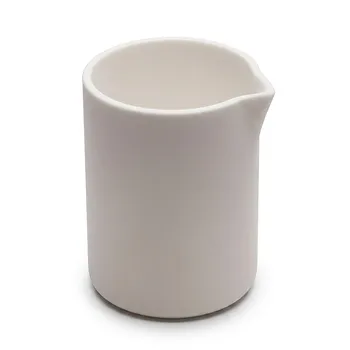
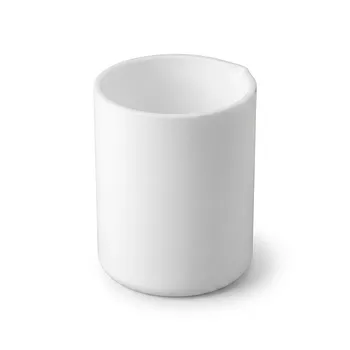
- Custom Thickened PTFE Beaker 3000ml Hotplate Heating High Temperature Deformation Resistant Fluoropolymer Labware
- Custom Thickened PTFE Beaker High Temperature Hot Plate Heating Resistant Precision Laboratory Labware Customizable Fluoropolymer Vessel
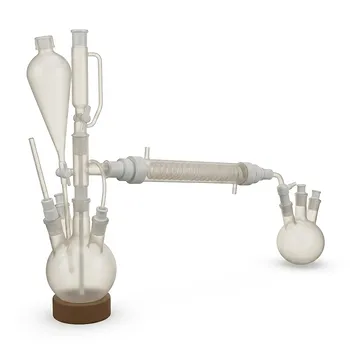
- PTFE Distillation Condensation Apparatus High Temperature Hydrofluoric Acid Resistant Fluorination Reaction Flask
People Also Ask
- What are the limitations of pure PTFE in high temperature applications? Understanding the 200°C Ceiling
- Are Teflon parts capable of withstanding high temperatures? Understanding the 260°C Limit for Performance
- What future advancements are expected in temperature-resistant PTFE seals? Discover Smarter, Tougher Sealing Solutions
- What is porous PTFE used for? Advanced Filtration for Harsh Chemical & High-Temp Environments
- What are the benefits of porous PTFE? Unlock Superior Filtration and Chemical Resistance