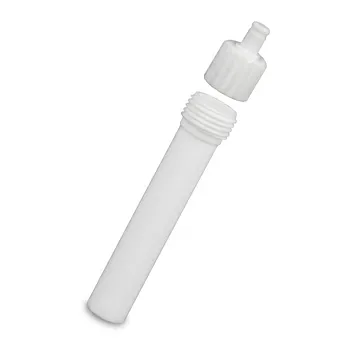
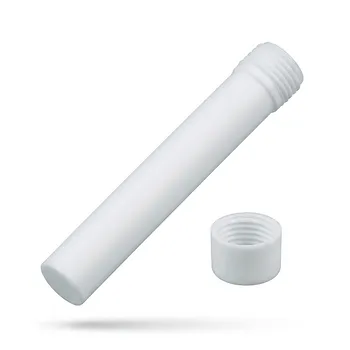
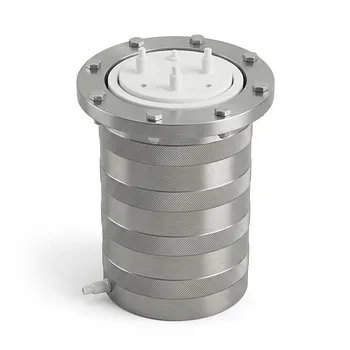
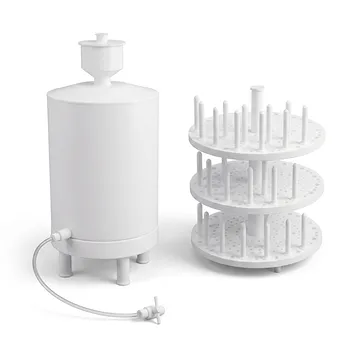
The use of PTFE-lined stainless steel autoclaves is the industry standard for synthesizing high-performance NiFeLDH/NF anodes. These vessels provide a chemically inert, high-pressure environment that allows Nickel-Iron Layered Double Hydroxides (NiFeLDH) to grow vertically and uniformly on nickel foam (NF) substrates. By isolating the reaction from the metallic outer shell, the system ensures high catalytic activity and the structural integrity of the synthesized nanomaterials.
Core Takeaway: PTFE-lined autoclaves act as a critical barrier against corrosion and contamination, enabling the stable hydrothermal conditions required to produce high-purity, vertically oriented NiFeLDH catalysts for efficient water electrolysis.
Ensuring Material Purity and Corrosion Resistance
Prevention of Metal Ion Contamination
The Polytetrafluoroethylene (PTFE) liner is fundamentally chemically inert, which prevents the reaction solution from interacting with the stainless steel body. This is crucial because it stops the exchange of metal ions between the shell and the solution, ensuring that the purity of the NiFeLDH remains uncompromised.
Protection Against Alkaline Erosion
Hydrothermal synthesis of LDHs often involves strong alkaline environments that would rapidly corrode a standard metal vessel. The PTFE liner protects the stainless steel outer shell from these aggressive chemicals, extending the life of the equipment while preventing corrosion byproducts from entering the reaction.
Maintaining Chemical Integrity
By providing a non-reactive surface, the liner allows for precise control over the reaction chemistry. This ensures that the precursors react exactly as intended, which is vital for maintaining the correct iron-to-nickel ratios within the LDH structure.
Achieving Optimal Catalyst Morphology
Facilitating Vertical and Uniform Growth
At hydrothermal temperatures (typically around 120°C), this equipment combination ensures that NiFeLDH crystals grow vertically and uniformly on the nickel foam substrate. This specific orientation is a technical advantage because it maximizes the surface area and exposure of active sites for the Oxygen Evolution Reaction (OER).
Influence of Autogenous Pressure
The sealed environment creates autogenous pressure as the temperature rises. This pressure promotes uniform nucleation and oriented growth of the crystals, which is essential for forming the specific sacrificial template morphologies required for high-efficiency anodes.
Structural Integrity and Interlayer Spacing
The high-pressure environment allows for precise control over the interlayer spacing and structural integrity of the NiFeLDH. This level of control results in a catalyst that exhibits higher catalytic activity and contributes to a significantly lower cell voltage during operation.
Understanding Technical Constraints and Trade-offs
Thermal Limits of PTFE
While PTFE is highly resistant to chemicals, it has a strict thermal ceiling, typically around 200°C to 250°C. For reactions requiring higher temperatures, the liner may deform or degrade, potentially contaminating the sample or causing the seal to fail.
Pressure Sealing Vulnerabilities
The performance of the autoclave depends heavily on the mechanical seal between the liner and the stainless steel cap. If the vessel is not tightened correctly, pressure leaks can occur, leading to non-uniform film growth and inconsistent electrochemical performance across different batches.
Heating and Cooling Rates
The thickness of the PTFE liner can act as a thermal insulator, meaning the internal reaction temperature may lag behind the external furnace temperature. Precise calibration is required to ensure the reaction reaches the target temperature for the correct duration.
How to Apply This to Your Synthesis
- If your primary focus is maximum OER activity: Ensure the hydrothermal temperature is maintained at 120°C to 150°C to promote the vertical orientation of the LDH crystals.
- If your primary focus is material purity: Always inspect the PTFE liner for scratches or discoloration before use to prevent trace metal contamination from the stainless steel shell.
- If your primary focus is structural consistency: Use a torque wrench or consistent tightening method to ensure the autogenous pressure remains stable across all synthesis batches.
Utilizing a PTFE-lined autoclave provides the necessary chemical isolation and high-pressure stability to transform simple precursors into highly efficient, vertically aligned NiFeLDH/NF anodes.
Summary Table:
| Feature | Advantage in Synthesis | Impact on Performance |
|---|---|---|
| PTFE Inertness | Prevents metal ion contamination from steel | High-purity NiFeLDH structure |
| Alkaline Resistance | Protects vessel from corrosive KOH/precursors | Pure reaction with no shell byproducts |
| Autogenous Pressure | Promotes uniform oriented crystal nucleation | Maximized OER active sites |
| Thermal Insulation | Stabilizes internal reaction environment | Precise control over interlayer spacing |
Elevate Your Synthesis with KINTEK’s High-Performance Fluoropolymers
Precision in catalyst synthesis starts with the right materials. KINTEK specializes in manufacturing a comprehensive range of laboratory supplies crafted exclusively from high-performance PTFE and PFA. From essential hydrothermal synthesis liners and microwave digestion vessels to advanced electrochemical cells, battery testing fixtures, and microchannel reactors, we provide the chemical isolation and thermal stability your research demands.
Whether you need standard labware like beakers, reagent bottles, and centrifuge tubes, or complex non-standard machined parts via our end-to-end custom CNC fabrication, KINTEK is equipped to deliver. Our absolute focus on high-purity trace analysis instruments and fluid transfer components (tubing, fittings, valves) ensures your NiFeLDH/NF anodes are synthesized with the structural integrity required for peak performance.
Ready to optimize your lab setup? Contact us today to discuss your custom requirements and discover why KINTEK is the trusted choice for high-performance fluoropolymer laboratory solutions!
References
- Huihui Zhang, Yang Hou. Copper-stabilized bismuth subcarbonate electrocatalysts for durable large-scale formate production at kilowatt power. DOI: 10.1038/s41467-025-67274-7
This article is also based on technical information from Kintek Knowledge Base .
Related Products
- PTFE Lined High Pressure Digestion Vessel 50ml High Temperature Hydrothermal Synthesis Tank
- Custom TFM Reaction Vessel with Stainless Steel Jacket and PTFE Inner Cup for High Corrosion Resistance
- High Purity PTFE Microwave Digestion Vessel Replacement Liner for Acid Sample Preparation and Trace Analysis
- High Purity TFM Microwave Digestion Vessels PTFE Acid Evaporation Liners Domestic GT-400 Equivalent Laboratory Reaction Containers
- High Pressure Custom TFM Reactor Stainless Steel Outer Vessel PTFE Inner Cup for Corrosive Synthesis
People Also Ask
- What are the benefits of using a PTFE-lined vessel for carbon-sulfur cathode treatment? Maximize Purity & Performance
- Why are PTFE-lined pressure digestion vessels required for the preparation of Ag/CeO2 catalysts? Purity & Performance
- What safety features are typically incorporated into high-pressure PTFE digestion vessel designs? Ensure Lab Safety
- What is the function of high-pressure PTFE digestion vessels in mineral analysis? Optimize Sample Mineralization
- What is the function of PTFE lined high-pressure vessels in g-C3N4 synthesis? Achieve High-Purity Material Growth