Amorphous perfluoropolymers are transparent and solution-processable because their bulky, irregular molecular structures prevent tight crystalline packing. Cyclic units, asymmetric kink structures, bulky -CF3 groups, and, in some grades, ether linkages disrupt backbone alignment and suppress crystallization. The resulting amorphous material transmits visible light with minimal scattering and can dissolve in selected fluorinated solvents, enabling smooth protective films to be deposited on laboratory substrates.
The key design principle is structural disorder: disrupted chain packing provides optical transparency and solvent access, while strong carbon-fluorine bonds preserve the chemical resistance, thermal stability, and low surface energy expected from perfluorinated materials.
Why Conventional Fluoropolymers Are Not Easily Solution-Processed
Crystalline packing reduces transparency
Materials such as PTFE and PFA contain ordered crystalline regions. These regions produce differences in density and refractive index throughout the material, increasing light scattering and making the bulk polymer opaque or translucent rather than optically clear.
Crystallinity restricts solvent access
The tightly packed, highly fluorinated chains in conventional fluoropolymers are difficult for solvent molecules to penetrate. Combined with strong carbon-fluorine bonding, this makes PTFE and PFA effectively insoluble in ordinary organic solvents at room temperature.
Solid fluoropolymers serve a different purpose
The insolubility and structural integrity of PTFE and PFA are valuable for free-standing laboratory equipment. They are well suited to reaction vessels, tubing, containers, seals, and other components that require durable containment rather than a deposited surface film.
Structural Features That Produce Transparency
Cyclic units interrupt chain regularity
Amorphous perfluoropolymers incorporate cyclic structures into the backbone. These rings introduce rigidity and geometric irregularity, preventing neighboring chains from aligning into the repeated arrangements required for crystallization.
Bulky groups create steric disruption
Bulky monomeric side groups, including -CF3 groups, occupy space around the backbone and hinder close chain packing. Asymmetric kink structures further prevent the formation of long, orderly crystalline domains.
Ether linkages can reduce electronic interactions
Some amorphous fluoropolymers contain ether linkages that interrupt continuous backbone regularity. Along with the absence of hydrogen atoms and the presence of bulky fluorinated groups, these features reduce coplanar alignment and intermolecular charge-transfer-complex formation, helping the material remain low in color and highly transparent.
Fewer crystalline domains mean less scattering
When the polymer remains predominantly amorphous, it has fewer internal interfaces capable of scattering visible light. This is why suitable grades can provide near-complete optical transparency, with reported visible-light transmission above 95 percent in some materials.
Why the Same Structure Enables Solubility
Irregular chains are easier for solvents to access
A disordered amorphous structure does not present the same tightly locked interfaces found in a crystalline polymer. Selected fluorinated solvents can therefore penetrate and separate the chains sufficiently to form a solution.
Solubility is composition-specific
Amorphous structure alone does not make every perfluoropolymer soluble. Solubility depends on the particular cyclic monomers, comonomer balance, molecular weight, and solvent-polymer compatibility.
Only specialized fluorinated solvents may work
Certain materials dissolve in media such as hexafluorobenzene or perfluorohexane. This is a selective processing advantage, not broad compatibility with conventional solvents.
Fluorination preserves chemical resistance
The absence of hydrogen atoms and the strength of carbon-fluorine bonds maintain the polymer's resistance to aggressive reagents, organic vapors, and liquids after the solvent has evaporated. The material therefore combines solution processability with much of the chemical inertness associated with insoluble fluoropolymers.
How Protective Laboratory Coatings Are Applied
Prepare a compatible polymer solution
The amorphous perfluoropolymer is dissolved in an appropriate fluorinated solvent at a concentration selected for the desired film thickness. Substrate cleanliness and solvent compatibility are important because contamination can create defects or weaken adhesion.
Deposit a thin liquid layer
The solution can be applied to glass, metal, silicon, or other laboratory substrates using techniques such as spin coating, dip coating, spraying, or controlled casting. Because the polymer is deposited from a true solution, it can form a continuous layer rather than relying on the fusion of discrete solid particles.
Dry the coating
During drying, the fluorinated solvent evaporates and the polymer chains consolidate into an ultra-thin film. Controlled drying helps limit pinholes, thickness variation, trapped solvent, and edge buildup.
Use the film as a surface barrier
The resulting coating protects the underlying substrate from chemical exposure while presenting a low-energy, hydrophobic, and low-contamination surface. It can also reduce analyte adhesion and simplify cleaning in high-purity laboratory workflows.
Where These Coatings Are Useful
Optical windows and inspection surfaces
Transparent coatings can protect glass or other optical components without substantially obstructing visibility. This supports visual monitoring of sample levels, phase separation, reaction progress, or deposits.
Chemical sensors
A chemically inert, low-surface-energy film can protect sensor substrates while preserving optical access. The coating must still be selected carefully so that it does not block the analyte transport or surface interaction the sensor requires.
Surface passivation
Thin films can passivate metal, silicon, glass, and other vulnerable surfaces in laboratory instruments. This reduces direct contact between the substrate and aggressive reagents and can lower the risk of corrosion, adsorption, or trace contamination.
Separation and fluidic equipment
Solution-cast films can provide chemically stable barriers in separation apparatus and fluid-handling components. Their low swelling in relevant chemical environments helps maintain dimensional and surface-performance stability.
Understanding the Trade-offs
Solubility reduces the universal resistance of PTFE
A soluble amorphous perfluoropolymer is not interchangeable with solid PTFE in every application. The ability to dissolve it reflects a more accessible molecular structure and may make the coating more sensitive to selected fluorinated solvents than fully crystalline PTFE.
Films are not structural components
A thin coating protects a substrate but does not provide the bulk mechanical strength or containment capacity of a machined PTFE or PFA component. Coating thickness, adhesion, substrate preparation, and mechanical loading must match the application.
Gas permeability can be higher
Amorphous fluoropolymers may have higher gas permeability than more crystalline alternatives. This matters in vacuum systems, gas barriers, and applications where atmospheric or solvent-vapor transport could affect measurements.
Optical clarity does not eliminate design constraints
Transparency can vary with thickness, defects, substrate condition, and wavelength. A coating intended for precision optical work should be evaluated for transmission, refractive index, haze, thickness uniformity, and chemical exposure under actual operating conditions.
Coating deposition requires process control
Specialized fluorinated solvents can be costly, and some require careful handling. Inadequate drying or poor surface preparation can produce defects that compromise the barrier even when the polymer itself has excellent chemical resistance.
Making the Right Choice for Your Goal
Select the material and coating method according to whether the priority is a protected surface, optical access, or bulk containment.
- If your primary focus is optical inspection: Use a properly selected amorphous perfluoropolymer coating on a clean optical substrate, and verify transmission, haze, and thickness uniformity for the operating wavelength.
- If your primary focus is chemical surface protection: Apply a continuous solution-deposited film and validate adhesion, pinhole resistance, swelling, and exposure performance against the actual reagents.
- If your primary focus is bulk laboratory containment: Prefer solid PTFE or PFA components when structural integrity, long-term containment, and broad insolubility matter more than solution processability.
- If your primary focus is low contamination and easy cleaning: Use the coating's low surface energy and chemical inertness to reduce adsorption, then confirm that the film does not interfere with the required sensing or separation function.
Amorphous perfluoropolymers derive their distinctive value from combining disrupted molecular packing with fully fluorinated chemistry, making them transparent, selectively soluble, and effective as thin protective laboratory coatings.
Summary Table:
| Feature | Contribution |
|---|---|
| Cyclic units | Disrupt chain packing, prevent crystallization |
| Bulky -CF3 groups | Steric hindrance, reduce chain alignment |
| Asymmetric kinks | Prevent ordered domains |
| Ether linkages (in some) | Reduce electronic interactions, maintain clarity |
| Amorphous structure | Enables solvent penetration, reduces light scattering |
| Strong C-F bonds | Preserve chemical resistance and thermal stability |
Protect your lab equipment with advanced perfluoropolymer solutions from KINTEK. Our PTFE and PFA products offer exceptional chemical resistance, thermal stability, and low surface energy. Whether you need standard labware, custom machined parts, or high-purity coatings, KINTEK delivers quality and reliability. Contact us today to find the perfect fit for your lab.
Related Products
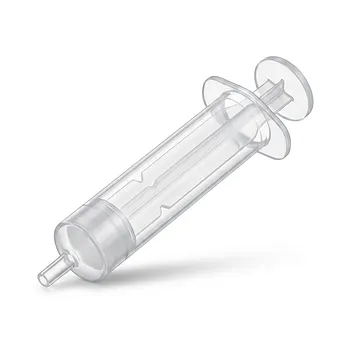
- Corrosion Resistant PFA Syringe Translucent Visual Fluoropolymer Labware 10ml Chemical Handling Tool
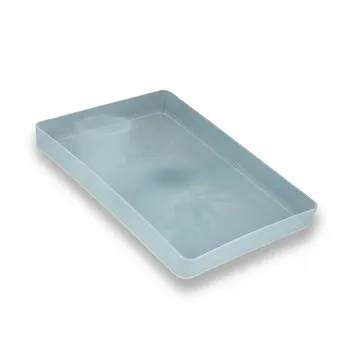
- Customizable PFA Square Tray Corrosion Resistant High Temperature Large Petri Dish Electrolytic Cell
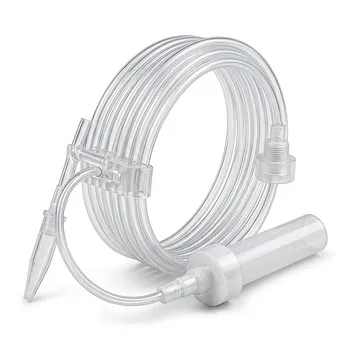
- Custom PFA Tubing 1/4 Inch High Purity Corrosion Resistant Fluoropolymer Tube with Welding and Machining Services
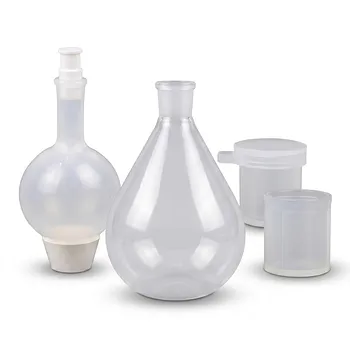
- PFA Eggplant Flask Custom Molded Pear Shaped Laboratory Flask Corrosion Resistant Glass Alternative
- High Purity PFA Beaker with Handle and Large Capacity Washable Soak Basket Multi Spec Teflon Laboratory Labware
People Also Ask
- How does the incorporation of comonomers such as perfluoropropyl vinyl ether (PPVE) alter the molecular structure and processing characteristics of TFE-based fluoropolymers like PFA compared to standard PTFE?
- Why do PFA fluoropolymer laboratory products offer different melt-processability and structural toughness compared to standard PTFE labware?
- PFA vs FEP: Which is Better for High-Temperature Lab Equipment?
- How does the removal of C8 (APFO) processing aids impact the chemical purity of solid fluoropolymer laboratory tools and fluid handling products? Discover the key benefits of C8-free PTFE, PFA, and FEP for trace analysis and high-purity applications.
- How does increasing fluorine content affect the physical and chemical performance of fluoropolymer laboratory supplies and components?