The standard ASTM methods depend on the fluoropolymer form and whether it is melt-processible. For raw fluoropolymer powders, the core characterization methods are ASTM D4464 for particle size, ASTM D895 for apparent density, ASTM D4567 for specific surface area, and ASTM D4591 for melting behavior by DSC. ASTM D1238 is commonly used for melt flow rate in melt-processible materials such as PFA and PVDF, but it is generally not an appropriate melt-flow test for conventional non-melt-processible PTFE.
The correct ASTM test panel is resin-specific: powder morphology and thermal behavior are central for PTFE, while melt flow and rheology become more meaningful for thermoplastic grades such as PFA and PVDF.
Start With the Resin Classification
Granular PTFE Resins
ASTM D4894 covers granular PTFE resins. These materials are typically consolidated by compression molding and sintering before being machined or used in molded components.
Fine Powder PTFE Resins
ASTM D4895 covers PTFE fine powders intended for paste extrusion. Particle size, apparent density, and specific surface area strongly influence paste behavior and the quality of tubing, thin-wall products, and porous structures.
PTFE Dispersions
ASTM D4441 covers aqueous PTFE dispersions used for coatings, films, and related applications. Dispersion quality cannot be characterized adequately using only the tests applied to dry granular or fine-powder resins.
Thermoplastic Fluoropolymers
ASTM D3307 is associated with PFA resins, while ASTM D3222 covers unmodified PVDF resins. These materials can generally be remelted and processed, so melt flow and rheological testing are more directly applicable than they are to conventional PTFE.
Characterizing Raw Powder Properties
Particle Size: ASTM D4464
ASTM D4464 measures average particle size using laser light scattering. Particle-size distribution affects powder handling, packing, surface quality, paste extrusion, and consistency during subsequent processing.
The test result should be interpreted alongside the resin form. A particle-size value for a PTFE fine powder does not describe the same processing behavior as a value for a granular PTFE resin.
Apparent Density: ASTM D895
ASTM D895 is used to determine bulk or apparent density by measuring the mass of powder occupying a defined volume. Results are commonly reported as mass per unit volume, such as grams per 1,000 milliliters.
Apparent density is useful for evaluating powder packing, filling behavior, batch-to-batch consistency, and material handling. It is not the same as the density of a fully consolidated polymer specimen.
Specific Surface Area: ASTM D4567
ASTM D4567 measures specific surface area, typically expressed in square meters per gram. This property provides an additional view of powder morphology that average particle size alone may not capture.
Two powders can have similar average particle sizes but different surface areas because of differences in shape, porosity, agglomeration, or particle-size distribution.
Measuring Thermal Properties
PTFE Melting Behavior: ASTM D4591
ASTM D4591 determines the peak melting point or melting transition of fluoropolymers using Differential Scanning Calorimetry. The result helps identify resin consistency and thermal behavior during sintering or other high-temperature processing.
For PTFE, the DSC response must be interpreted carefully because processing history, crystallinity, and thermal history can influence the observed transition.
Thermoplastic Melting Point: ASTM D3418
ASTM D3418 is commonly used to determine melting and crystallization temperatures of thermoplastic polymers by DSC. It is particularly relevant to melt-processible fluoropolymers such as PFA and PVDF.
The measured transition is a thermal characteristic, not a complete processing specification. Processing temperature selection also depends on residence time, shear, equipment design, and the specific resin grade.
Thermal Stability and Processing Limits
A melting point test does not by itself establish a safe continuous-use temperature or thermal-decomposition limit. Those decisions require the resin manufacturer’s data and, where relevant, additional thermal stability or service-performance testing.
Measuring Flow and Rheology
Melt Flow Rate: ASTM D1238
ASTM D1238 measures melt flow rate using an extrusion plastometer. It is useful for melt-processible fluoropolymers, including many PFA and PVDF grades, when the specified temperature and load match the applicable material specification.
PVDF testing may use ASTM D1238 at approximately 297°C with a 49 N load under the relevant specification. The exact condition must be confirmed against the resin standard or manufacturer’s technical data.
Why Conventional PTFE Is Different
Conventional PTFE is generally considered non-melt-processible under ordinary extrusion-plastometer conditions. It does not flow like PFA, FEP, or PVDF during standard melt-flow testing.
Consequently, applying ASTM D1238 indiscriminately to PTFE can produce an invalid or misleading result. PTFE quality is more commonly assessed through powder properties, melting behavior, specific gravity, tensile performance, and resin-specific specification tests.
Capillary Rheology: ASTM D3835
ASTM D3835 evaluates rheological properties using a capillary rheometer. It can provide useful flow information for melt-processible fluoropolymers when melt flow rate alone does not adequately describe processing behavior.
Rheology is especially valuable when comparing grades for extrusion, injection molding, or other operations where shear rate and residence time affect performance.
Measuring Consolidated Material Properties
Specific Gravity: ASTM D792 or D1505
ASTM D792 and ASTM D1505 are used to measure the density or specific gravity of molded or otherwise prepared specimens. For thermoplastic fluoropolymers, specific gravity can serve as an indirect indicator of resin consistency and, in some contexts, molecular-weight-related differences.
This measurement is performed on a prepared specimen rather than loose powder. The preparation method must therefore be controlled because porosity, voids, crystallinity, and molding history can influence the result.
Tensile Properties: ASTM D638
ASTM D638 measures tensile strength, elongation, and related tensile behavior on molded or machined specimens. It is relevant to PVDF and other thermoplastic fluoropolymers, and it is also used in specifications for finished PTFE forms.
Tensile results are strongly dependent on specimen preparation, orientation, crystallinity, test speed, and conditioning. They should be compared only when the test conditions are equivalent.
Flexural Properties: ASTM D790
ASTM D790 measures flexural strength or flexural modulus. It is commonly used to characterize molded thermoplastic fluoropolymer specimens, including PVDF.
Flexural modulus is useful for comparing stiffness, but it should not be treated as a direct substitute for tensile modulus or long-term dimensional-stability data.
Additional Performance Tests
Depending on the resin and application, ASTM D256 may be used for notched Izod impact resistance, ASTM D648 for heat deflection temperature, and ASTM D696 for the coefficient of linear thermal expansion.
Electrical and flammability characterization may include ASTM D257 for DC volume resistivity, ASTM D149 for dielectric strength, ASTM D150 for dielectric constant and dissipation factor, and ASTM D2863 for limiting oxygen index.
Understanding the Trade-offs
Do Not Use One Test Panel for Every Fluoropolymer
PTFE, PFA, and PVDF differ substantially in molecular structure, processing behavior, and commercial specification practice. A test that is meaningful for PVDF, such as melt flow rate, may be unsuitable for conventional PTFE.
Powder Tests Do Not Predict Every Finished-Part Property
Particle size, apparent density, and surface area are valuable indicators of raw-material consistency. They do not directly establish the tensile strength, electrical insulation, dimensional stability, or chemical performance of a finished component.
DSC Results Require Controlled Thermal History
Melting and crystallization transitions can change with heating rate, cooling rate, prior processing, and specimen history. Comparing DSC results requires consistent test preparation and reporting conditions.
Material Standards and Test Methods Serve Different Purposes
An ASTM material specification, such as ASTM D4894, ASTM D4895, ASTM D3307, or ASTM D3222, defines requirements for a resin category. An ASTM test method, such as D4464 or D3418, defines how a particular property is measured.
A reliable qualification program uses both: the applicable material specification establishes what must be controlled, and the referenced test methods establish how it is measured.
Making the Right Choice for Your Goal
The most defensible approach is to select tests according to the polymer’s resin form, processing method, and intended application.
- If your primary focus is PTFE powder consistency: Use ASTM D4464 for particle size, ASTM D895 for apparent density, ASTM D4567 for specific surface area, and ASTM D4591 for DSC melting behavior, while applying the appropriate PTFE specification such as ASTM D4894, D4895, or D4441.
- If your primary focus is PFA processability: Use the applicable PFA resin specification, typically ASTM D3307, together with ASTM D1238 for melt flow rate and ASTM D3418 for DSC melting behavior.
- If your primary focus is PVDF resin qualification: Use ASTM D3222 with ASTM D1238 for melt flow, ASTM D3835 for rheology when needed, ASTM D3418 for melting behavior, and ASTM D792 or D1505 for specific gravity.
- If your primary focus is finished-part performance: Add ASTM D638, D790, D256, D648, D696, and the relevant electrical or flammability methods using controlled molded specimens.
A technically sound ASTM test program matches each method to the fluoropolymer’s chemistry, physical form, and processing route.
Summary Table:
| Property | Test Method | Applicable Polymers | Key Notes |
|---|---|---|---|
| Particle Size | ASTM D4464 | PTFE, PFA, PVDF | Laser light scattering; powder morphology and handling. |
| Apparent Density | ASTM D895 | PTFE, PFA, PVDF | Bulk density; packing and consistency. |
| Specific Surface Area | ASTM D4567 | PTFE, PFA, PVDF | Surface area per gram; distinguishes morphology. |
| Melting Behavior (DSC) | ASTM D4591 | PTFE | Peak melting; thermal history sensitive. |
| Melting/Crystallization (DSC) | ASTM D3418 | PFA, PVDF | For thermoplastics; transition temperatures. |
| Melt Flow Rate | ASTM D1238 | PFA, PVDF | For melt-processible; not for conventional PTFE. |
| Capillary Rheology | ASTM D3835 | PFA, PVDF | For shear-dependent flow. |
| Specific Gravity | ASTM D792/D1505 | PFA, PVDF | On molded specimens; porosity and crystallinity. |
| Tensile Strength | ASTM D638 | PVDF, PTFE (finished) | Preparation dependent. |
| Flexural Properties | ASTM D790 | PVDF | Stiffness comparison. |
| Additional Tests | ASTM D256, D648, D696, D257, D149, D150, D2863 | Various | For impact, HDT, CTE, electrical, flammability. |
| Resin Specifications | D4894, D4895, D4441, D3307, D3222 | Specific classes | Define requirements; complement test methods. |
Achieve accurate fluoropolymer characterization with KINTEK! Our high-performance PTFE, PFA, and PVDF labware and custom CNC machined parts are designed to meet rigorous ASTM standards. From powders to finished components, we support your testing needs. Contact our experts today to discuss your application and get a tailored solution. Contact Us
Related Products
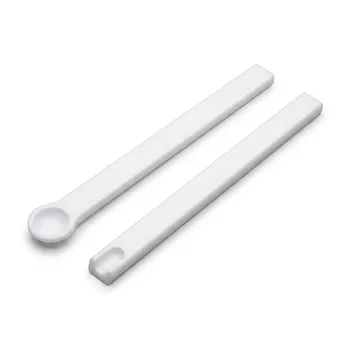
- Corrosion Resistant PTFE Sampling Spoon for High Purity Solid Powder Reagent Handling and Laboratory Chemical Transfer
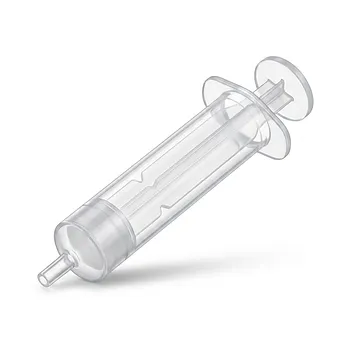
- Corrosion Resistant PFA Syringe Translucent Visual Fluoropolymer Labware 10ml Chemical Handling Tool
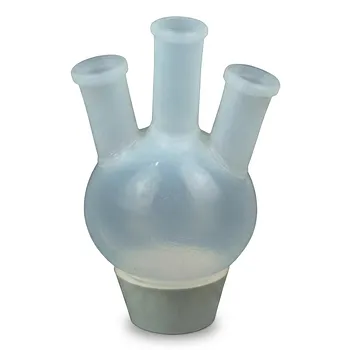
- Custom Corrosion Resistant PFA PTFE Multi Neck Laboratory Reaction Flask GL Standard Mouth Fluoropolymer Flasks
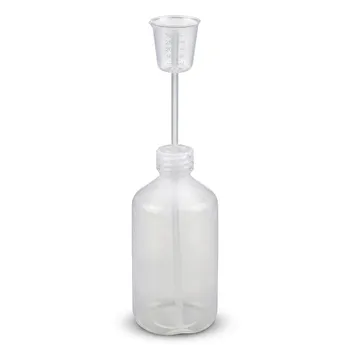
- Translucent PFA Bottle Top Dispenser for Corrosion Resistant Chemical Squeeze Extraction
- Custom PTFE Teflon Balls for Advanced Industrial Applications
People Also Ask
- How does PTFE's chemical resistance make it suitable for high-purity lab supplies and transfer systems? Discover its key benefits in handling extreme corrosives.
- How do the high melting point and non-flowing melt characteristics of PTFE influence custom machining? Discover key fabrication insights and design tips for lab fluid components.
- How do the low surface energy and non-wetting properties of PTFE fluoropolymers benefit precision laboratory fluid transfer components and analytical labware? Discover the advantages for your lab.
- How do fluoropolymers benefit fluid transfer systems and sample prep containers? Non-stick performance for improved recovery, reduced contamination, and easier cleaning.
- What factors should be considered when selecting a PTFE shovel for laboratory use? Ensure Chemical Inertness & Sample Integrity