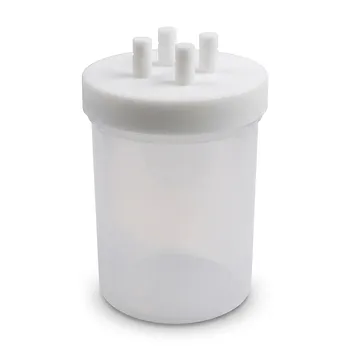
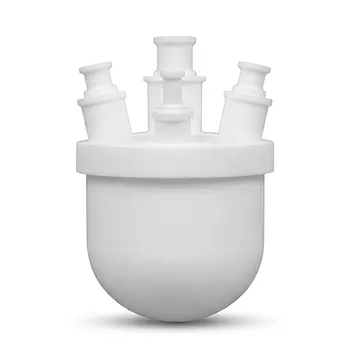
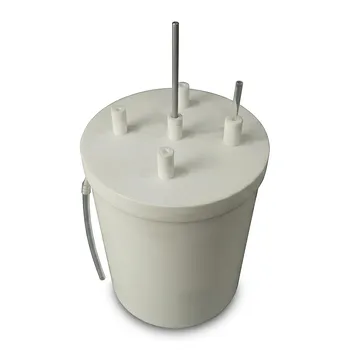
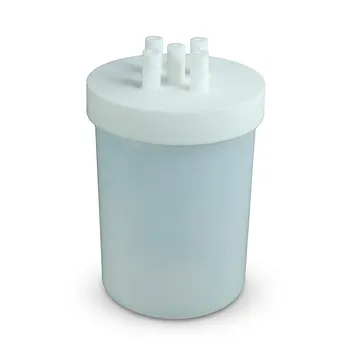
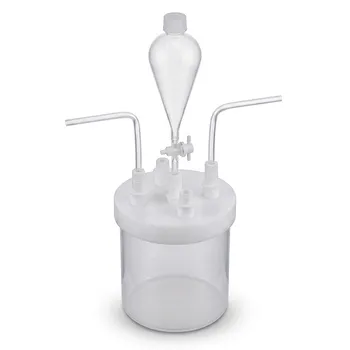
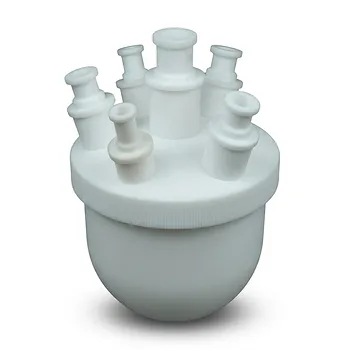
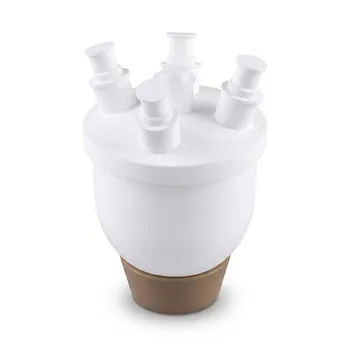
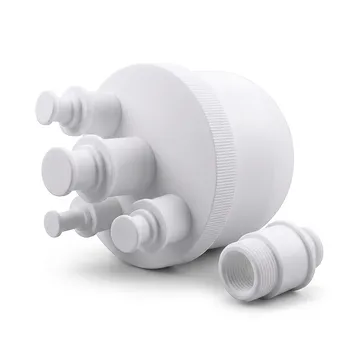
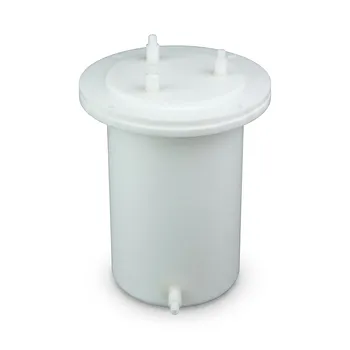
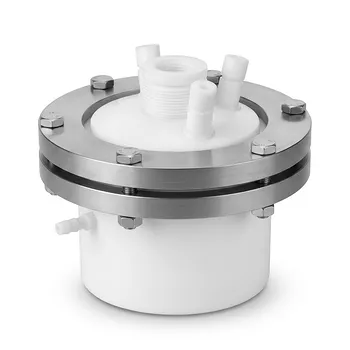
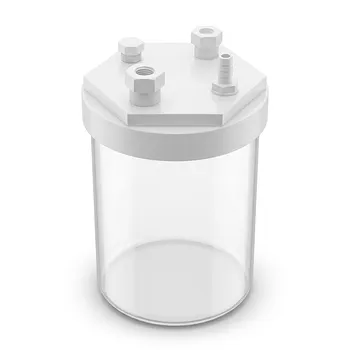
Ensuring high-performance liquid-phase oxidation requires reaction vessels that provide superior sealing and pressure resistance alongside temperature control systems capable of maintaining precise thermal stability. Specifically, for p-xylene oxidation using cobalt-doped sodium tantalate catalysts, the vessel must hold a stable oxygen atmosphere (typically at 1 atm) while the thermal system maintains a constant temperature, such as 393 K.
Core Takeaway: To achieve reproducible results in the selective oxidation of p-xylene, your equipment must strictly eliminate pressure leaks and thermal fluctuations to facilitate efficient mass transfer across the gas-liquid-solid three-phase boundary.
Structural Integrity of the Reaction Vessel
Superior Sealing and Pressure Resistance
The reaction vessel must be designed with high-grade sealing mechanisms to prevent any loss of the reactant gas.
Maintaining a stable oxygen atmosphere (e.g., at 1 atmosphere) is critical for consistent chemical kinetics throughout the test duration.
Any compromise in pressure resistance can lead to inaccurate performance evaluations of the catalyst and potential safety hazards.
Facilitating Multi-Phase Interaction
The oxidation of p-xylene is a complex gas-liquid-solid three-phase reaction.
The vessel must be configured to allow the oxygen (gas), p-xylene (liquid), and cobalt-doped sodium tantalate (solid catalyst) to interact efficiently.
Proper vessel design ensures that mass transfer is not the limiting factor, allowing the true catalytic activity to be measured accurately.
Precision in Thermal Regulation
Constant Temperature Maintenance
The temperature control system must be capable of holding the reaction at a specific set point, such as 393 K, without significant drift.
Thermal stability is vital because even minor fluctuations can significantly alter the reaction rate and the selectivity of the process.
High-precision sensors and feedback loops are necessary to ensure the system reacts quickly to any internal heat changes during the oxidation process.
Impact on Selective Oxidation
The primary goal of these tests is often the selective oxidation of p-xylene into p-tolualdehyde (PTALD).
Precise temperature control ensures that the energy input remains within the narrow window required for PTALD production.
Inconsistent heating can lead to over-oxidation or the formation of unwanted byproducts, skewing the results of the catalyst evaluation.
Understanding the Trade-offs and Pitfalls
Risks of Pressure Fluctuations
If the sealing is inadequate, oxygen levels may drop, leading to incomplete oxidation and inconsistent data.
Fluctuating pressure can also disrupt the three-phase equilibrium, making it impossible to determine if catalyst performance is due to the material or the environment.
Challenges of Thermal Overshoot
In high-precision systems, "overshooting" the target temperature during the initial heating phase is a common risk.
If the temperature exceeds the target (e.g., 393 K) even briefly, it may trigger secondary reactions that contaminate the final product.
Robust PID (Proportional-Integral-Derivative) controllers are often required to mitigate these thermal spikes effectively.
Implementation Recommendations for Reliable Results
To ensure your p-xylene oxidation tests are both accurate and reproducible, consider the following strategic focuses:
- If your primary focus is reproducible catalyst benchmarking: Prioritize a vessel with certified pressure-holding capabilities and a stable oxygen feed to ensure every test starts under identical atmospheric conditions.
- If your primary focus is maximizing p-tolualdehyde (PTALD) yield: Invest in a high-precision temperature control system with a tolerance of ±0.1 K to maintain the specific kinetic environment required for selective oxidation.
- If your primary focus is analyzing mass transfer efficiency: Focus on the vessel's internal geometry and stirring capabilities to optimize the interaction between the gas, liquid, and solid phases.
By strictly adhering to these mechanical and thermal requirements, you ensure that your experimental data reflects the true potential of your catalytic materials.
Summary Table:
| Requirement Type | Specific Need | Impact on Results |
|---|---|---|
| Structural Sealing | Leak-proof 1 atm O2 Atmosphere | Maintains consistent chemical kinetics and safety |
| Phase Interaction | Gas-Liquid-Solid 3-Phase Design | Prevents mass transfer from limiting catalytic activity |
| Thermal Precision | Constant 393 K Maintenance | Ensures selectivity for p-tolualdehyde (PTALD) |
| Regulation System | PID Feedback Controllers | Mitigates thermal overshoot and secondary reactions |
Optimize Your Chemical Synthesis with KINTEK
Elevate the precision of your liquid-phase oxidation tests with KINTEK’s world-class laboratory supplies. From high-purity PFA reaction vessels and PTFE-lined hydrothermal synthesis liners to custom-machined fluid transfer components like tubing, valves, and fittings, we provide the hardware necessary to maintain absolute thermal and atmospheric stability.
Whether your research requires standard labware—such as beakers, reagent bottles, and centrifuge tubes—or complex, non-standard bespoke laboratory setups designed through our end-to-end custom CNC fabrication, KINTEK delivers high-performance fluoropolymer solutions tailored to your exact specifications. Don't let pressure leaks or thermal spikes compromise your catalyst benchmarking.
Contact KINTEK today to discuss your custom project and ensure your laboratory is equipped with the highest quality PFA and PTFE apparatus for reproducible, high-yield results!
References
- Masato Yanagi, Nobuyuki Ichikuni. Calcination-driven Co4+ incorporation in hydrothermally synthesized NaTaO3. DOI: 10.1093/chemle/upaf053
This article is also based on technical information from Kintek Knowledge Base .
Related Products
- High Purity PTFE Reaction Vessel with Electric Stirring System and Customizable 5L Tank including Buchner Funnel Filtration Assembly
- High Purity PFA Reaction Tank for Proton Exchange Membrane Electrolysis and Water Oxygen Separation Custom Labware
- High Purity Custom PTFE Laboratory Reaction Tank with Baffles for Low Background Trace Analysis
- High Purity PTFE Multi Neck Reaction Flask for Corrosive Chemical Processing and Custom Industrial Laboratory Synthesis
- PTFE 10L Reaction Vessel with Stirring Paddle Customizable Corrosion Resistant High Temperature Reactor for Biopharmaceutical and Chemical Processing
People Also Ask
- Why are fluoroplastic (PTFE) reaction vessels recommended for Methylene Blue (MB) adsorption kinetic experiments?
- Why is a PTFE reaction vessel required for Ti3C2Tx MXene synthesis? Ensure Safe HF Etching & High Purity
- Ion Activation Reaction Vessel Requirements: Why PTFE is Critical for Membrane Performance
- What reaction vessel and fluid handling considerations are necessary for living cationic polymerization of fluorinated monomers involving Lewis acid catalysts? Key design and safety tips
- Why are high-purity PTFE or PFA reaction vessels recommended for the synthesis of PANI-TiC hybrid materials? - Guide