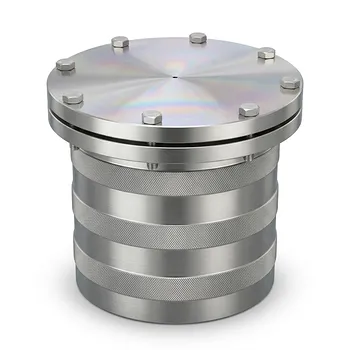
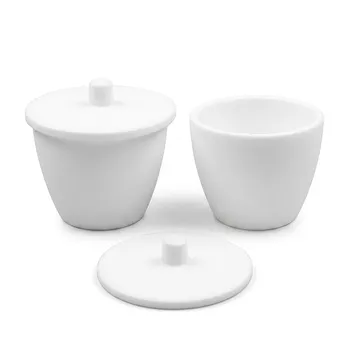
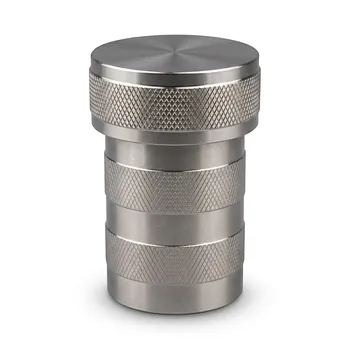
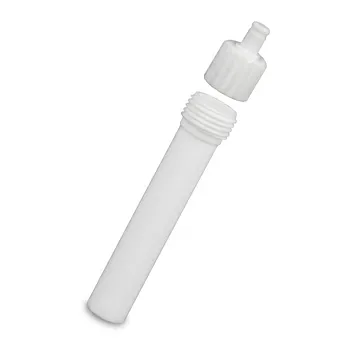
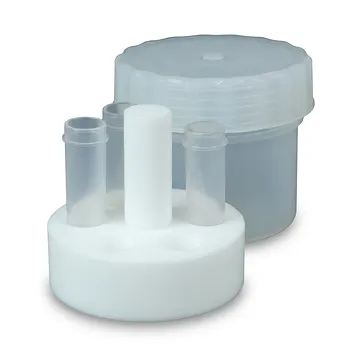
The Teflon-lined stainless steel autoclave serves as the critical pressure vessel required to transition niobium precursors into the specific ortho-niobium pentoxide (ortho-$Nb_2O_5$) crystalline phase. By creating a sealed environment, the autoclave allows the internal temperature to rise above the boiling point of the solvent, generating autogenous pressure that facilitates the dissolution and recrystallization of precursors. This process is essential for achieving the high crystallinity and precise morphology required for advanced material applications.
Core Takeaway: The autoclave provides a dual-function environment: the stainless steel shell maintains the mechanical strength to handle high autogenous pressures, while the Teflon liner ensures a chemically inert space that prevents metal contamination and enables the precise formation of the ortho-$Nb_2O_5$ phase.
Engineering the Hydrothermal Environment
Generating Autogenous Pressure
In the synthesis of ortho-$Nb_2O_5$, the autoclave acts as a closed system where heating the liquid precursor solution generates autogenous pressure. This pressure exceeds atmospheric levels, significantly increasing the solubility of the niobium precursors and allowing them to react at lower temperatures than traditional solid-state methods.
Facilitating Phase Transformation
The hydrothermal environment is unique because it promotes the dissolution and recrystallization of molecules into specific crystalline structures. By precisely controlling the internal temperature and pressure, researchers can drive the niobium atoms into the "ortho" lattice arrangement rather than other competing phases like pseudo-hexagonal or monoclinic $Nb_2O_5$.
Morphological Control
Beyond just the crystal phase, the autoclave environment dictates the physical shape or morphology of the $Nb_2O_5$ particles. The constant-temperature conditions within the vessel ensure uniform nucleation, which results in consistent nanostructures such as nanowires or nanosheets, depending on the specific precursors used.
The Synergistic Role of Materials
Teflon (PTFE) as a Chemical Shield
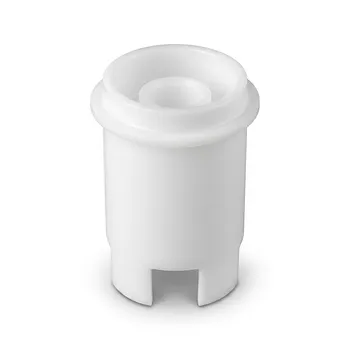
The Teflon (polytetrafluoroethylene) liner is utilized for its exceptional chemical inertness and resistance to corrosion. It prevents the precursor solution—which may contain acidic or highly polar reagents—from reacting with the metallic walls of the autoclave, thereby ensuring the synthesized ortho-$Nb_2O_5$ remains free of iron, chromium, or nickel impurities.
Stainless Steel for Structural Integrity
While Teflon provides the chemical environment, the external stainless steel casing provides the necessary mechanical strength. It safely contains the high internal pressures generated during the heating process, which can often reach temperatures up to 240°C, ensuring the vessel does not rupture during the long-duration crystallization process.
Maintaining a High-Purity Environment
Because Teflon has an extremely low impurity leaching rate, it is the gold standard for synthesizing high-purity oxides. This is particularly vital for $Nb_2O_5$ used in electronics or catalysis, where even trace amounts of metal ions from the autoclave body could degrade the material's performance.
Understanding the Trade-offs
Temperature Limitations of PTFE
While Teflon is highly inert, it has a strict thermal ceiling, typically around 250°C. If the synthesis of a specific niobium phase requires temperatures exceeding this limit, the liner may deform or release toxic fumes, requiring the use of more expensive gold or platinum-lined vessels.
Thermal Lag and Gradient Issues
The thick stainless steel walls required for safety introduce thermal inertia. This means the internal precursor solution may take significant time to reach the target temperature, and cooling it down is equally slow, which can affect the growth kinetics of the ortho-$Nb_2O_5$ crystals if not carefully monitored.
Pressure Safety Margins
Operating an autoclave involves inherent risks associated with stored energy. If the vessel is overfilled (exceeding the 70-80% safety limit), the liquid expansion can lead to a catastrophic pressure spike that exceeds the mechanical limits of the stainless steel shell.
Applying This to Your Synthesis Goals
How to Achieve Optimal Results
When utilizing a Teflon-lined autoclave for niobium synthesis, your approach should vary based on your specific requirements for the final product.
- If your primary focus is phase purity: Ensure the autoclave is maintained at a constant, calibrated temperature for the full duration of the reaction to prevent the formation of mixed $Nb_2O_5$ phases.
- If your primary focus is preventing contamination: Inspect the Teflon liner for any staining or pitting before use, as degraded PTFE can trap and later release impurities into your niobium solution.
- If your primary focus is nanostructure uniformity: Pay close attention to the cooling rate of the autoclave, as slow natural cooling often produces larger, better-defined single crystals compared to rapid quenching.
By mastering the balance between the chemical protection of the Teflon and the mechanical containment of the steel, you can reliably produce high-quality ortho-niobium pentoxide for any technical application.
Summary Table:
| Component | Primary Function | Benefit for Ortho-Nb2O5 |
|---|---|---|
| Teflon (PTFE) Liner | Chemical Inertness | Prevents metal contamination; ensures high-purity crystalline phase. |
| Stainless Steel Shell | Structural Integrity | Safely contains high autogenous pressure required for dissolution. |
| Hydrothermal System | Phase Transformation | Drives niobium atoms into specific "ortho" lattice arrangements. |
| Temperature Stability | Morphological Control | Ensures uniform nucleation for consistent nanowires or nanosheets. |
Elevate Your Synthesis Precision with KINTEK
High-purity material synthesis like ortho-Nb2O5 demands equipment that never compromises. KINTEK specializes in high-performance fluoropolymer solutions tailored for the most rigorous laboratory environments.
From everyday basic labware—including beakers, measuring cylinders, crucibles, and reagent bottles—to advanced reaction apparatus like hydrothermal synthesis liners, microwave digestion vessels, and custom electrochemical cells, we manufacture virtually every laboratory supply crafted from premium PTFE and PFA.
Our expertise extends to:
- Fluid Transfer & Filtration: Tubing, valves, fittings, and separatory funnels.
- General Consumables: Stirring bars, O-rings, gaskets, and high-purity sample prep tools.
- Bespoke Engineering: End-to-end custom CNC fabrication for non-standard machined parts and complex laboratory setups.
Whether you require high-volume standard orders or a bespoke reaction vessel, KINTEK delivers the chemical inertness and structural reliability your research deserves.
Contact KINTEK today to secure your high-performance labware
References
- Tarmizi Taher, Aditya Rianjanu. High Surface Area Ortho-Nb2O5 as Bifunctional Adsorbent and Photocatalyst for Efficient Removal of Tetracycline Antibiotics from Wastewater. DOI: 10.26554/sti.2025.10.3.936-943
This article is also based on technical information from Kintek Knowledge Base .
Related Products
- Custom TFM Reaction Vessel with Stainless Steel Jacket and PTFE Inner Cup for High Corrosion Resistance
- High Purity Corrosion Resistant Teflon Crucible Low Background Laboratory PTFE Vessel for Trace Analysis and Acid Digestion
- High Temperature Corrosion Resistant Hydrothermal Synthesis Reactor with TFM Inner Liner and Straight Cylinder Design
- High Purity PTFE Microwave Digestion Vessel Replacement Liner for Acid Sample Preparation and Trace Analysis
- PTFE Lined High Pressure Digestion Vessel 50ml High Temperature Hydrothermal Synthesis Tank
People Also Ask
- Why are high-performance pressure-resistant reaction vessels required for oxygen-assisted hydrothermal conversion at 150 °C?
- Why are high-quality fluoropolymer-lined reaction vessels required for alk-Ti3C2Tx MXene? Ensure Purity & HF Resistance
- How do magnetic stirring and reaction vessels impact MOF-derived carbon quality? Optimize Your Composite Performance
- Why are PTFE-lined reaction vessels necessary for forced degradation studies? Ensure high-purity results and accuracy.
- Why is a high-purity PTFE lined reaction vessel required for the acidic etching of MXenes? Ensure Material Purity.