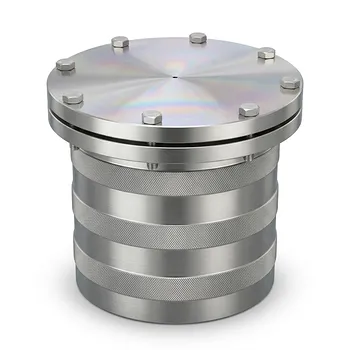
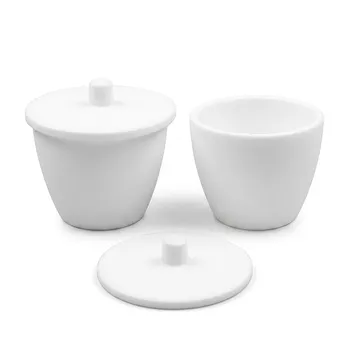
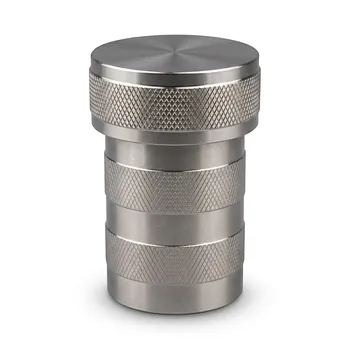
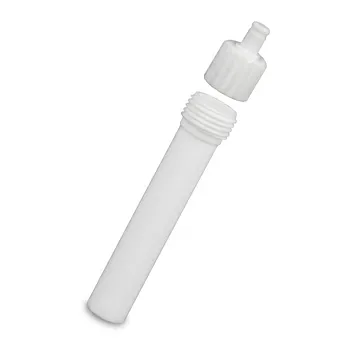
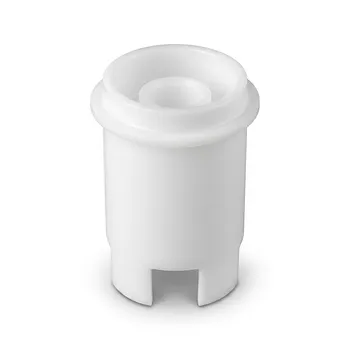
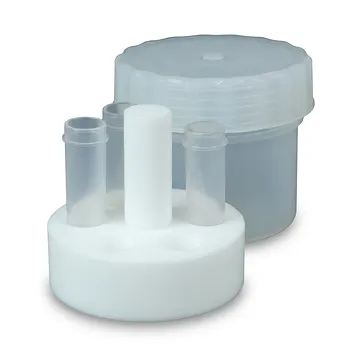
The Teflon-lined stainless steel autoclave serves as the primary pressure vessel required to transform aluminosilicate gels into high-crystallinity Linde Type A (LTA) zeolite. This specialized equipment provides a sealed, constant-temperature environment (typically 90 °C) and generates the autogenous pressure necessary for the gel to rearrange and grow. The dual-material construction ensures the reaction remains pure while safely containing the energy of the hydrothermal process.
Core Takeaway: The autoclave functions as a chemically inert micro-reactor that balances the extreme alkaline resistance of Teflon with the mechanical strength of stainless steel to facilitate controlled zeolite crystallization.
The Synergistic Design of the Vessel
Teflon’s Chemical Shield Against Alkalinity
LTA zeolite synthesis requires a highly alkaline environment, often utilizing 3 M to 4 M sodium hydroxide (NaOH) solutions. At the 90 °C synthesis temperature, these strong bases are highly corrosive and would rapidly erode standard metallic containers.
The Polytetrafluoroethylene (PTFE/Teflon) liner provides exceptional chemical inertness and corrosion resistance. By acting as a physical barrier, it prevents the reaction liquid from leaching metal impurities from the outer shell, ensuring the final zeolite product remains uncontaminated.
The Structural Integrity of the Steel Shell
While Teflon provides the necessary chemical protection, it lacks the structural rigidity to withstand the internal forces generated during heating. The external stainless steel casing provides the mechanical strength required to contain the reaction safely.
This outer shell ensures that the vessel can withstand the autogenous pressure—the internal pressure created by steam and expanding gases—without deforming or bursting. This structural support is what allows the internal environment to remain stable throughout the crystallization period.
Facilitating the Crystallization Process
Maintaining Autogenous Pressure
The autoclave creates a sealed hydrothermal environment where the pressure rises naturally as the temperature increases. This pressure is a critical driver for the dissolution-recrystallization of the aluminosilicate precursors.
Under these pressurized conditions, the solubility of the starting materials increases, allowing the components to migrate and organize into the specific LTA framework structure. Without this pressure, the gel would likely fail to reach the density and order required for high-quality crystals.
Ensuring Thermal Stability for Gel Rearrangement
Crystallization of LTA zeolite is a time-sensitive process that requires a constant-temperature environment, usually maintained at 90 °C. The mass and insulation properties of the autoclave assembly help minimize temperature fluctuations.
Steady heat ensures the orderly development of the zeolite pores and prevents the formation of competing crystalline phases. This thermal precision is essential for achieving the specific morphology and high crystallinity that define Linde Type A zeolites.
Understanding the Trade-offs and Limitations
Temperature and Pressure Constraints
While highly effective, the Teflon liner has a thermal threshold, typically losing structural integrity above 240 °C to 250 °C. For LTA synthesis (90 °C), this is well within safety limits, but higher-temperature zeolites require careful monitoring of the liner's condition.
Sealing and Contamination Risks
The effectiveness of the autoclave depends entirely on the integrity of the seal between the liner and the steel cap. If the seal is compromised, the alkaline solution can seep between the liner and the shell, leading to "crevice corrosion" of the stainless steel.
Furthermore, repeated use of the Teflon liner can lead to memory effects, where trace amounts of previous reactions are trapped in microscopic pores. Regular inspection and rigorous cleaning are mandatory to maintain the purity required for advanced material synthesis.
How to Apply This to Your Synthesis Goals
To achieve the best results in zeolite production, consider the following technical priorities:
- If your primary focus is High Product Purity: Ensure the Teflon liner is free of scratches or pitting and use a dedicated liner for LTA synthesis to avoid cross-contamination from other metal ions.
- If your primary focus is Reproducible Crystallinity: Use a calibrated oven to heat the autoclave, as the thermal mass of the stainless steel shell requires time to reach equilibrium with the internal gel.
- If your primary focus is Laboratory Safety: Never exceed the maximum fill volume (usually 60-80%) of the Teflon liner to allow sufficient headspace for pressure expansion during the 90 °C heating cycle.
By mastering the balance between chemical resistance and mechanical containment, you ensure the successful transformation of raw aluminosilicate gels into functional LTA zeolites.
Summary Table:
| Component/Feature | Role in LTA Synthesis | Benefit to Process |
|---|---|---|
| Teflon (PTFE) Liner | Resists 3M-4M NaOH alkalinity | Prevents contamination and leaching |
| Stainless Steel Shell | Contains autogenous pressure | Ensures structural safety at 90 °C |
| Sealed Environment | Facilitates dissolution-recrystallization | Drives high-crystallinity LTA framework |
| Thermal Stability | Maintains constant 90 °C environment | Ensures orderly pore development |
Elevate Your Synthesis with KINTEK’s Precision Engineering
Achieving high-crystallinity LTA zeolites requires equipment that never compromises on purity or safety. KINTEK specializes in high-performance fluoropolymer solutions tailored for the most demanding hydrothermal processes.
Our extensive range includes:
- Synthesis Tools: Hydrothermal synthesis liners, microwave digestion vessels, and custom electrochemical cells.
- Fluid & Filtration: Tubing, fittings, valves, separatory funnels, and filters.
- Essential Labware: High-purity beakers, crucibles, reagent bottles, and digestion tubes.
- Consumables: Stirring bars, O-rings, gaskets, and seal tapes.
Backed by end-to-end custom CNC fabrication, KINTEK manufactures virtually all laboratory supplies crafted from PTFE and PFA. Whether you require complex non-standard machined parts, bespoke laboratory setups, or high-volume orders, we maintain an exclusive focus on high-performance materials to deliver exactly what your research demands.
Ready to optimize your lab’s performance? Contact us today to discuss your custom fluoropolymer needs and discover how our expertise can support your next breakthrough.
References
- Cyrille Ghislain Fotsop, Franziska Scheffler. Cameroonian natural clay derived Linde type LTA zeolite: demystifying and understanding the impact of the synthesis process on adsorption efficiency. DOI: 10.1039/d5ma00915d
This article is also based on technical information from Kintek Knowledge Base .
Related Products
- Custom TFM Reaction Vessel with Stainless Steel Jacket and PTFE Inner Cup for High Corrosion Resistance
- High Purity Corrosion Resistant Teflon Crucible Low Background Laboratory PTFE Vessel for Trace Analysis and Acid Digestion
- High Temperature Corrosion Resistant Hydrothermal Synthesis Reactor with TFM Inner Liner and Straight Cylinder Design
- PTFE Lined High Pressure Digestion Vessel 50ml High Temperature Hydrothermal Synthesis Tank
- High Purity PTFE Microwave Digestion Vessel Replacement Liner for Acid Sample Preparation and Trace Analysis
People Also Ask
- Why are high-performance pressure-resistant reaction vessels required for oxygen-assisted hydrothermal conversion at 150 °C?
- Why are PTFE-lined reaction vessels necessary for forced degradation studies? Ensure high-purity results and accuracy.
- Why are high-quality fluoropolymer-lined reaction vessels required for alk-Ti3C2Tx MXene? Ensure Purity & HF Resistance
- How do magnetic stirring and reaction vessels impact MOF-derived carbon quality? Optimize Your Composite Performance
- Why is a high-purity PTFE lined reaction vessel required for the acidic etching of MXenes? Ensure Material Purity.