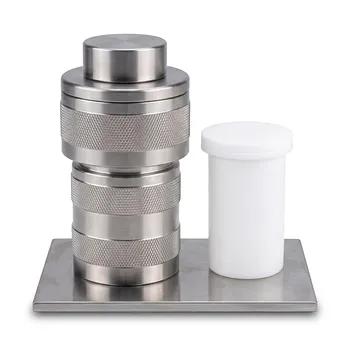
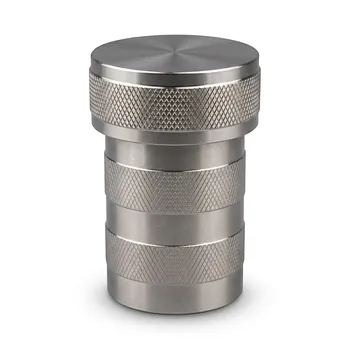
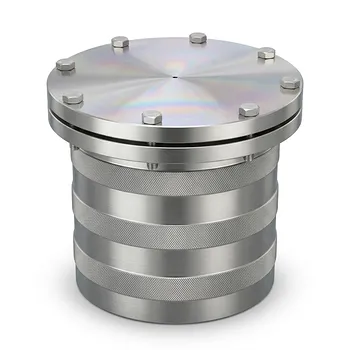
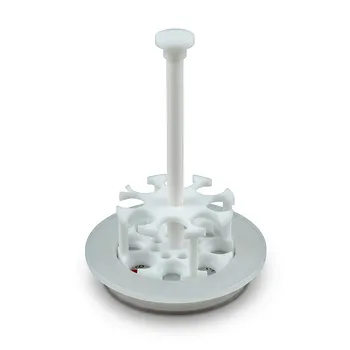
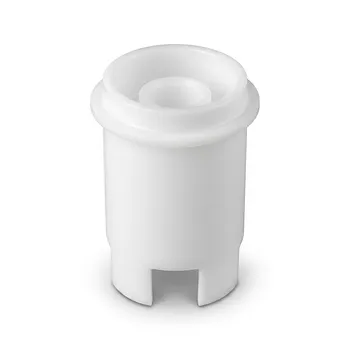
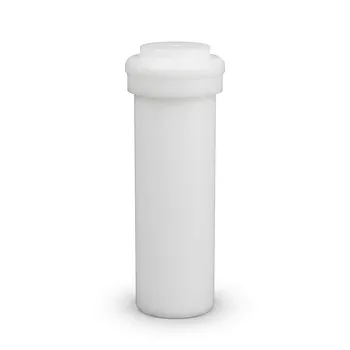
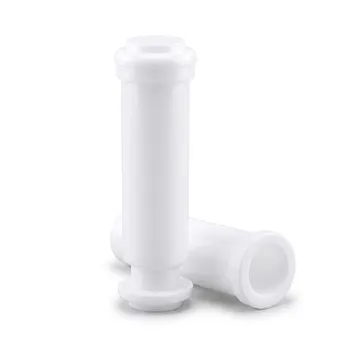
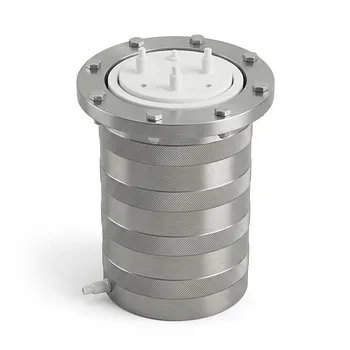
The stainless steel high-pressure autoclave serves as the critical reaction vessel that provides the sealed, high-temperature, and high-pressure environment necessary for the solvothermal synthesis of ZIF-67. Typically operated at temperatures around 120°C, it facilitates the coordination self-assembly of cobalt ions and 2-methylimidazole ligands within an ethanol solvent. This controlled environment is essential for achieving a high degree of crystallinity, reducing structural defects, and ensuring the formation of the characteristic regular dodecahedral morphology of the ZIF-67 framework.
The autoclave enables solvothermal synthesis by maintaining autogenous pressure, which allows the reaction to occur at temperatures above the solvent's boiling point. This physical environment is the primary driver for transforming precursors into a highly ordered, crystalline metal-organic framework (MOF).
Creating the Solvothermal Environment
Overcoming Solvent Boiling Points
The primary role of the autoclave is to provide a sealed environment where autogenous pressure builds as the solvent is heated. This pressure allows ethanol or other solvents to remain in a liquid or supercritical state at temperatures, such as 120°C, that far exceed their standard boiling points.
Enhancing Reaction Kinetics
Under these high-pressure conditions, the solubility of precursors is significantly increased. This enhances the movement and interaction of cobalt ions and organic ligands, accelerating the reaction kinetics required for the successful nucleation of the ZIF-67 structure.
Controlling Structural Integrity and Morphology
Driving Coordination Self-Assembly
The high-energy environment within the autoclave provides the thermal energy necessary to overcome activation barriers for coordination self-assembly. This process ensures that cobalt atoms and 2-methylimidazole ligands bond precisely to form the three-dimensional porous network.
Reducing Defects and Improving Crystallinity
By maintaining a stable, pressurized state, the autoclave allows for a slower, more uniform crystal growth process. This results in ZIF-67 catalysts with fewer structural defects and a more robust crystalline lattice compared to synthesis at room temperature.
Defining Geometric Morphology
The autoclave's controlled conditions are a prerequisite for achieving specific geometric shapes. In the case of ZIF-67, this environment ensures the consistent growth of regular dodecahedral crystals, which is vital for the material's performance as a catalyst.
Material Protection and Purity
The Function of the PTFE Liner
Most high-pressure autoclaves utilize a Polytetrafluoroethylene (PTFE) liner inside the stainless steel shell. This liner provides exceptional chemical inertness and corrosion resistance, protecting the outer steel walls from being eroded by the ligand solutions or metal precursors.
Preventing Metallic Contamination
The PTFE liner acts as a barrier that prevents metallic impurities from the stainless steel from leaching into the reaction mixture. This ensures the high purity of the ZIF-67 catalyst, which is critical for its subsequent electrochemical or catalytic applications.
Understanding the Trade-offs and Pitfalls
Pressure and Safety Risks
The primary trade-off of using a high-pressure autoclave is the inherent safety risk associated with pressurized vessels. Failure to monitor temperature or exceeding the filling limit (typically 60-80% of volume) can lead to dangerous pressure spikes or mechanical failure of the seal.
Scaling Limitations
While autoclaves are excellent for precision at the laboratory scale, they present scalability challenges. Batch processing in sealed vessels is more difficult to transition to continuous industrial production compared to open-air, room-temperature synthesis methods.
Liner Degradation
PTFE liners have temperature limitations, typically losing structural integrity above 250°C. For ZIF-67, the 120°C requirement is safe, but researchers must be cautious not to reuse degraded liners, as they can leak and lead to the permanent corrosion of the expensive stainless steel outer shell.
How to Apply This to Your Project
When selecting or operating an autoclave for ZIF-67 synthesis, consider your primary objective to optimize the results:
- If your primary focus is high crystallinity: Ensure the autoclave remains at a stable temperature (e.g., 120°C) for the full duration of the reaction to minimize lattice strain and defects.
- If your primary focus is catalyst purity: Always use a high-quality PTFE liner and inspect it for discoloration or pitting before each run to prevent iron or chromium contamination.
- If your primary focus is morphology control: Strictly control the cooling rate of the autoclave after the reaction, as rapid cooling can sometimes lead to crystal cracking or irregular shapes.
By mastering the pressurized environment of the autoclave, you can precisely tune the structural and chemical properties of ZIF-67 for advanced catalytic applications.
Summary Table:
| Feature | Role in ZIF-67 Synthesis | Benefit to Catalyst |
|---|---|---|
| Pressure Control | Maintains solvents above boiling point | Enables solvothermal reaction pathways |
| Thermal Stability | Facilitates coordination self-assembly | High degree of crystallinity and structure |
| PTFE Liner | Provides chemical inertness | Prevents metallic contamination and corrosion |
| Sealed Environment | Regulates reaction kinetics | Ensures regular dodecahedral morphology |
Elevate Your Research with KINTEK’s Precision Fluoropolymer Labware
At KINTEK, we understand that catalyst purity and structural integrity are non-negotiable. We manufacture virtually all imaginable laboratory supplies crafted from high-performance PTFE and PFA to support your most demanding solvothermal synthesis applications.
From everyday basic labware (beakers, crucibles, reagent bottles, and digestion tubes) to advanced reaction apparatus like hydrothermal synthesis liners, microwave digestion vessels, and custom electrochemical cells, we provide the chemical inertness your experiments require. Backed by end-to-end custom CNC fabrication, KINTEK is equipped to deliver everything from complex non-standard machined parts to high-volume orders with absolute precision.
Ready to optimize your ZIF-67 synthesis? Contact us today to discuss your custom laboratory needs!
References
- Y. Cai, Shihua Zhao. Preparation of cobalt based metal organic framework ZIF-67 catalyst for activating peroxymonosulfate and its catalytic system for rapid degradation of Rhodamine B and other dyes at high concentrations. DOI: 10.1039/d5ra08184j
This article is also based on technical information from Kintek Knowledge Base .
Related Products
- PTFE Lined High Pressure Digestion Vessel 50ml High Temperature Hydrothermal Synthesis Tank
- High Temperature Corrosion Resistant Hydrothermal Synthesis Reactor with TFM Inner Liner and Straight Cylinder Design
- Custom TFM Reaction Vessel with Stainless Steel Jacket and PTFE Inner Cup for High Corrosion Resistance
- High Performance TFM Microwave Digestion Vessel Rack 15 Position Customizable Sample Preparation Support
- High Pressure PTFE Digestion Vessel Inner Cup Holder Custom Corrosion Resistant Low Background Teflon
People Also Ask
- What are the benefits of using a PTFE-lined vessel for carbon-sulfur cathode treatment? Maximize Purity & Performance
- Why are PTFE-lined pressure digestion vessels required for the preparation of Ag/CeO2 catalysts? Purity & Performance
- What safety features are typically incorporated into high-pressure PTFE digestion vessel designs? Ensure Lab Safety
- What is the function of PTFE lined high-pressure vessels in g-C3N4 synthesis? Achieve High-Purity Material Growth
- Role of High-Pressure Digestion Tanks in Perovskite Synthesis: Achieve Superior Stability and Latent Heat