The PTFE-lined stainless steel autoclave serves as the primary reaction vessel for the solvothermal synthesis of $\text{Fe}_3\text{O}_4$ magnetic nanoparticle cores. It provides a sealed, high-pressure environment that allows chemical precursors to react at temperatures far exceeding their atmospheric boiling points. This setup is fundamental for achieving the necessary nucleation and growth stages that produce high-quality, crystalline magnetic nanoparticles.
Core Takeaway: The autoclave functions as a dual-layered system where the stainless steel shell provides structural strength to withstand autogenous pressure, while the PTFE liner ensures chemical purity by preventing corrosive reagents from leaching metal impurities into the magnetic cores.
Engineering a Controlled Reaction Environment
Generating Autogenous Pressure
The airtight seal of the autoclave allows the internal liquid to expand and vaporize as it is heated, creating autogenous pressure. This pressure is the physical basis for promoting the nucleation and growth of nanocrystals, ensuring a high-crystallinity, single-phase product.
Exceeding Atmospheric Boiling Points
By operating in a closed system, the autoclave enables solvents like ethylene glycol to remain in a liquid or supercritical state at temperatures such as 180°C to 200°C. This high-energy environment facilitates the dissolution and recrystallization of poorly soluble precursors into uniform nanoparticle morphologies.
Sustaining Thermal Stability
The heavy stainless steel outer shell acts as a heat reservoir, maintaining a stable thermal environment during extended reaction periods. This stability is critical for the uniform growth of the $\text{Fe}_3\text{O}_4$ crystal lattice over durations that can last up to 24 hours.
The Critical Role of the PTFE Liner
Preventing Metallic Contamination
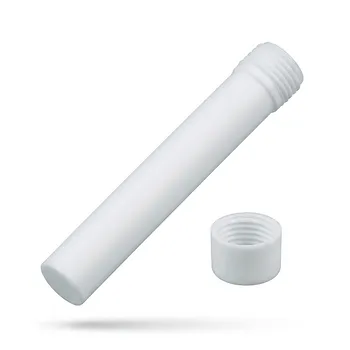
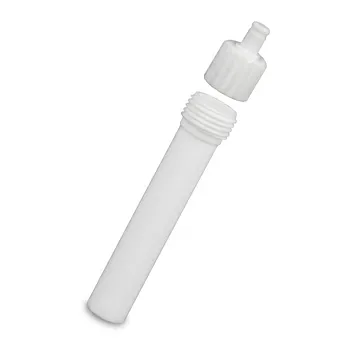
The PTFE (Polytetrafluoroethylene) liner acts as an internal protective barrier that prevents the reaction solution from contacting the metal shell. This isolation ensures that metal ion impurities from the stainless steel do not enter the $\text{Fe}_3\text{O}_4$ lattice, which would otherwise degrade the magnetic response of the nanoparticles.
Resistance to Corrosive Reagents
Solvothermal synthesis often involves aggressive reagents such as sodium acetate or alkaline stabilizers like sodium hydroxide. PTFE provides exceptional chemical corrosion resistance, protecting the structural integrity of the autoclave from these corrosive precursors.
Facilitating Product Recovery
The anti-adhesive properties and extremely smooth surface of the PTFE liner prevent the synthesized powder sediments from sticking to the vessel walls. This characteristic is vital for the efficient recovery and collection of the final solid precipitates after the reaction is complete.
Understanding Technical Limitations and Trade-offs
Temperature and Pressure Thresholds
While PTFE is highly inert, it has a physical limit; it can begin to deform or degrade if temperatures consistently exceed 250°C. Users must balance the need for high-temperature synthesis with the mechanical limits of the polymer liner to prevent vessel failure.
Thermal Lag and Cooling Rates
The thickness of the stainless steel shell creates significant thermal inertia, meaning the internal reaction temperature may lag behind the oven's set point. Precise control over cooling rates, which influences nanoparticle size distribution, can be difficult to manage due to this retained heat.
Risk of Liner Deformation
Under extreme pressure, the PTFE liner can undergo "creep," where it slightly changes shape to fit the steel cavity. If the liner is not properly seated or if the autoclave is overfilled, this deformation can lead to leaks or difficulty in removing the liner after the synthesis.
Maximizing Results in $\text{Fe}_3\text{O}_4$ Synthesis
To achieve the best results when preparing magnetic cores, consider your primary experimental goal:
- If your primary focus is High Magnetic Purity: Ensure the PTFE liner is free of scratches or degradation to prevent even trace amounts of iron or chromium from the shell from contaminating the crystals.
- If your primary focus is Uniform Particle Size: Monitor the filling ratio of the autoclave carefully, as the volume of precursors directly dictates the autogenous pressure and, consequently, the rate of crystal growth.
- If your primary focus is High Yield and Recovery: Utilize the anti-adhesive nature of a new or polished PTFE liner to ensure that the maximum amount of synthesized $\text{Fe}_3\text{O}_4$ can be collected during the washing phase.
The synergy between the pressure-resistant steel shell and the chemically inert PTFE liner is what makes the preparation of high-performance magnetic nanoparticles possible.
Summary Table:
| Feature | Benefit for Fe3O4 Synthesis | Technical Function |
|---|---|---|
| Stainless Steel Shell | Structural Integrity | Withstands high autogenous pressure for crystal growth. |
| PTFE Liner | Chemical Purity | Prevents metal ion contamination from the steel vessel. |
| Anti-adhesive Surface | Efficient Recovery | Ensures magnetic powders don't stick to walls for high yield. |
| Sealed Environment | High-Energy Reaction | Allows solvents to reach supercritical states above boiling points. |
Elevate Your Nanoparticle Synthesis with KINTEK
Achieving high-crystallinity magnetic cores requires laboratory supplies that never compromise on purity or performance. KINTEK specializes in high-performance fluoropolymer solutions tailored for the most demanding solvothermal and hydrothermal reactions.
From PTFE-lined hydrothermal synthesis liners and microwave digestion vessels to a full range of labware including beakers, crucibles, and high-purity trace analysis instruments, we provide the tools necessary for precision research. Whether you require standard consumables—like stirring bars and PFA tubing—or custom CNC-fabricated non-standard parts and advanced reaction apparatus, KINTEK delivers end-to-end expertise.
Ready to optimize your lab's output? Contact us today to discuss your custom fabrication needs or high-volume orders for high-performance PTFE and PFA laboratory supplies.
References
- Mengqiong Yang, Si Chen. Matrix Interference Removal Using Fe3O4@SiO2-PSA-Based Magnetic Dispersive Solid-Phase Extraction for UPLC-MS/MS Analysis of Diazepam in Aquatic Products. DOI: 10.3390/foods14142421
This article is also based on technical information from Kintek Knowledge Base .
Related Products
- Custom TFM Reaction Vessel with Stainless Steel Jacket and PTFE Inner Cup for High Corrosion Resistance
- PTFE Lined High Pressure Digestion Vessel 50ml High Temperature Hydrothermal Synthesis Tank
- High Pressure Custom TFM Reactor Stainless Steel Outer Vessel PTFE Inner Cup for Corrosive Synthesis
- High Purity TFM Microwave Digestion Vessels PTFE Acid Evaporation Liners Domestic GT-400 Equivalent Laboratory Reaction Containers
- High Purity PTFE Microwave Digestion Vessel Replacement Liner for Acid Sample Preparation and Trace Analysis
People Also Ask
- Why are high-performance pressure-resistant reaction vessels required for oxygen-assisted hydrothermal conversion at 150 °C?
- How do magnetic stirring and reaction vessels impact MOF-derived carbon quality? Optimize Your Composite Performance
- Why are high-quality fluoropolymer-lined reaction vessels required for alk-Ti3C2Tx MXene? Ensure Purity & HF Resistance
- Why are PTFE-lined reaction vessels necessary for forced degradation studies? Ensure high-purity results and accuracy.
- Why is a high-purity PTFE lined reaction vessel required for the acidic etching of MXenes? Ensure Material Purity.