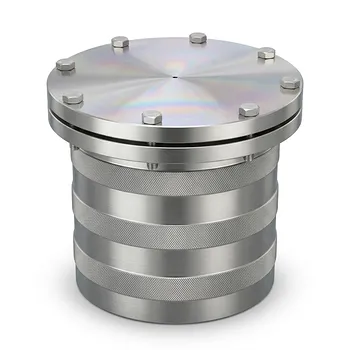
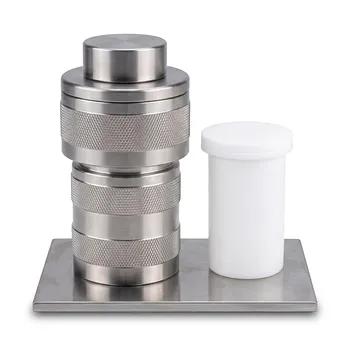
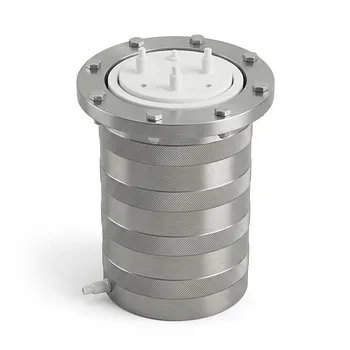
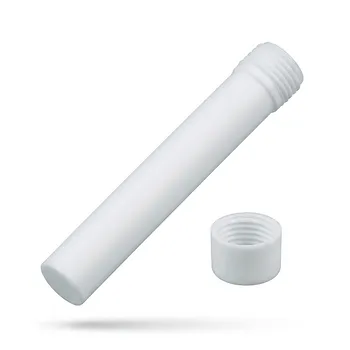
A PTFE-lined stainless steel autoclave is the essential pressure vessel used to create the controlled, high-temperature environment required for TS-1 catalyst formation. It performs a dual role by providing the structural strength to withstand internal pressure while maintaining a chemically inert interior. This combination allows silicon and titanium precursors to crystallize into the specific molecular sieve structure needed for high-performance catalysis.
The autoclave acts as a subcritical reactor that facilitates the hydrothermal crystallization of TS-1 by balancing mechanical pressure containment with absolute chemical isolation. This ensures the catalyst forms without metal contamination while protecting the vessel from the corrosive, highly alkaline reaction gels.
The Dual Architecture of Hydrothermal Reactors
Structural Support via Stainless Steel
The outer stainless steel shell provides the mechanical integrity required to withstand the high autogenous pressure generated during heating. Because TS-1 synthesis typically occurs at temperatures around 175°C to 200°C, the liquid precursors expand and create a high-pressure environment that would rupture weaker vessels.
Chemical Protection via PTFE Lining
The internal Polytetrafluoroethylene (PTFE) liner is prized for its extreme chemical inertness. In TS-1 synthesis, the reaction gels are often highly alkaline, which would aggressively corrode a standard metal container. The PTFE barrier ensures these chemicals never touch the steel.
Preservation of Catalyst Purity
Protecting the metal shell is not just about equipment longevity; it is vital for product quality. By preventing the reaction liquid from eroding the stainless steel, the liner ensures that no iron, nickel, or chromium ions leach into the gel. This maintains the high purity of the TS-1 molecular sieve, which is critical for its catalytic efficiency.
Driving the Crystallization Mechanism
Facilitating Hydrothermal Nucleation
The sealed, high-pressure environment inside the autoclave is what drives the hydrothermal crystallization of silicon and titanium sources. Under these closed conditions, the precursors undergo nucleation and growth to form the specific MFI framework characteristic of TS-1.
Inducing Active Titanium Sites
The autoclave is also used during modification phases to facilitate interactions between the molecular sieve framework and reagents like tetrapropylammonium bromide. This process induces the formation of binuclear titanium sites (Ti-O-Ti). These specific sites are the primary drivers of the catalyst's high activity in industrial applications.
Improving Solids Recovery
The extremely smooth surface of the PTFE lining serves a practical role at the end of the synthesis. It prevents the synthesized powder sediments from sticking to the walls, which facilitates the recovery and collection of the solid precipitates once the reaction is complete.
Understanding the Trade-offs
Temperature Limitations of PTFE
While PTFE is chemically stable, it has a distinct thermal ceiling, typically around 250°C. If the synthesis temperature exceeds this limit, the liner can soften, deform, or lose its seal, potentially leading to vessel failure or batch contamination.
Cleaning and Cross-Contamination
The very "memory" of the PTFE liner can be a pitfall; if not cleaned meticulously, residual zeolite seeds from a previous synthesis can influence the crystal growth of the next batch. This can lead to inconsistent crystal sizes or unintended morphologies in subsequent catalyst runs.
Applying This to Your Synthesis Goals
To achieve the best results with TS-1 hydrothermal synthesis, the use of the autoclave must be aligned with your specific experimental objectives.
- If your primary focus is maximizing catalytic activity: Ensure the autoclave remains sealed at consistent temperatures to facilitate the proper formation of binuclear titanium sites.
- If your primary focus is catalyst purity: Inspect the PTFE liner regularly for cracks or thinning to prevent metal ions from the stainless steel shell from poisoning the reaction.
- If your primary focus is yield consistency: Use the smooth properties of the PTFE liner to ensure total recovery of the precipitates and perform deep cleaning between batches to avoid "seeding" effects.
By providing a stable, high-pressure, and contamination-free environment, the PTFE-lined autoclave remains the definitive tool for engineering high-performance TS-1 catalysts.
Summary Table:
| Component | Primary Function | Benefit for TS-1 Synthesis |
|---|---|---|
| Stainless Steel Shell | Structural Integrity | Withstands high autogenous pressures at 175°C-200°C. |
| PTFE Internal Liner | Chemical Isolation | Prevents alkaline corrosion and metal ion leaching (Fe, Ni, Cr). |
| Smooth Inner Surface | Material Recovery | Minimizes sediment sticking, ensuring high yield and easy collection. |
| Sealed Environment | Hydrothermal Nucleation | Drives the formation of the specific MFI molecular sieve structure. |
Precision Lab Solutions for High-Performance Catalyst Synthesis
To achieve superior catalytic activity and purity, your reaction environment must be flawless. KINTEK specializes in high-performance fluoropolymer labware designed to meet the rigorous demands of hydrothermal synthesis. From everyday basics like PTFE and PFA beakers, crucibles, and centrifuge tubes, to advanced hydrothermal synthesis liners, microwave digestion vessels, and custom electrochemical cells, we provide the absolute chemical isolation your research requires.
Our expertise extends to comprehensive fluid transfer components (tubing, valves), filtration tools, and general consumables, all the way to bespoke non-standard machined parts via our end-to-end custom CNC fabrication. Whether you need high-volume supplies or complex reaction apparatus, KINTEK delivers the durability and purity essential for TS-1 synthesis and beyond.
Optimize your laboratory performance — Contact KINTEK today!
References
- Keval Mehta, Albertus D. Handoko. A Paradigm Shift: From Batch Processing to Flow Chemistry. DOI: 10.1002/smll.202411519
This article is also based on technical information from Kintek Knowledge Base .
Related Products
- Custom TFM Reaction Vessel with Stainless Steel Jacket and PTFE Inner Cup for High Corrosion Resistance
- PTFE Lined High Pressure Digestion Vessel 50ml High Temperature Hydrothermal Synthesis Tank
- High Pressure Custom TFM Reactor Stainless Steel Outer Vessel PTFE Inner Cup for Corrosive Synthesis
- High Purity TFM Microwave Digestion Vessels PTFE Acid Evaporation Liners Domestic GT-400 Equivalent Laboratory Reaction Containers
- High Purity PTFE Microwave Digestion Vessel Replacement Liner for Acid Sample Preparation and Trace Analysis
People Also Ask
- Why are high-performance pressure-resistant reaction vessels required for oxygen-assisted hydrothermal conversion at 150 °C?
- How do magnetic stirring and reaction vessels impact MOF-derived carbon quality? Optimize Your Composite Performance
- Why are PTFE-lined reaction vessels necessary for forced degradation studies? Ensure high-purity results and accuracy.
- Why are high-quality fluoropolymer-lined reaction vessels required for alk-Ti3C2Tx MXene? Ensure Purity & HF Resistance
- Why is a high-purity PTFE lined reaction vessel required for the acidic etching of MXenes? Ensure Material Purity.