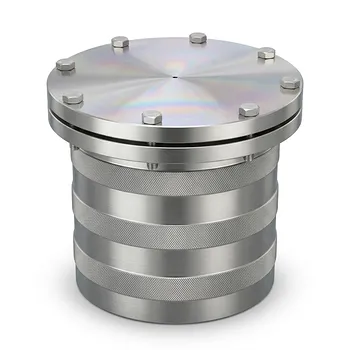
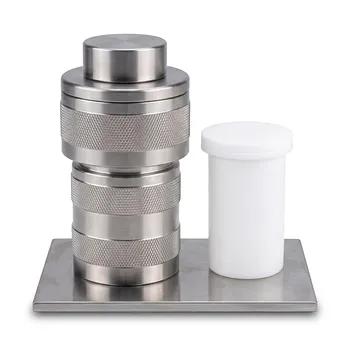
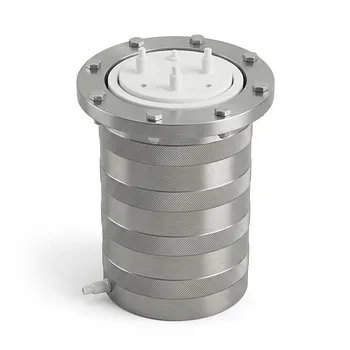
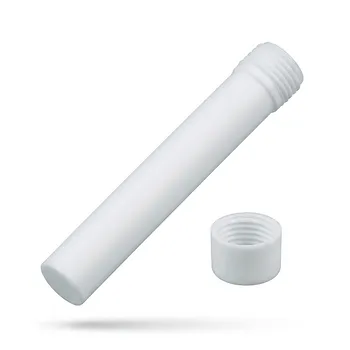
The PTFE-lined stainless steel autoclave acts as a high-pressure chemical reactor that enables the phase-controlled synthesis of 1T-MoS2. By providing a sealed, chemically inert environment at temperatures around 200°C, it facilitates the in-situ intercalation of ions (such as ammonium) required to transform and stabilize the metallic 1T phase. Without the dual-layered protection of the stainless steel shell and the PTFE liner, the required subcritical conditions and chemical purity necessary for this metastable transition could not be maintained.
The autoclave provides the critical high-pressure, high-temperature environment needed to drive the chemical precursors into a metastable 1T crystalline structure. It serves as both a pressure vessel for subcritical water reactions and a chemical shield that prevents corrosion and contamination during long-duration synthesis.
Facilitating the Metastable 1T Phase
Driving Ion Intercalation via High Pressure
The primary role of the autoclave is to maintain autogenous pressure at temperatures reaching 200°C. This pressure is essential for the in-situ intercalation of ammonium ions or other species between the MoS2 layers. This process forces the structural rearrangement of the molybdenum disulfide from the stable 2H phase to the metallic 1T phase.
Maintaining Subcritical Conditions
Under the sealed conditions of the autoclave, water enters a subcritical state, where its properties as a solvent change significantly. This environment increases the solubility of molybdenum and sulfur sources, allowing for a more complete reaction. The sustained thermal energy ensures the metastable phase is successfully nucleated and grown over extended periods, often exceeding 24 hours.
The Synergistic Role of PTFE and Stainless Steel
Chemical Inertness of the PTFE Liner
The PTFE (Polytetrafluoroethylene) liner is vital because it is highly resistant to the acidic or corrosive intermediates produced during the reaction. Precursors like thiourea or sodium molybdate can become aggressive at high temperatures, but the PTFE prevents these chemicals from attacking the vessel walls. This inertness ensures that the reaction remains pure and that the vessel does not degrade.
Structural Integrity of the Stainless Steel Shell
While PTFE provides chemical resistance, it lacks the mechanical strength to withstand high internal pressures at 200°C. The stainless steel outer shell provides the necessary structural support to contain the pressure generated by the heated solvent. This combination allows for a safe "one-pot" synthesis where high-energy chemical transitions can occur without vessel failure.
Engineering Nanostructure and Purity
Prevention of Metallic Contamination
Because the PTFE liner completely encloses the reaction mixture, it prevents iron, chromium, or nickel ions from the stainless steel shell from leaching into the product. Maintaining this high level of purity is critical for the electronic performance of 1T-MoS2, as metallic impurities can disrupt its unique conductivity.
Morphology and Self-Assembly Control
The constant pressure and temperature within the autoclave promote the self-assembly of MoS2 into specific shapes, such as nanorods or hollow microspheres. The smooth surface of the PTFE liner also facilitates the recovery of the final product and simplifies the cleaning process. This ensures that the synthesized 1T-MoS2 maintains a consistent morphology across different batches.
Understanding Technical Trade-offs
Temperature and Pressure Limitations
While effective, PTFE has a clear thermal ceiling, typically around 220°C to 250°C, beyond which it begins to soften or release toxic fumes. Exceeding these limits can lead to liner deformation, known as "creeping," which may break the seal and cause a dangerous pressure release.
Cooling and Phase Stability
The 1T phase is metastable, meaning it can revert to the 2H phase if the post-synthesis cooling process is not controlled. Rapid pressure drops or improper handling of the autoclave after the reaction can impact the final phase purity of the molybdenum disulfide.
How to Apply This to Your Project
Recommendations for Synthesis
- If your primary focus is Phase Purity: Ensure the autoclave remains sealed for the full duration to maintain the pressure required for maximum ion intercalation.
- If your primary focus is Material Purity: Always inspect the PTFE liner for scratches or pitting to prevent precursor contact with the stainless steel shell.
- If your primary focus is Safety: Never exceed the 80% fill capacity of the PTFE liner to allow for sufficient head-space for vapor expansion during heating.
By precisely controlling the internal environment of the autoclave, you can reliably transform standard molybdenum precursors into high-performance, metallic 1T-MoS2.
Summary Table:
| Component/Feature | Functional Role | Benefit for 1T-MoS2 Synthesis |
|---|---|---|
| PTFE Liner | Chemical inertness & insulation | Prevents metallic contamination; resists corrosive precursors like thiourea. |
| Stainless Steel Shell | Structural pressure containment | Maintains high autogenous pressure required for subcritical water states. |
| High Pressure | Kinetic driver | Facilitates in-situ ion intercalation to transform 2H phase into 1T phase. |
| Thermal Stability | Controlled heating | Provides sustained energy for metastable phase nucleation and growth. |
| Smooth Surface | Physical interface | Promotes self-assembly of nanostructures and simplifies product recovery. |
Elevate Your Synthesis Precision with KINTEK
Achieving the perfect metastable phase requires hardware that never compromises on purity or pressure integrity. KINTEK specializes in high-performance fluoropolymer solutions tailored for the most demanding hydrothermal environments.
From everyday basic labware like beakers, crucibles, and reagent bottles to specialized microwave digestion vessels and hydrothermal synthesis liners, we manufacture a comprehensive range of PTFE and PFA supplies. Our expertise extends to high-purity trace analysis instruments, fluid transfer components (tubing, valves, fittings), and advanced reaction apparatus such as custom electrochemical cells and battery testing fixtures.
Backed by end-to-end custom CNC fabrication, KINTEK is equipped to deliver everything from complex non-standard machined parts to high-volume orders with absolute focus on material performance. Ensure your 1T-MoS2 synthesis is backed by industry-leading durability and chemical resistance.
Contact KINTEK today to discuss your custom laboratory requirements!
References
- Kushal Mazumder, Pramoda K. Nayak. Phase selective hydrothermal synthesis of 1T MoS<sub>2</sub> and Janus 1T MoSSe for the hydrogen evolution reaction. DOI: 10.1039/d5ma00395d
This article is also based on technical information from Kintek Knowledge Base .
Related Products
- Custom TFM Reaction Vessel with Stainless Steel Jacket and PTFE Inner Cup for High Corrosion Resistance
- PTFE Lined High Pressure Digestion Vessel 50ml High Temperature Hydrothermal Synthesis Tank
- High Pressure Custom TFM Reactor Stainless Steel Outer Vessel PTFE Inner Cup for Corrosive Synthesis
- High Purity TFM Microwave Digestion Vessels PTFE Acid Evaporation Liners Domestic GT-400 Equivalent Laboratory Reaction Containers
- High Purity PTFE Microwave Digestion Vessel Replacement Liner for Acid Sample Preparation and Trace Analysis
People Also Ask
- Why are high-performance pressure-resistant reaction vessels required for oxygen-assisted hydrothermal conversion at 150 °C?
- How do magnetic stirring and reaction vessels impact MOF-derived carbon quality? Optimize Your Composite Performance
- Why are high-quality fluoropolymer-lined reaction vessels required for alk-Ti3C2Tx MXene? Ensure Purity & HF Resistance
- Why are PTFE-lined reaction vessels necessary for forced degradation studies? Ensure high-purity results and accuracy.
- Why is a high-purity PTFE lined reaction vessel required for the acidic etching of MXenes? Ensure Material Purity.