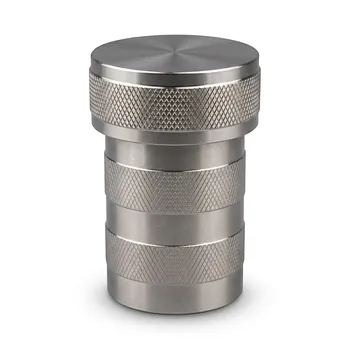
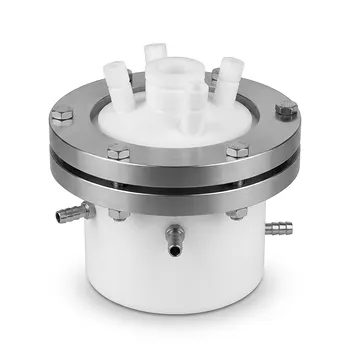
The PTFE-lined hydrothermal synthesis autoclave acts as a specialized chemical reactor that provides the simultaneous heat, pressure, and chemical purity required to grow copper nanowires. It ensures the reaction occurs in a sealed, non-reactive environment where copper precursors can transform into high-aspect-ratio nanostructures without contamination.
The autoclave enables "bottom-up" synthesis by creating a stable, high-pressure environment that forces copper precursors into specific crystalline shapes. The PTFE liner is critical because it isolates the reaction from metallic contaminants, ensuring the resulting nanowires maintain high chemical purity and consistent morphology.
Preventing Contamination via Chemical Inertness
High-Purity Material Isolation
The PTFE (polytetrafluoroethylene) liner is almost entirely non-reactive, even when exposed to the strong alkaline or oxidative solutions often used in copper nanowire (Cu NW) synthesis. This prevents metal ions from the outer stainless steel shell from leaching into the solution, which would otherwise poison the catalyst or interfere with wire growth.
Resistance to Corrosive Precursors
Synthesis often involves aggressive chemicals like copper chloride, ammonium fluoride, or organic solvents like ethylene glycol. PTFE resists chemical erosion from these substances at elevated temperatures, preventing secondary reactions between the reagents and the vessel walls.
Ease of Product Recovery
PTFE possesses extremely low surface energy, making it a naturally "non-stick" material. This ensures that the synthesized copper nanowires do not adhere to the internal walls, allowing for the complete collection of the reaction products and a higher overall yield.
Thermal and Mechanical Stability for Crystal Growth
Achieving Superheated Conditions
The sealed environment allows the internal pressure to rise spontaneously as the temperature increases, typically to levels between 120°C and 200°C. These conditions trigger the slow chemical kinetics, such as the hydrolysis of agents like hexamethylenetetramine (HMT), which are necessary for established nanowire growth.
The Role of the Stainless Steel Shell
While the PTFE liner provides the chemical environment, the stainless steel outer shell provides the necessary structural integrity. It safely contains the high internal pressures generated during the hydrothermal process, ensuring a stable environment for reactions that often last 12 hours or more.
Stable Anisotropic Growth
For copper to grow into long, thin wires rather than spherical nanoparticles, the growth environment must remain perfectly stable. The autoclave maintains constant temperature and pressure levels, providing the steady-state conditions required for the anisotropic growth of crystals.
Understanding the Trade-offs and Risks
Thermal Limits of PTFE
While highly durable, PTFE has a definitive thermal ceiling, typically around 220°C to 250°C. Exceeding these temperatures can cause the liner to soften, deform, or release toxic fluorinated vapors, potentially ruining the experiment and damaging the autoclave.
Pressure and Cooling Lags
Because the PTFE liner is nested within a thick steel jacket, there is often a thermal lag between the laboratory oven's display and the actual internal liquid temperature. Additionally, cooling the autoclave too rapidly can create pressure differentials that cause the liner to collapse or "implode" away from the steel walls.
Cleaning and Cross-Contamination
Although PTFE is non-stick, microscopic residues can occasionally remain in the pores of the material. If not cleaned rigorously between runs using acid digestion, trace amounts of copper or surfactants from previous batches may act as unintended "seeds," leading to inconsistent nanowire dimensions in subsequent experiments.
How to Apply This to Your Synthesis Goals
To achieve the best results when preparing copper nanowires, your approach to using the autoclave should align with your specific research objectives.
- If your primary focus is Maximum Purity: Prioritize the use of a fresh or high-purity PTFE liner to ensure no stray metal ions interfere with the electronic properties of the Cu NWs.
- If your primary focus is High Aspect Ratio: Ensure the stainless steel shell is properly tightened to maintain the spontaneous pressure required for the slow, controlled anisotropic growth of the wires.
- If your primary focus is Scalability and Yield: Leverage the non-stick properties of the PTFE liner by using a "bottom-up" recovery method, ensuring all precipitated nanowires are collected from the vessel.
By maintaining the integrity of the PTFE-lined environment, you ensure that the complex thermodynamics of hydrothermal synthesis result in high-quality, uniform copper nanowires.
Summary Table:
| Feature | Advantage | Impact on Cu NW Synthesis |
|---|---|---|
| PTFE Liner | Chemical inertness | Prevents metal contamination and resists corrosive precursors. |
| Non-stick Surface | Low surface energy | Ensures high product yield and easy recovery of synthesized wires. |
| Steel Shell | Mechanical strength | Withstands high internal pressure required for anisotropic growth. |
| Sealed System | Controlled Environment | Provides steady-state thermal conditions for consistent morphology. |
Elevate Your Synthesis Precision with KINTEK
Achieve uncompromising purity and performance in your lab with KINTEK’s high-performance fluoropolymer solutions. Whether you require everyday basic labware (beakers, measuring cylinders, crucibles, reagent/wash bottles, centrifuge and digestion tubes) or high-purity trace analysis instruments, we deliver the chemical inertness your research demands.
Our extensive range covers everything from comprehensive fluid transfer components (tubing, fittings, valves) and sample prep tools (separatory funnels, burettes, filters, tweezers) to advanced reaction apparatus like custom hydrothermal synthesis liners, microwave digestion vessels, and electrochemical cells.
Backed by end-to-end custom CNC fabrication, KINTEK specializes in PTFE and PFA manufacturing, delivering everything from complex bespoke setups to high-volume orders. Contact us today to find the perfect fluoropolymer solution for your application!
References
- Seok Hwan Kim, Yuho Min. Synthesis of Bimetallic Cu-Au Nanotubes and Cu@Au Core-Shell Nanowires for Anti-Oxidative Electrodes. DOI: 10.3740/mrsk.2025.35.1.9
This article is also based on technical information from Kintek Knowledge Base .
Related Products
- PTFE Lined High Pressure Digestion Vessel 50ml High Temperature Hydrothermal Synthesis Tank
- High Temperature Corrosion Resistant Hydrothermal Synthesis Reactor with TFM Inner Liner and Straight Cylinder Design
- Custom TFM Reaction Vessel with Stainless Steel Jacket and PTFE Inner Cup for High Corrosion Resistance
- High Pressure Custom TFM Reactor Stainless Steel Outer Vessel PTFE Inner Cup for Corrosive Synthesis
- PTFE Acid Steam Cleaning System HF Resistant Trace Analysis Beaker Digestion Tank Customizable
People Also Ask
- What are the benefits of using a PTFE-lined vessel for carbon-sulfur cathode treatment? Maximize Purity & Performance
- Why are PTFE-lined pressure digestion vessels required for the preparation of Ag/CeO2 catalysts? Purity & Performance
- What is the function of high-pressure PTFE digestion vessels in mineral analysis? Optimize Sample Mineralization
- What safety features are typically incorporated into high-pressure PTFE digestion vessel designs? Ensure Lab Safety
- What is the function of PTFE lined high-pressure vessels in g-C3N4 synthesis? Achieve High-Purity Material Growth