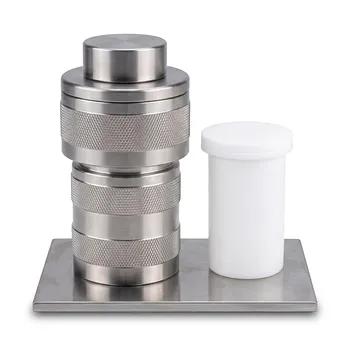
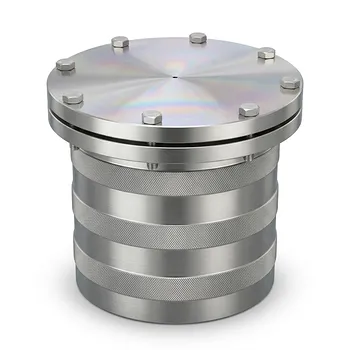
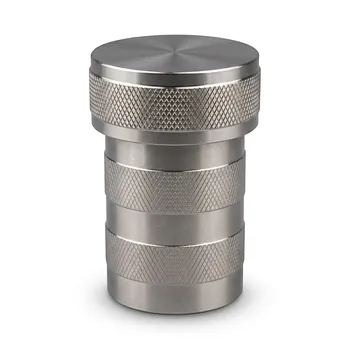
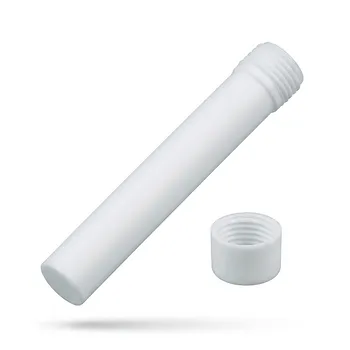
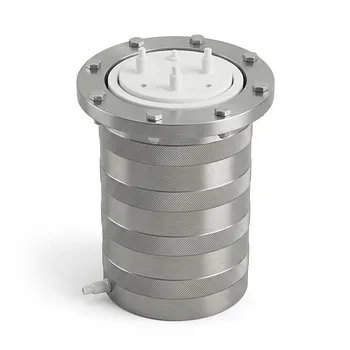
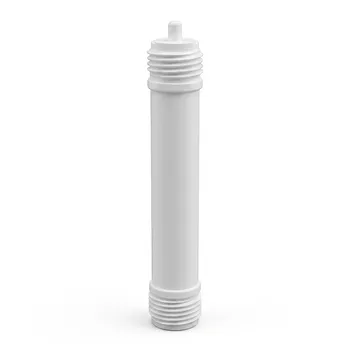
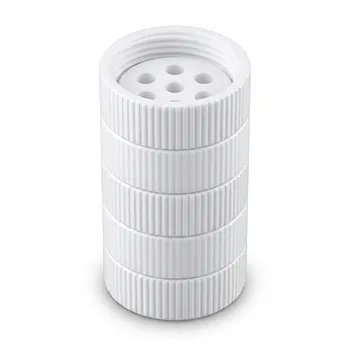
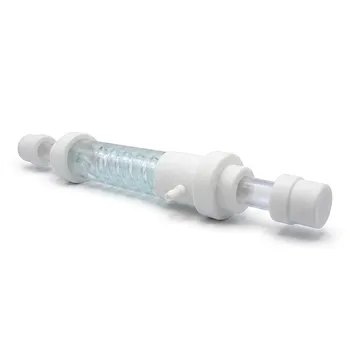
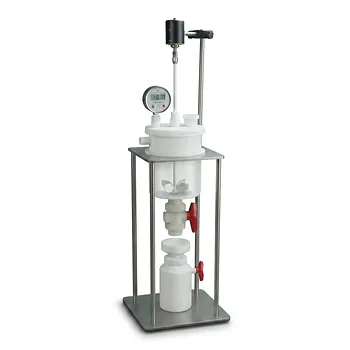
The PTFE-lined hydrothermal autoclave serves as the critical reaction vessel for synthesizing cobalt-based nanoneedle precursors by providing a controlled, high-pressure environment. This equipment allows for precise chemical transformations at elevated temperatures, typically around 120 °C, while maintaining a sealed system. The internal PTFE liner is specifically chosen for its ability to resist aggressive chemical reagents and prevent metallic impurities from interfering with the crystallization process.
The primary role of the PTFE-lined autoclave is to provide a chemically inert, high-pressure chamber that facilitates the uniform growth of cobalt nanoneedles while protecting the structural integrity of both the reactor and the precursors. By isolating the reaction from the metal walls of the autoclave, it ensures high purity and consistent morphology.
The Essential Function of PTFE in Synthesis
Corrosion Resistance Against Aggressive Reagents
Synthesis protocols for cobalt precursors often involve harsh chemicals, such as ammonium fluoride, which are necessary for directing crystal growth. The PTFE (polytetrafluoroethylene) liner possesses exceptional chemical stability, allowing it to withstand these aggressive substances without degrading. This resistance ensures that the internal environment remains stable throughout the duration of the hydrothermal process.
Preventing Metallic Contamination
Without a liner, the reaction solution would come into direct contact with the stainless steel walls of the autoclave. The PTFE material acts as a barrier, preventing metal ion contamination from leaching into the precursor solution. This isolation is vital for maintaining the purity and specific single-crystal phase characteristics required for high-performance nanoneedles.
Protection of the Outer Pressure Vessel
While the stainless steel shell provides the mechanical strength to handle high internal pressures, it is susceptible to chemical erosion. The PTFE liner protects the external shell from corrosion by acidic or oxidative reaction precursors. This dual-material approach combines the safety of a high-pressure vessel with the chemical resilience of a fluoropolymer.
Facilitating Precise Nanostructure Growth
Controlled High-Pressure Environments
Hydrothermal synthesis relies on the increased solubility and reactivity of precursors under high-pressure conditions. The sealed autoclave creates a solvothermal environment that promotes the anisotropic growth of crystals. This pressure is essential for driving the formation of one-dimensional nanostructures like nanoneedles or nanowires.
Thermal Stability for Uniformity
The autoclave provides a stable thermal environment, allowing reactions to proceed at constant temperatures, such as 120 °C, for extended periods. This thermal consistency is critical for the uniform growth of precursors on substrates like carbon fiber paper or nickel foam. Steady heat distribution ensures that the resulting nanoneedle arrays have a consistent morphology across the entire surface.
Facilitating Precursor Mixing
The enclosed, high-temperature environment facilitates the thorough mixing and reaction of precursors that might remain unreactive at room temperature. By allowing for higher energy states within the solution, the autoclave enables the precise formation of complex precursor architectures. This leads to better structural consistency in the final cobalt-based material.
Understanding the Trade-offs
Temperature Limitations of PTFE
While PTFE is highly inert, it has a distinct thermal limit, typically around 250 °C, beyond which it may deform or release toxic fumes. For synthesis requiring extreme temperatures (above 250–300 °C), researchers must often switch to more expensive materials like PPL (polyphenylene polymers) or quartz.
Thermal Expansion Disparity
PTFE has a different coefficient of thermal expansion than the stainless steel outer shell. If cooled or heated too rapidly, the liner can warp or crack, potentially leading to leaks or "pinched" liners that are difficult to remove. Gradual heating and cooling cycles are necessary to maintain the physical integrity of the equipment over time.
Pressure Safety and Filling Limits
The internal pressure is highly sensitive to the filling ratio of the liquid inside the liner. Overfilling the autoclave can lead to excessive pressure that exceeds the safety limits of the stainless steel shell. Standard safety protocols generally recommend a filling volume between 60% and 80% to provide sufficient headspace for vapor expansion.
How to Apply This to Your Project
Making the Right Choice for Your Goal
To achieve the best results in cobalt-based nanoneedle synthesis, you must align your autoclave parameters with your specific material requirements.
- If your primary focus is high purity: Ensure the PTFE liner is thoroughly cleaned with dilute acid between runs to prevent "memory effects" or cross-contamination from previous reactions.
- If your primary focus is uniform substrate coating: Maintain a consistent filling ratio and temperature to ensure stable pressure, which promotes even deposition on substrates like carbon fiber paper.
- If your primary focus is structural morphology (nanoneedle length/width): Precisely control the reaction time and temperature, as the PTFE-lined environment allows for the slow, steady kinetics required for anisotropic growth.
By effectively leveraging the chemical inertness and pressure containment of the PTFE-lined autoclave, you can consistently produce high-quality, high-purity cobalt nanoneedles for advanced technological applications.
Summary Table:
| Feature | Role in Synthesis | Critical Consideration |
|---|---|---|
| PTFE Liner | Prevents metal ion contamination and resists aggressive reagents like NH4F. | Max temperature limit of 250°C to avoid deformation. |
| Pressure Vessel | Facilitates anisotropic crystal growth via a sealed, high-pressure environment. | Filling ratio must stay between 60-80% for safety. |
| Thermal Control | Ensures uniform morphology and stable kinetics for nanostructure formation. | Requires gradual heating/cooling to prevent liner warping. |
Elevate Your Research with High-Performance Fluoropolymer Solutions
Achieve uncompromising purity in your cobalt nanoneedle synthesis with KINTEK’s premium laboratory supplies. Specializing in high-performance PTFE and PFA materials, we provide the chemical inertness and precision required for advanced hydrothermal and solvothermal processes.
From essential high-purity trace analysis instruments and hydrothermal synthesis liners to complex custom CNC-machined parts, KINTEK is your end-to-end partner for specialized laboratory needs. Our extensive range includes:
- Reaction & Synthesis: PTFE-lined autoclaves, microwave digestion vessels, and custom electrochemical cells.
- Fluid Handling: Precision tubing, fittings, valves, and comprehensive fluid transfer components.
- Lab Essentials: High-purity beakers, reagent bottles, filters, and sample prep tools like separatory funnels and pipettes.
- Custom Fabrication: Bespoke laboratory setups and high-volume orders tailored to your unique specifications.
Ready to enhance your lab’s efficiency and experimental accuracy? Contact KINTEK today to discover how our fluoropolymer expertise can support your next breakthrough.
References
- Wenjing Lv, Zhu Yuanzhi. Superhydrophilic Porous CoOOH Nano-Architecture with Abundant Oxygen Vacancies for Enhanced Urea Electrooxidation at Ampere-Level Current Densities. DOI: 10.61558/2993-074x.3550
This article is also based on technical information from Kintek Knowledge Base .
Related Products
- PTFE Lined High Pressure Digestion Vessel 50ml High Temperature Hydrothermal Synthesis Tank
- Custom TFM Reaction Vessel with Stainless Steel Jacket and PTFE Inner Cup for High Corrosion Resistance
- High Temperature Corrosion Resistant Hydrothermal Synthesis Reactor with TFM Inner Liner and Straight Cylinder Design
- PTFE Acid Steam Cleaning System HF Resistant Trace Analysis Beaker Digestion Tank Customizable
- High Purity TFM Microwave Digestion Vessels PTFE Acid Evaporation Liners Domestic GT-400 Equivalent Laboratory Reaction Containers
People Also Ask
- What are the benefits of using a PTFE-lined vessel for carbon-sulfur cathode treatment? Maximize Purity & Performance
- Why are PTFE-lined pressure digestion vessels required for the preparation of Ag/CeO2 catalysts? Purity & Performance
- What is the function of high-pressure PTFE digestion vessels in mineral analysis? Optimize Sample Mineralization
- What safety features are typically incorporated into high-pressure PTFE digestion vessel designs? Ensure Lab Safety
- What is the function of PTFE lined high-pressure vessels in g-C3N4 synthesis? Achieve High-Purity Material Growth