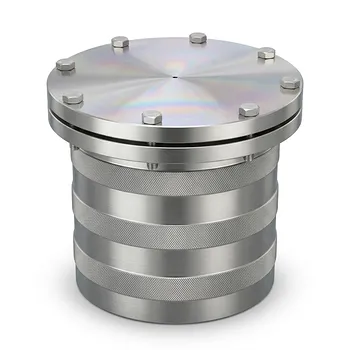
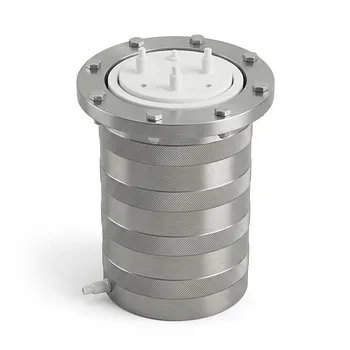
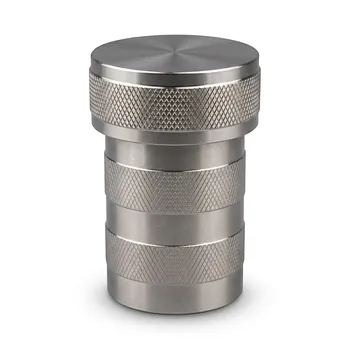
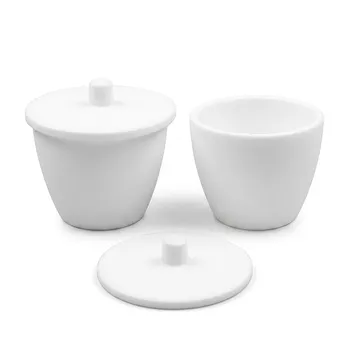
The PTFE-lined stainless steel autoclave acts as a specialized high-pressure chemical reactor that facilitates the transformation of precursor solutions into solid molybdenum disulfide (MoS2). By providing a sealed environment capable of reaching temperatures around 200°C and high internal pressures, it enables hydrothermal synthesis—a process where substances dissolve and recrystallize under subcritical conditions that would be impossible at atmospheric pressure.
Core Takeaway: The autoclave provides the mechanical strength to withstand high pressure via its stainless steel shell while using a PTFE liner to ensure a chemically inert, corrosion-resistant environment necessary for the high-purity nucleation and growth of MoS2.
Creating the Necessary Thermodynamic Environment
Achieving Subcritical Conditions
Hydrothermal synthesis requires the reaction to occur at temperatures exceeding the normal boiling point of the solvent. The sealed stainless steel shell contains the pressure generated by heating, allowing the precursor solution to reach subcritical states that promote the dissolution of molybdenum and sulfur sources.
Facilitating Nucleation and Crystal Growth
The constant temperature and high-pressure environment within the autoclave are critical for the nucleation and growth of MoS2 crystals. These controlled conditions allow for the formation of complex morphologies, such as hollow microspheres, nanorod arrays, or nanowires, by managing the rate of precipitation and recrystallization.
Chemical Integrity and Purity
The Role of the PTFE Liner
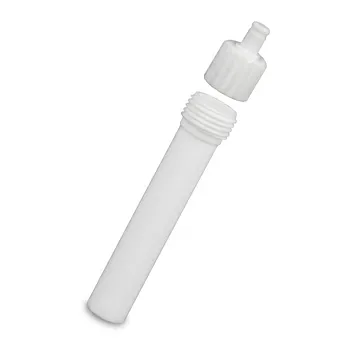
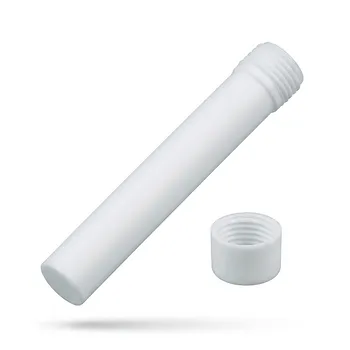
The Polytetrafluoroethylene (PTFE) liner, often referred to as a Teflon liner, serves as a barrier against extreme chemical environments. It offers exceptional resistance to the strong acids, bases, and corrosive intermediates produced during the reaction of sulfur and molybdenum precursors, such as thiourea or sodium molybdate.
Preventing Metallic Contamination
Without the PTFE liner, the corrosive precursor solution would attack the stainless steel body of the autoclave. This liner prevents the introduction of metallic impurities into the reaction system, ensuring the structural consistency and high purity of the resulting MoS2 product.
Phase Control and In-Situ Manipulation
Inducing Phase Transitions
The autoclave environment is essential for the in-situ intercalation of ions, such as ammonium ions, which can trigger a phase transition. This process is vital for synthesizing the metallic 1T phase of MoS2, a metastable state that offers different electronic properties than the standard semiconductor 2H phase.
Maintaining Structural Consistency
By providing a stable, enclosed system, the autoclave ensures that the solvothermal reactions proceed uniformly over extended periods, often reaching 24 hours or more. This stability is necessary to achieve the desired thickness and crystallinity of the MoS2 layers on various substrates, such as nickel foam.
Understanding the Trade-offs and Limitations
Temperature Constraints of PTFE
While PTFE is highly inert, it has a functional temperature limit, typically around 250°C to 260°C. Exceeding these temperatures can cause the liner to soften or undergo thermal decomposition, potentially compromising the seal or contaminating the reaction.
Pressure Safety and Filling Ratios
The internal pressure is highly sensitive to the filling ratio of the liquid precursors within the liner. Overfilling the autoclave can lead to an exponential increase in pressure during heating, risking mechanical failure of the stainless steel vessel or the safety rupture disk.
Making the Right Choice for Your Synthesis Goal
How to Apply This to Your Project
Success in hydrothermal synthesis depends on balancing the chemical requirements of the precursors with the physical limits of the autoclave.
- If your primary focus is High Purity: Ensure the PTFE liner is thoroughly cleaned with aqua regia or nitric acid between runs to prevent cross-contamination of MoS2 batches.
- If your primary focus is 1T Phase Stabilization: Use the autoclave to maintain a steady 200°C to facilitate the subcritical intercalation of ions required for the 2H to 1T phase transition.
- If your primary focus is Controlled Morphology: Carefully calculate the precursor concentration and reaction time, as the autoclave's constant pressure environment directly influences the formation of hollow structures or nanorods.
The PTFE-lined autoclave is the indispensable "black box" that provides the specific thermodynamic and chemical isolation required to engineer the next generation of MoS2-based nanomaterials.
Summary Table:
| Component | Primary Function | Research Benefit |
|---|---|---|
| Stainless Steel Shell | High-pressure containment | Enables subcritical hydrothermal synthesis |
| PTFE (Teflon) Liner | Chemical corrosion resistance | Prevents metallic contamination & ensures purity |
| Thermal Stability | Constant temperature environment | Controls nucleation and crystal morphology |
| Sealed System | Ion intercalation facilitation | Induces phase transitions (e.g., 2H to 1T MoS2) |
Elevate Your Research with KINTEK’s Precision Fluoropolymer Solutions
Master your hydrothermal synthesis with KINTEK’s high-performance laboratory supplies. From everyday basic labware (beakers, measuring cylinders, crucibles, and reagent bottles) to the specialized hydrothermal synthesis liners and high-purity trace analysis instruments essential for MoS2 growth, we provide the chemical integrity your research demands.
Our expertise covers everything from comprehensive fluid transfer components (tubing, valves) and sample prep tools (filters, pipettes, tweezers) to advanced derivative apparatus like custom electrochemical cells, battery testing fixtures, and microwave digestion vessels. Backed by end-to-end custom CNC fabrication, KINTEK delivers absolutely everything from high-volume consumables (stirring bars, O-rings, gaskets) to complex non-standard machined parts, maintaining an absolute focus on high-performance PTFE and PFA materials.
Ready to optimize your lab setup? Contact our experts today for a custom quote!
References
- Shuai Liu, Guangsuo Yu. Stirring-Assisted In Situ Construction of Highly Dispersed MoS2/g-C3N4 Heterojunctions with Enhanced Edge Exposure for Efficient Photocatalytic Hydrogen Evolution. DOI: 10.3390/catal15090808
This article is also based on technical information from Kintek Knowledge Base .
Related Products
- Custom TFM Reaction Vessel with Stainless Steel Jacket and PTFE Inner Cup for High Corrosion Resistance
- PTFE Lined High Pressure Digestion Vessel 50ml High Temperature Hydrothermal Synthesis Tank
- High Pressure Custom TFM Reactor Stainless Steel Outer Vessel PTFE Inner Cup for Corrosive Synthesis
- High Purity PTFE Microwave Digestion Vessel Replacement Liner for Acid Sample Preparation and Trace Analysis
- High Purity TFM Microwave Digestion Vessels PTFE Acid Evaporation Liners Domestic GT-400 Equivalent Laboratory Reaction Containers
People Also Ask
- Why are high-performance pressure-resistant reaction vessels required for oxygen-assisted hydrothermal conversion at 150 °C?
- Why are high-quality fluoropolymer-lined reaction vessels required for alk-Ti3C2Tx MXene? Ensure Purity & HF Resistance
- Why are PTFE-lined reaction vessels necessary for forced degradation studies? Ensure high-purity results and accuracy.
- How do magnetic stirring and reaction vessels impact MOF-derived carbon quality? Optimize Your Composite Performance
- Why is a high-purity PTFE lined reaction vessel required for the acidic etching of MXenes? Ensure Material Purity.