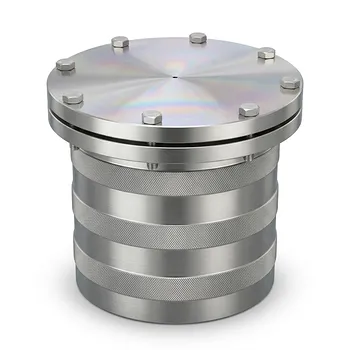
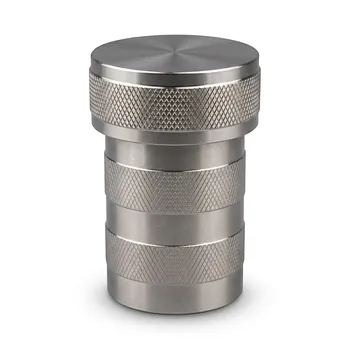
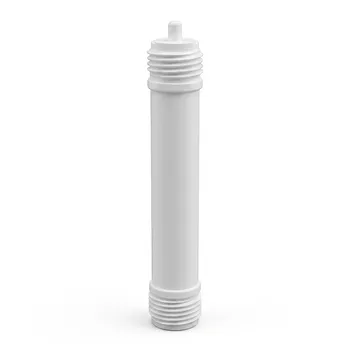
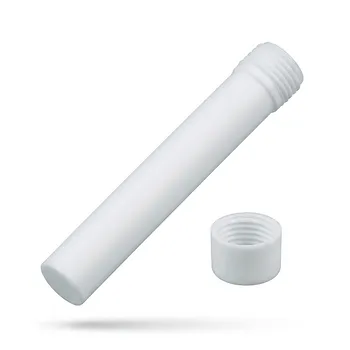
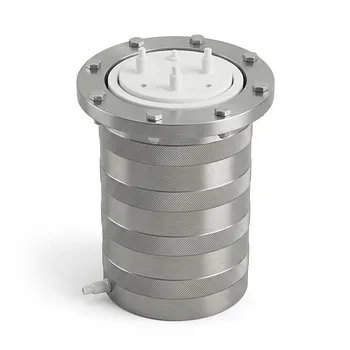
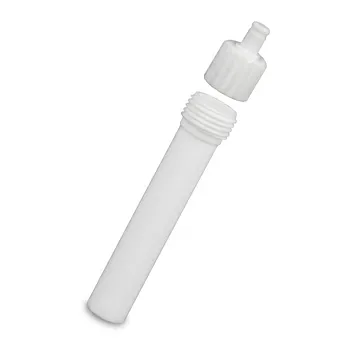
The PTFE-lined hydrothermal autoclave serves as the critical reaction vessel that provides a high-temperature, high-pressure, and chemically inert environment required for the phase-controlled growth of alpha-manganese dioxide (α-MnO2) nanowires. By isolating corrosive precursors like manganese sulfate and acetic acid within a sealed Polytetrafluoroethylene (PTFE) liner, the autoclave enables long-term crystallization under constant pressure, ensuring the formation of high-purity nanowires with a defined tunnel structure and regular morphology.
Core Takeaway: The PTFE-lined autoclave is essential because it simultaneously facilitates the subcritical water conditions necessary for nanowire nucleation while protecting the reaction from metallic contamination and preventing the acidic precursors from corroding the vessel’s structural shell.
Creating the Ideal Environment for Nanowire Growth
Achieving Subcritical Conditions
The primary role of the autoclave is to create a sealed environment where solvents can be heated above their atmospheric boiling points while remaining in a liquid state.
These subcritical conditions significantly enhance the solubility and reactivity of manganese precursors. This leads to a state of supersaturation, which is the driving force behind the nucleation and slow, directional growth of α-MnO2 crystals.
Facilitating Anisotropic Crystallization
The constant, high internal pressure generated within the autoclave promotes the conformal deposition of manganese dioxide.
For α-MnO2 specifically, this controlled environment is what allows the precursors to develop into nanowires with a specific tunnel structure. Without the stable pressure maintained by the autoclave's seal, the resulting material would likely lack the desired high-quality morphology and crystallinity.
The Protective Role of the PTFE Liner
Resistance to Acidic and Oxidizing Corrosion
Synthesis of α-MnO2 often involves aggressive chemicals, such as acetic acid, manganese sulfate, and strong oxidizing agents like potassium permanganate.
The PTFE liner is chosen for its exceptional chemical inertness and superior resistance to strong acid corrosion. It acts as a physical barrier that prevents these harsh chemicals from attacking the stainless steel walls of the autoclave during the long crystallization periods, which typically last 12 hours or more.
Ensuring Chemical Purity
In nanotechnology, even trace amounts of metallic impurities can drastically alter the properties of the final product.
By isolating the reaction solution from the metal body of the autoclave, the PTFE liner prevents the leaching of metal ions (such as iron or chromium) into the precursor mix. This ensures the structural integrity and high purity of the α-MnO2 nanowires, which is vital for their performance in catalytic or energy-storage applications.
Understanding the Trade-offs
Temperature Limitations
While PTFE is highly resistant to chemicals, it has a lower thermal threshold than the metal exterior.
Most PTFE liners are limited to operating temperatures around 200°C to 240°C. Exceeding these limits can lead to the deformation or "creeping" of the liner, which compromises the seal and can cause the autoclave to fail under pressure.
Heat Transfer and Cooling Rates
The PTFE liner acts as an insulator, which can affect how quickly the internal reaction mixture reaches the target temperature.
This insulation must be accounted for during the synthesis process, as rapid heating or cooling of the external stainless steel shell may not be immediately reflected in the internal precursor solution, potentially affecting the uniformity of the nanowire growth.
How to Apply This to Your Synthesis Project
Making the Right Choice for Your Goal
- If your primary focus is high-purity α-MnO2: Always use a pristine, unscratched PTFE liner to prevent any potential leaching of metal ions from the autoclave body.
- If your primary focus is morphology control: Ensure the autoclave is properly sealed to maintain constant pressure, as fluctuations can lead to irregular particle shapes rather than uniform nanowires.
- If your primary focus is reaction safety: Never exceed the maximum temperature rating of the PTFE liner, as the material can soften and lose its ability to contain high-pressure acidic vapors.
The PTFE-lined autoclave is the fundamental tool that enables the precise, uncontaminated, and high-pressure chemical environment required to transform simple manganese salts into sophisticated α-MnO2 nanowires.
Summary Table:
| Feature of PTFE-Lined Autoclave | Role in α-MnO2 Nanowire Synthesis |
|---|---|
| Subcritical Conditions | Increases precursor solubility and drives nucleation of crystals. |
| Sustained High Pressure | Promotes anisotropic growth for uniform, high-quality nanowire morphology. |
| PTFE Chemical Inertness | Prevents corrosion from acidic precursors and eliminates metallic contamination. |
| Sealed Environment | Enables long-term crystallization (12+ hours) at constant, controlled pressure. |
| Thermal Threshold | Regulates reaction temperature (typically up to 240°C) for stable phase control. |
Elevate Your Synthesis Precision with KINTEK Fluoropolymer Solutions
Achieving high-purity α-MnO2 nanowires requires laboratory equipment that can withstand extreme chemical environments without compromising sample integrity. KINTEK specializes in high-performance fluoropolymer materials, offering an exhaustive range of labware designed for researchers who demand perfection.
Whether you need standard hydrothermal synthesis liners, microwave digestion vessels, and reagent bottles, or complex custom CNC-machined parts for bespoke laboratory setups, we provide end-to-end solutions crafted from premium PTFE and PFA. Our expertise extends from everyday consumables—like beakers, crucibles, and stirring bars—to advanced reaction apparatus including electrochemical cells and battery testing fixtures.
Don't let metallic contamination or vessel corrosion stall your breakthroughs. Trust KINTEK’s absolute focus on high-performance materials to deliver the reliability your research deserves.
Contact our expert team today to discuss your custom laboratory needs!
References
- Cheng Liu, Dino Tonti. Unveiling capacity limitations of MnO <sub>2</sub> in rechargeable Zn chemistry. DOI: 10.1039/d5ee03588k
This article is also based on technical information from Kintek Knowledge Base .
Related Products
- PTFE Lined High Pressure Digestion Vessel 50ml High Temperature Hydrothermal Synthesis Tank
- Custom TFM Reaction Vessel with Stainless Steel Jacket and PTFE Inner Cup for High Corrosion Resistance
- High Temperature Corrosion Resistant Hydrothermal Synthesis Reactor with TFM Inner Liner and Straight Cylinder Design
- High Purity PTFE Microwave Digestion Vessel for Soil and Food Analysis Acid Resistant Fluoropolymer Sample Preparation Liners
- High Purity TFM Microwave Digestion Vessels PTFE Acid Evaporation Liners Domestic GT-400 Equivalent Laboratory Reaction Containers
People Also Ask
- What are the benefits of using a PTFE-lined vessel for carbon-sulfur cathode treatment? Maximize Purity & Performance
- Why are PTFE-lined pressure digestion vessels required for the preparation of Ag/CeO2 catalysts? Purity & Performance
- What safety features are typically incorporated into high-pressure PTFE digestion vessel designs? Ensure Lab Safety
- What is the function of PTFE lined high-pressure vessels in g-C3N4 synthesis? Achieve High-Purity Material Growth
- Role of High-Pressure Digestion Tanks in Perovskite Synthesis: Achieve Superior Stability and Latent Heat