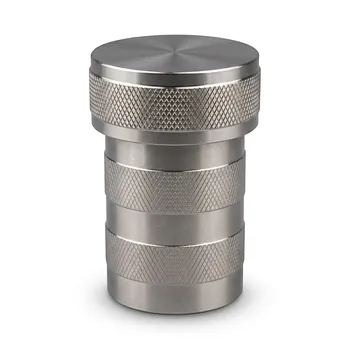
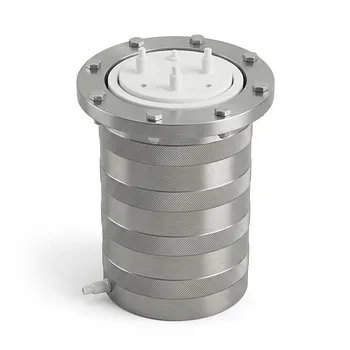
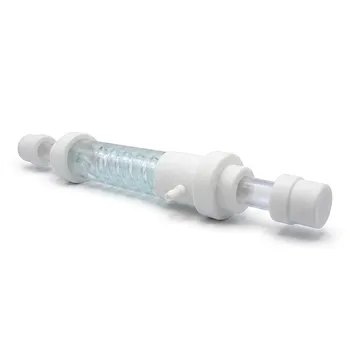
A PTFE-lined hydrothermal autoclave serves as the critical reaction vessel for the ion exchange process between ZnSe and CdSe. It provides a chemically inert, high-pressure environment that allows cadmium ions to precisely penetrate the Zinc Selenide (ZnSe) lattice at elevated temperatures, typically around 160°C, to form high-quality core-shell heterostructures.
Core Takeaway: The PTFE liner ensures a pure, closed system that prevents contamination and corrosion while maintaining the high-pressure, subcritical conditions necessary for controlled ion diffusion into the semiconductor lattice.
Protecting Reaction Purity and Integrity
Resistance to Aggressive Reagents
In the preparation of ZnSe/CdSe heterojunctions, reagents like cadmium chloride (CdCl₂) are frequently used to provide the source of cadmium ions. The Polytetrafluoroethylene (PTFE) liner is essential because it is chemically inert, meaning it will not react with or be degraded by these aggressive salts even at high temperatures.
Prevention of Metallic Contamination
Standard stainless steel autoclaves would succumb to corrosion if they came into direct contact with the reaction solution. The PTFE liner acts as a barrier, preventing metal ions from the autoclave body from leaching into the solution, which is vital for maintaining the high purity of the synthesized semiconductor materials.
Facilitating the Ion Exchange Process
Creation of Subcritical Conditions
The sealed nature of the autoclave allows the solvent to reach subcritical states, where it remains liquid at temperatures far above its atmospheric boiling point. These conditions significantly enhance the solubility and reactivity of the precursors, providing the energy required for the ion exchange to occur.
Promoting Lattice Penetration
The controlled high-pressure environment facilitates the precise penetration of cadmium ions into the ZnSe lattice. This replaces zinc ions with cadmium ions in a controlled manner, resulting in the formation of a stable ZnSe/CdSe heterojunction with tight interfacial contact, which is necessary for efficient electronic properties.
Physical Advantages of the PTFE Liner
Thermal Stability at Synthesis Temperatures
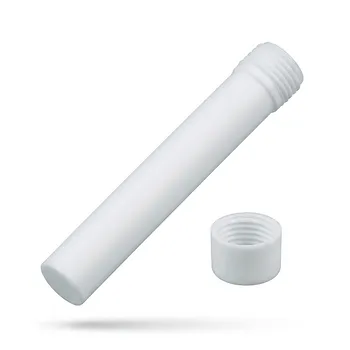
PTFE remains stable and retains its structural integrity at the temperatures required for this synthesis, such as 160°C. This thermal stability ensures that the liner does not undergo unwanted side reactions or release impurities into the ethylene glycol or aqueous solvents used during the extended heating periods.
Low Surface Energy and Yield Optimization
PTFE is known for its low surface energy, which creates a non-stick surface. This property prevents the newly formed ZnSe/CdSe particles from adhering to the walls of the vessel, ensuring a higher and more consistent powder yield and making the recovery of the reaction products much easier.
Understanding the Trade-offs and Limitations
Temperature Constraints
While PTFE is excellent for many solvothermal reactions, it has a functional temperature limit (usually around 200°C to 250°C). Exceeding these temperatures can cause the liner to soften or deform, potentially leading to a loss of the hermetic seal or the release of toxic vapors.
Pressure Limitations
The PTFE liner itself does not provide structural strength; it relies on the stainless steel outer shell to contain the high internal pressures. If the liner is not properly fitted or if the pressure exceeds the autoclave's design specifications, the liner may collapse or "creep," compromising the experiment.
Making the Right Choice for Your Goal
When using a PTFE-lined autoclave for ZnSe/CdSe synthesis, consider your primary objective to ensure the best results:
- If your primary focus is Maximum Purity: Ensure the PTFE liner is thoroughly cleaned with acid between uses to remove any residual metal ions that may have adsorbed onto the surface.
- If your primary focus is Structural Precision: Maintain a consistent temperature of 160°C to ensure the rate of ion exchange is slow enough to form a well-defined heterojunction interface without collapsing the lattice.
- If your primary focus is High Yield: Leverage the non-stick properties of the PTFE by using mechanical agitation or ultrasonic cleaning to recover all synthesized particles from the liner.
The PTFE-lined autoclave is the indispensable engine of this synthesis, transforming aggressive chemical precursors into sophisticated, high-purity heterostructures through controlled environmental management.
Summary Table:
| Feature of PTFE-Lined Autoclave | Benefit for ZnSe/CdSe Synthesis |
|---|---|
| Chemical Inertness | Prevents contamination from CdCl₂ and metal leaching from the steel shell. |
| Subcritical Conditions | Facilitates high-pressure lattice penetration of cadmium ions at 160°C. |
| Low Surface Energy | Non-stick surface ensures high powder yield and easy product recovery. |
| Thermal Stability | Maintains a sealed, pure environment throughout long reaction durations. |
Elevate Your Research with High-Performance Fluoropolymer Labware
Precision in semiconductor synthesis starts with the right materials. KINTEK specializes in high-performance fluoropolymer solutions designed to withstand aggressive chemicals and maintain absolute purity. From essential labware like PFA beakers, crucibles, and reagent bottles to advanced PTFE-lined hydrothermal synthesis liners and custom-machined components, we provide the tools you need for reliable, repeatable results.
Whether you require high-purity trace analysis instruments, complex fluid transfer components, or bespoke laboratory setups, KINTEK offers end-to-end custom CNC fabrication to meet your exact specifications. Contact us today to discuss how our fluoropolymer expertise can support your next breakthrough!
References
- Xiaowu Gao, Yongjie Wang. Multi‐Chambered Branches of Hollow Nanoreactors Drive Spatiotemporal Regulation of <sup>*</sup> CO Intermediate for Efficient CO <sub>2</sub> ‐to‐CH <sub>4</sub> Photoreduction. DOI: 10.1002/adma.202514658
This article is also based on technical information from Kintek Knowledge Base .
Related Products
- PTFE Lined High Pressure Digestion Vessel 50ml High Temperature Hydrothermal Synthesis Tank
- Custom TFM Reaction Vessel with Stainless Steel Jacket and PTFE Inner Cup for High Corrosion Resistance
- High Temperature Corrosion Resistant Hydrothermal Synthesis Reactor with TFM Inner Liner and Straight Cylinder Design
- PTFE Acid Steam Cleaning System HF Resistant Trace Analysis Beaker Digestion Tank Customizable
- High Purity TFM Microwave Digestion Vessels PTFE Acid Evaporation Liners Domestic GT-400 Equivalent Laboratory Reaction Containers
People Also Ask
- What are the benefits of using a PTFE-lined vessel for carbon-sulfur cathode treatment? Maximize Purity & Performance
- Why are PTFE-lined pressure digestion vessels required for the preparation of Ag/CeO2 catalysts? Purity & Performance
- What is the function of high-pressure PTFE digestion vessels in mineral analysis? Optimize Sample Mineralization
- What safety features are typically incorporated into high-pressure PTFE digestion vessel designs? Ensure Lab Safety
- What is the function of PTFE lined high-pressure vessels in g-C3N4 synthesis? Achieve High-Purity Material Growth