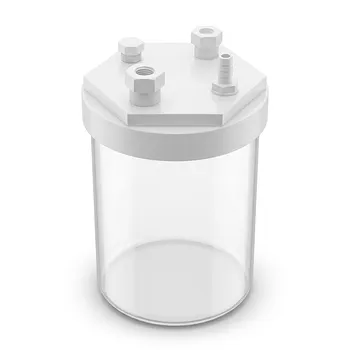
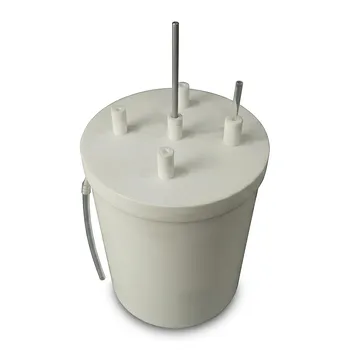
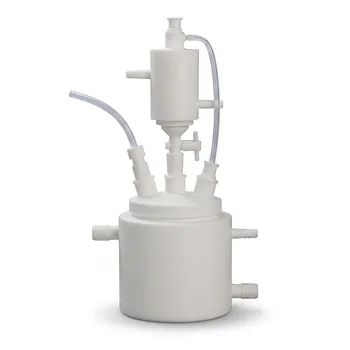
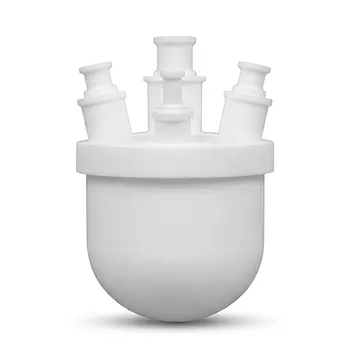
The hydrothermal synthesis reactor serves as the primary engine for the in-situ growth of vertically aligned TiO2 nanowire arrays. It creates a pressurized, high-temperature environment that forces chemical precursors to crystallize directly onto a substrate with high orientation and regularity. This process is essential for building a structural foundation that supports uniform catalyst loading and provides efficient channels for gas diffusion.
The hydrothermal synthesis reactor is the indispensable tool for transforming amorphous precursors into highly ordered, high-aspect-ratio TiO2 nanostructures. By maintaining a sealed, supercritical environment, it enables precise control over crystalline phase, surface area, and the uniform dispersion of active catalytic components.
Engineering the High-Pressure Growth Environment
Achieving Supercritical Solubility and Reactivity
The reactor provides a sealed system that allows solvents to reach temperatures well above their boiling points, creating subcritical or supercritical states. These conditions significantly enhance the solubility of precursor powders, such as titanium-bearing salts or bulk TiO2 particles.
The resulting high-energy environment facilitates complex chemical reactions, including chelation and dehydration, which are impossible at standard atmospheric pressure. This allows the system to move beyond simple mixing into molecular-level material construction.
Facilitating In-Situ Crystalline Growth
The reactor drives the in-situ growth of nanowires directly onto a substrate, ensuring a robust mechanical bond between the catalytic layer and the support. This direct growth avoids the need for binders that can block active sites or degrade over time.
By controlling the thermal energy within the autoclave, researchers can dictate the speed of crystal growth. This results in highly ordered nanowire arrays that provide the necessary geometric framework for advanced catalytic applications.
Precision Control of Catalytic Microstructures
Managing Phase Transitions and Morphology
The hydrothermal environment is critical for determining the final crystalline phase of the titanium dioxide, such as the transition from amorphous structures to pure anatase or rutile. Each phase offers different catalytic properties, and the reactor’s temperature profile is the primary lever for selecting the desired outcome.
Beyond phase, the reactor influences the physical morphology of the nanostructures. It can induce the self-assembly of TiO2 from micron-sized particles into nanosheets, nanotubes, or high-aspect-ratio nanowires depending on the chemical environment and pressure.
Enhancing Surface Area and Gas Diffusion
A primary goal of using a hydrothermal reactor is to create nanostructures with a large specific surface area. This maximizes the available space for active metal deposition, which is crucial for high-performance catalysis.
The resulting nanowire arrays create regularly oriented channels. These channels facilitate highly efficient gas diffusion, reducing mass transport limitations that often plague dense or disordered catalytic layers.
Integration of Active Components
Atomic-Level Dispersion and Ion Exchange
High-pressure conditions enhance the diffusion capability of the solvent, allowing active ions (such as ruthenium or copper) to penetrate deep into the layered TiO2 structures. This achieves a level of metal ion exchange that traditional impregnation methods cannot match.
This process ensures that active components achieve uniform atomic-level dispersion within the matrix. By preventing component segregation, the reactor helps maintain the long-term stability and efficiency of the catalyst.
Ensuring Adhesion and Structural Integrity
The reactor enables the in-situ functionalization of the TiO2 surface with secondary nanoparticles, such as platinum or copper oxides. The high-pressure environment ensures these particles adhere firmly to the nanowire network.
This strong adhesion is vital for the integrity of the crystalline heterojunction. It prevents the leaching or detachment of expensive active metals during high-stress catalytic reactions.
Understanding the Trade-offs
Corrosion and Contamination Risks
The high-temperature, acidic, or highly alkaline environments required for TiO2 growth are extremely corrosive to standard metallic reactor walls. Without proper protection, metal ions can leach into the sample, poisoning the catalyst and ruining the crystalline purity.
Material Limitations of Liners
To combat corrosion, reactors must use PTFE (polytetrafluoroethylene) or PFA liners. While these protect the product, they have strict temperature limits (typically below 250°C), which constrains the thermal window available for synthesizing certain advanced crystalline phases.
How to Apply This to Your Project
Recommendations for Research and Development
- If your primary focus is maximizing catalytic surface area: Use a high-concentration alkaline environment within the reactor to drive the self-assembly of nanotubes or high-aspect-ratio nanowires.
- If your primary focus is phase purity for photocatalysis: Carefully monitor the reactor’s temperature profile to ensure a complete transition to the anatase phase while using a PTFE liner to prevent metal ion contamination.
- If your primary focus is durability in gas-phase reactions: Prioritize in-situ growth protocols within the reactor to ensure the nanowires are chemically bonded to the substrate, preventing layer delamination.
The hydrothermal synthesis reactor remains the definitive tool for researchers seeking to move from random particle coatings to precisely engineered, high-performance catalytic architectures.
Summary Table:
| Key Reactor Role | Technical Function | Impact on Catalytic Layer |
|---|---|---|
| High-Pressure Growth | Creates supercritical solubility conditions | Enhances precursor reactivity and molecular construction |
| In-Situ Synthesis | Direct crystallization onto substrates | Ensures robust mechanical bonding without binders |
| Morphology Control | Regulates nanostructure assembly | Increases specific surface area for active site loading |
| Phase Selection | Manages thermal energy profiles | Dictates transition to active anatase or rutile phases |
| Ion Dispersion | Facilitates deep solvent penetration | Achieves uniform atomic-level active component dispersion |
Elevate Your Research with KINTEK’s Precision Fluoropolymer Solutions
High-performance catalysis requires an environment free from metallic contamination. KINTEK specializes in manufacturing high-purity laboratory supplies crafted exclusively from PTFE and PFA, ensuring your TiO2 synthesis remains untainted and precise.
Whether you need hydrothermal synthesis liners, microwave digestion vessels, or high-purity trace analysis instruments, we provide the ultimate chemical resistance and thermal stability. Our capabilities include:
- Custom Fabrication: End-to-end custom CNC machining for non-standard parts and bespoke laboratory setups.
- Core Labware: From beakers, crucibles, and reagent bottles to high-volume fluid transfer components (tubing, valves, fittings).
- Advanced Apparatus: Specialized electrochemical cells, battery testing fixtures, and microchannel reactors.
- Essential Consumables: High-quality stirring bars, O-rings, gaskets, and filtration tools.
Ready to optimize your catalytic architectures? Contact KINTEK today to discuss your custom project or explore our comprehensive range of high-performance fluoropolymer labware.
References
- Muhammad Yusro, Viktor Hacker. Advantages of ordered catalyst layers in PEMFCs: theoretical perspectives and future development. DOI: 10.1039/d5se00028a
This article is also based on technical information from Kintek Knowledge Base .
Related Products
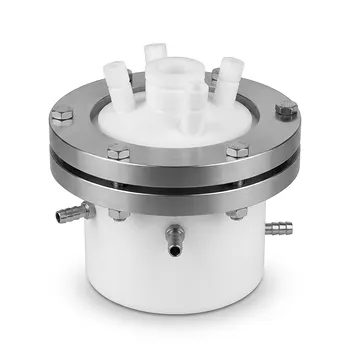
- High Temperature Corrosion Resistant Hydrothermal Synthesis Reactor with TFM Inner Liner and Straight Cylinder Design
- PTFE Lined High Pressure Digestion Vessel 50ml High Temperature Hydrothermal Synthesis Tank
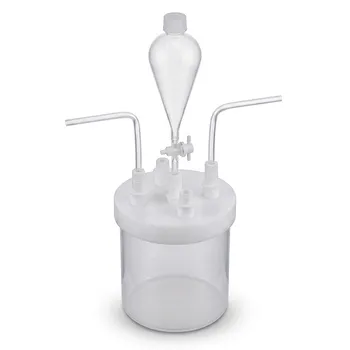
- Custom PTFE Reaction System with Hose Barb Fittings Corrosion Resistant High Sealing 2L 4L Lab Reactor with Separatory Funnel
- High Pressure Custom TFM Reactor Stainless Steel Outer Vessel PTFE Inner Cup for Corrosive Synthesis
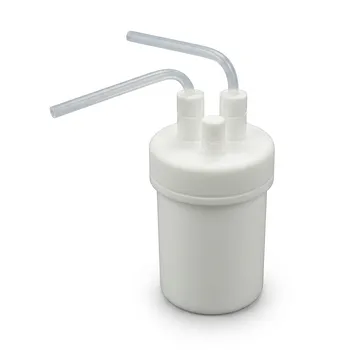
- High Purity PFA Reaction Vessel for Biopharmaceutical Synthesis and Corrosive Chemical Fluid Handling with Customizable Tube Fittings
People Also Ask
- What is the role of a corrosion-resistant reactor in the synthesis of lignin-based carbon dots? Ensure Maximum Purity
- What are the technical advantages of using hydrothermal synthesis reactors for advanced electronic & optical nanomaterials?
- How does a hydrothermal synthesis reactor facilitate the production of crystalline materials with tailored morphologies? Precision Crystal Growth
- Why is the sealing reliability of a hydrothermal synthesis reactor critical for 24-hour cycles? Ensure Nano-Precision
- What role do hydrothermal synthesis reactors play in CQD preparation? Achieve High-Purity Nanomaterial Synthesis