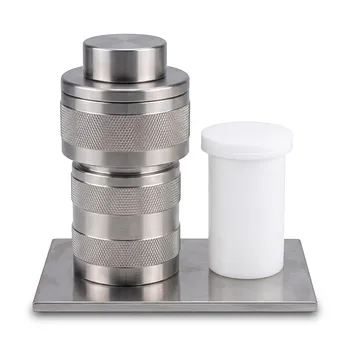
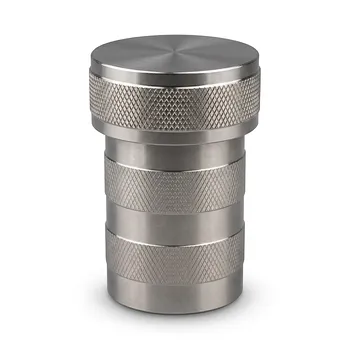
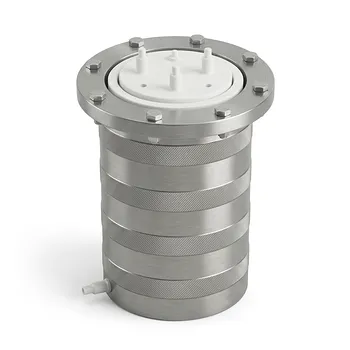
The high-pressure hydrothermal synthesis autoclave is the essential reactor for solvothermal COF production. It provides a sealed environment where heating generates autogenous pressure, allowing solvents to remain in a liquid state at temperatures exceeding their normal boiling points. This high-energy environment is vital for the reversible formation and "error-correction" of covalent bonds, resulting in highly crystalline materials with regular pore structures.
The autoclave acts as a precision pressure vessel that enables subcritical solvent conditions. These conditions facilitate the dynamic covalent chemistry required to transform organic monomers into ordered, long-range crystalline frameworks.
Creating the Solvothermal Environment
Maintaining Subcritical Solvents
The primary role of the autoclave is to keep solvents like water, alcohols, or ethers in a liquid state despite being heated far beyond their atmospheric boiling points. These subcritical conditions significantly enhance the solubility and reactivity of organic monomers. By staying liquid, the solvent can effectively transport reactants and facilitate the collisions necessary for polymerization.
Generating Autogenous Pressure
As the sealed chamber is heated, the internal pressure rises naturally, creating autogenous pressure. This pressure accelerates the dissolution and recrystallization of precursors. It ensures that the reaction mixture reaches a supersaturated state, which is a prerequisite for the controlled nucleation of COF crystals.
Achieving Structural Precision in COFs
Enabling Reversible Covalent Bonding
Unlike standard polymers, COFs require reversible chemical bonding to achieve high crystallinity. The high-temperature environment within the autoclave provides the thermal energy needed for bonds to break and reform. This "error-checking" process allows the framework to repair defects during growth, ensuring a regular pore structure.
Promoting Nucleation and Slow Growth
The controlled environment of the autoclave allows for a transition from a supersaturated solution to the slow growth of single crystals or highly ordered powders. This stability is critical for ensuring the reproducibility of the specific surface area and the integrity of the microporous topology. Rapid, uncontrolled reactions would otherwise result in amorphous, disordered polymers.
The Role of Chemical Inertness and Purity
Preventing Metal Contamination
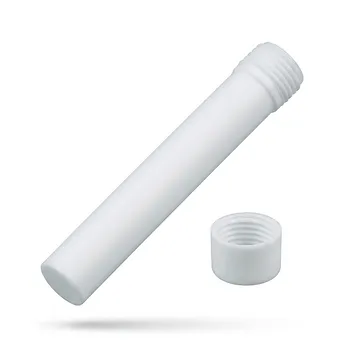
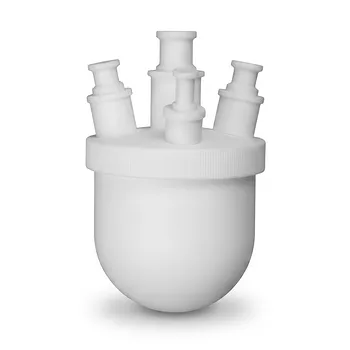
High-pressure autoclaves typically utilize PTFE (Teflon) or PPL liners to house the reaction. These liners provide a chemically inert environment that prevents the reaction liquid from contacting the metal walls of the autoclave. This is crucial for avoiding the introduction of metal impurities, which could interfere with the organic framework's properties or catalytic activity.
Resistance to Corrosive Catalysts
COF synthesis often requires acidic catalysts, such as 3 M acetic acid, to facilitate bond formation. The corrosion-resistant nature of PTFE and PPL liners ensures the reactor can withstand these harsh chemicals at high temperatures. This allows researchers to utilize a wide range of chemical environments without damaging the hardware or compromising the purity of the final product.
Understanding the Trade-offs
Temperature and Material Limitations
While PTFE liners are excellent for chemical resistance, they have strict thermal limits, typically around 220°C to 250°C. Exceeding these temperatures can lead to liner deformation or the release of toxic fumes. For higher-temperature reactions, specialized materials like PPL or gold-plated liners may be required, increasing equipment costs.
Safety and Pressure Management
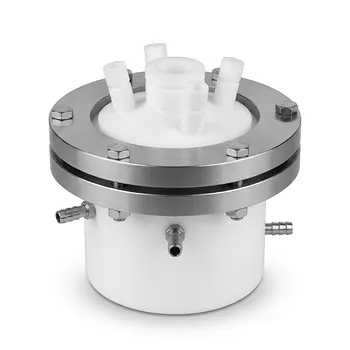
The reliance on autogenous pressure means the internal force is entirely dependent on the temperature and the filling degree of the solvent. Overfilling the liner can lead to an exponential pressure spike upon heating, potentially exceeding the safety limits of the stainless steel shell. Precise calculation of the solvent volume is mandatory to prevent mechanical failure of the reactor.
Applying This to Your Synthesis Goals
How to Apply This to Your Project
- If your primary focus is high crystallinity: Ensure the autoclave temperature is high enough to allow for reversible bonding, typically between 120°C and 200°C depending on the monomers.
- If your primary focus is avoiding impurities: Always use a high-purity PTFE liner and implement a rigorous cleaning protocol to prevent cross-contamination between batches.
- If your primary focus is working with harsh acids: Verify that your liner material (PTFE or PPL) is rated for the specific concentration and temperature of the catalyst you are using.
By mastering the high-pressure environment of the autoclave, you gain the ability to manipulate organic molecules into the sophisticated, highly ordered architectures that define Covalent Organic Frameworks.
Summary Table:
| Feature | Function in COF Synthesis | Benefit to Final Material |
|---|---|---|
| Subcritical Conditions | Keeps solvents liquid above boiling point | Enhanced monomer solubility and reactivity |
| Autogenous Pressure | Facilitates dissolution and recrystallization | Controlled nucleation and regular pore growth |
| Thermal Energy | Enables reversible covalent bonding | "Error-correction" for high crystallinity |
| PTFE/PPL Liners | Provides a chemically inert environment | Prevents metal contamination and resists acids |
Elevate Your Advanced Material Synthesis with KINTEK
Achieve unmatched precision in your COF production with KINTEK’s high-performance fluoropolymer solutions. We specialize in manufacturing virtually all laboratory supplies crafted from PTFE and PFA, specifically designed for the demanding environments of high-pressure synthesis.
From hydrothermal synthesis liners and microwave digestion vessels to high-purity trace analysis instruments and custom electrochemical cells, our products ensure zero contamination and superior chemical resistance. Whether you require everyday consumables like stirring bars and O-rings, fluid transfer components such as tubing and valves, or bespoke laboratory setups via our end-to-end custom CNC fabrication, KINTEK provides the reliability your research demands.
Ready to optimize your lab's performance? Contact KINTEK today to discuss your standard or custom requirements!
References
- Shuanglong Lu, Wei Zhang. Covalent porous catalysts for electrochemical reduction of CO<sub>2</sub>. DOI: 10.1039/d4gc00717d
This article is also based on technical information from Kintek Knowledge Base .
Related Products
- PTFE Lined High Pressure Digestion Vessel 50ml High Temperature Hydrothermal Synthesis Tank
- Custom TFM Reaction Vessel with Stainless Steel Jacket and PTFE Inner Cup for High Corrosion Resistance
- High Temperature Corrosion Resistant Hydrothermal Synthesis Reactor with TFM Inner Liner and Straight Cylinder Design
- High Pressure Custom TFM Reactor Stainless Steel Outer Vessel PTFE Inner Cup for Corrosive Synthesis
- High Purity TFM Microwave Digestion Vessels PTFE Acid Evaporation Liners Domestic GT-400 Equivalent Laboratory Reaction Containers
People Also Ask
- What are the benefits of using a PTFE-lined vessel for carbon-sulfur cathode treatment? Maximize Purity & Performance
- Why are PTFE-lined pressure digestion vessels required for the preparation of Ag/CeO2 catalysts? Purity & Performance
- What safety features are typically incorporated into high-pressure PTFE digestion vessel designs? Ensure Lab Safety
- What is the function of high-pressure PTFE digestion vessels in mineral analysis? Optimize Sample Mineralization
- What is the function of PTFE lined high-pressure vessels in g-C3N4 synthesis? Achieve High-Purity Material Growth