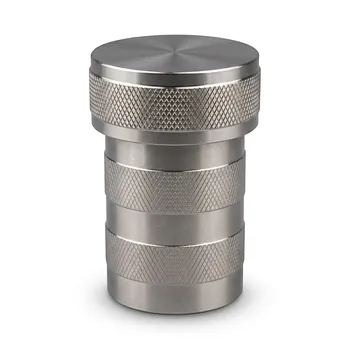
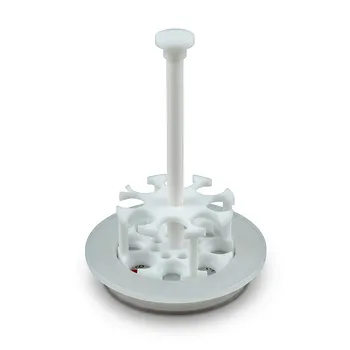
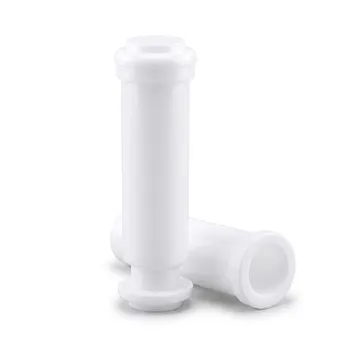
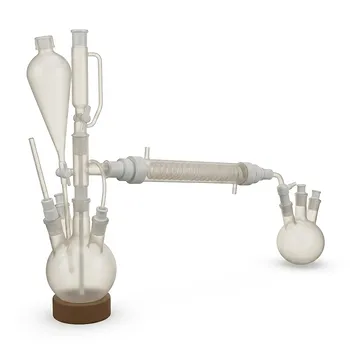
The high-pressure hydrothermal autoclave is the foundational reactor for the precision synthesis of Bimetallic MIL-53 (Al, Ni)/ZnO nanocomposites. It provides a controlled, sealed environment where high temperatures and autogenous pressures drive the coordination assembly of aluminum and nickel ions with terephthalic acid ligands. This specialized atmosphere ensures that zinc oxide (ZnO) nanoparticles are tightly integrated into the metal-organic framework (MOF), resulting in a stable and highly crystalline composite structure.
The autoclave acts as a high-energy catalyst for structural formation, using pressure to maintain solvents in a liquid state far above their boiling points. This environment is essential for the dissolution-recrystallization process that bonds ZnO to the MOF lattice, creating a durable and functional heterojunction.
Driving Coordination Assembly and Crystallization
Overcoming Energy Barriers for Ligand Bonding
The synthesis of Bimetallic MIL-53 requires significant energy to facilitate effective collisions between metal ions (Al, Ni) and terephthalic acid ligands. The autoclave’s high-temperature environment provides the thermal energy necessary for these components to assemble into a structured microporous framework. Without this contained heat, the coordination bonds required for the MOF structure would fail to form properly.
Maintaining Liquid States Above Boiling Points
A critical role of the autoclave is maintaining solvents, such as water or glycols, in a liquid state at temperatures significantly exceeding their normal boiling points. This is achieved through the generation of autogenous pressure within the sealed vessel. This "subcritical" solvent environment is vital for the complete dissolution of precursors, which is a prerequisite for uniform crystal growth.
Enhancing Crystal Integrity and Stability
The high-pressure environment promotes the complete growth of the crystal structure, minimizing defects within the lattice. By providing a stable, enclosed space for long-duration reactions, the autoclave ensures the final MIL-53 (Al, Ni)/ZnO nanocomposite possesses high thermal and structural stability. This results in a material that can withstand demanding applications without degrading.
Achieving Structural Integration of ZnO
Formation of Tight Heterojunction Interfaces
The autoclave facilitates the dissolution-recrystallization of precursors, allowing ZnO nanoparticles to become deeply embedded within the MOF matrix. This process creates a tight heterojunction interface between the ZnO and the bimetallic MIL-53 framework. Such a seamless connection is crucial for efficient charge separation and improved performance in catalytic or adsorption tasks.
Regulating Nucleation and Growth Kinetics
By precisely controlling temperature and pressure, the autoclave allows for the regulation of crystal nucleation and growth kinetics. This enables "programmatic control" over the morphology and size of the ZnO components within the composite. This level of engineering ensures that specific crystal planes are exposed, which can significantly enhance the material's chemical reactivity.
Ensuring Uniform In-Situ Growth
The hydrothermal method allows ZnO to grow in-situ on or within the surface of the MOF structure. This ensures a uniform distribution of nanoparticles, preventing the aggregation that often occurs in traditional mixing methods. The result is a three-dimensional structure with a high surface area and optimized active sites.
Understanding the Trade-offs and Limitations
Complexity of Real-Time Monitoring
One of the primary challenges of using a high-pressure autoclave is its "black box" nature. Because the reaction occurs within a sealed, thick-walled steel vessel, it is difficult to monitor real-time crystal growth or phase changes. This requires researchers to rely on post-synthesis analysis to determine if the reaction conditions were optimal.
Safety and Equipment Requirements
Operating at high temperatures and pressures carries inherent safety risks, including the potential for vessel failure if limits are exceeded. The equipment requires specialized maintenance and rigorous safety protocols to manage the autogenous pressure generated during the hydrothermal process. Furthermore, the high-quality materials required for autoclave construction can increase the initial laboratory setup costs.
Scalability Constraints
While autoclaves are excellent for producing high-quality crystals on a laboratory scale, industrial scaling can be complex. Maintaining uniform temperature gradients throughout a very large pressure vessel is technically challenging. This can lead to variations in batch quality if the heating and cooling cycles are not perfectly calibrated for larger volumes.
How to Apply This to Your Project
Recommendations for Synthesis Goals
- If your primary focus is maximizing crystallinity: Ensure the autoclave is kept at a constant, high temperature for an extended period to allow for slow, defect-free crystal assembly.
- If your primary focus is morphology control: Focus on precisely regulating the pressure and cooling rate, as these kinetics dictate the final shape and facet orientation of the ZnO nanoparticles.
- If your primary focus is material purity: Use the autoclave to facilitate complete precursor dissolution, which helps in washing away unreacted ligands during the post-synthesis phase.
Mastering the hydrothermal environment allows you to unlock the full potential of bimetallic nanocomposites by transforming simple precursors into highly ordered, high-performance materials.
Summary Table:
| Key Role | Mechanism | Primary Benefit |
|---|---|---|
| Coordination Assembly | Contained thermal energy facilitates metal-ligand bonding | Highly crystalline, structured framework |
| Phase Maintenance | Autogenous pressure keeps solvents liquid above boiling points | Complete precursor dissolution & uniform growth |
| Structural Integration | Facilitates dissolution-recrystallization of ZnO | Formation of tight, efficient heterojunctions |
| Kinetics Regulation | Precision control over nucleation and growth | Programmatic morphology and size control |
Elevate Your Nanomaterials Research with KINTEK’s Precision Fluoropolymers
Achieving the perfect Bimetallic MIL-53 (Al, Ni)/ZnO nanocomposite requires not only precise temperature control but also high-purity, chemically resistant environments. KINTEK specializes in manufacturing high-performance laboratory supplies crafted exclusively from PTFE and PFA to ensure your synthesis remains free from contamination.
From hydrothermal synthesis liners and microwave digestion vessels to everyday essentials like high-purity beakers, reagent bottles, and centrifuge tubes, we provide the tools necessary for advanced material engineering. Our expertise extends to comprehensive fluid transfer components (tubing, fittings, valves), sample prep tools (filters, pipettes, tweezers), and advanced reaction apparatus like custom electrochemical cells and battery testing fixtures.
Why partner with KINTEK?
- Bespoke Engineering: Backed by end-to-end custom CNC fabrication, we deliver complex, non-standard machined parts and bespoke laboratory setups tailored to your specific project.
- Unmatched Purity: Our absolute focus on fluoropolymers ensures your high-purity trace analysis remains accurate and reliable.
- Comprehensive Range: We manufacture virtually all imaginable laboratory supplies, supporting everything from basic labware to advanced derivative reaction systems.
Ready to optimize your laboratory setup with high-performance components? Contact us today to discuss your custom requirements!
References
- Zinat Gordi, Shiva Teilaghi. Novel Ni/Fe-MIL-53@ZnO nanocomposite for efficient photodegradation of aflatoxins G1 and G2. DOI: 10.1038/s41598-025-94863-9
This article is also based on technical information from Kintek Knowledge Base .
Related Products
- High Temperature Corrosion Resistant Hydrothermal Synthesis Reactor with TFM Inner Liner and Straight Cylinder Design
- PTFE Lined High Pressure Digestion Vessel 50ml High Temperature Hydrothermal Synthesis Tank
- Custom TFM Reaction Vessel with Stainless Steel Jacket and PTFE Inner Cup for High Corrosion Resistance
- High Performance TFM Microwave Digestion Vessel Rack 15 Position Customizable Sample Preparation Support
- High Pressure Custom TFM Reactor Stainless Steel Outer Vessel PTFE Inner Cup for Corrosive Synthesis
People Also Ask
- What is the role of a corrosion-resistant reactor in the synthesis of lignin-based carbon dots? Ensure Maximum Purity
- What are the technical advantages of using hydrothermal synthesis reactors for advanced electronic & optical nanomaterials?
- How does a hydrothermal synthesis reactor facilitate the production of crystalline materials with tailored morphologies? Precision Crystal Growth
- Why is the sealing reliability of a hydrothermal synthesis reactor critical for 24-hour cycles? Ensure Nano-Precision
- What role do hydrothermal synthesis reactors play in CQD preparation? Achieve High-Purity Nanomaterial Synthesis