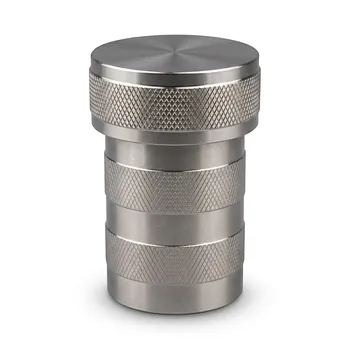
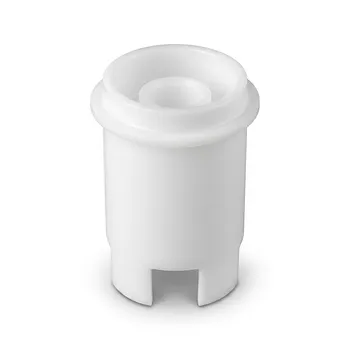
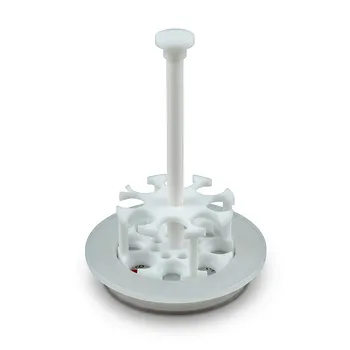
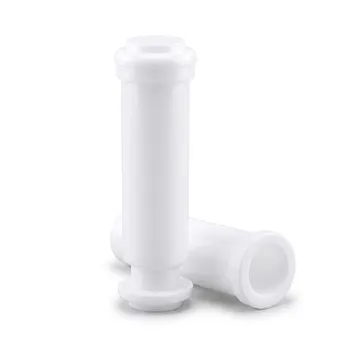
The high-pressure autoclave serves as the primary engine for crystal facet engineering in ZnO synthesis. It creates a sealed environment where elevated temperatures and pressures regulate the nucleation and growth kinetics of the zinc precursor. This specific thermal environment allows for the preferential growth of specific crystal planes, such as 101, 103, and 112, which are otherwise difficult to isolate under atmospheric conditions.
The core role of the high-pressure autoclave is to provide a stable, hydrothermal environment that drives the dissolution-recrystallization process. This enables precise control over anisotropic growth, allowing for the "tuning" of specific crystal facets to enhance the material's chemical and physical properties.
The Mechanics of Facet Engineering
Regulating Growth Kinetics
The autoclave provides a closed system where temperature and pressure can be maintained far beyond the boiling point of the solvent. This environment allows for the precise regulation of crystal nucleation, ensuring that the energy barriers for specific facets are met. By controlling these kinetics, researchers can favor the expression of desired crystal planes over the naturally dominant ones.
Promoting Anisotropic Growth
Under high pressure, the precursor solution reaches a state of supersaturation that is critical for directional growth. This pressure-assisted environment encourages anisotropic growth along the [0001] direction or other specific orientations. This is the fundamental mechanism used to transition from simple spherical particles to facet-tuned geometries like nanowires or nanosheets.
Facilitating Dissolution-Recrystallization
The high-pressure environment is essential for the dissolution-recrystallization process of the zinc hydroxide precursor. In this cycle, raw materials dissolve into the aqueous solution and then recrystallize into the stable wurtzite structure. This process is vital for ensuring that the resulting nanoparticles possess high crystallinity and well-defined surface facets.
Enhancing Material Quality and Purity
Maintaining Solvent Liquid States
The sealed nature of the autoclave allows water or other solvents to remain in a liquid state at temperatures significantly higher than their normal boiling points (e.g., 150°C). This increases the solubility of solid reactants, which accelerates the solid-phase reaction kinetics. Higher solubility ensures a more homogeneous reaction mixture, leading to more uniform facet distribution.
Ensuring Chemical Purity
Most high-pressure autoclaves utilize fluoropolymer liners (PTFE or PFA) to protect the stainless steel vessel. These liners prevent metal ion contamination from the reactor walls, which is crucial when working in the strong alkaline environments required for ZnO synthesis. This ensures that the facet tuning is not disrupted by impurities that could poison the crystal growth sites.
Stabilizing Complex Structures
In the synthesis of hybrid materials, such as ZnO integrated with Metal-Organic Frameworks (MOFs), the autoclave acts as a driver for coordination assembly. The high-pressure environment ensures a tight integration between the ZnO nanoparticles and the supporting framework. This leads to the formation of stable heterojunction interfaces, which are critical for applications like photocatalysis.
Understanding the Trade-offs
The Risk of Pressure-Induced Defects
While high pressure promotes growth, excessive pressure or rapid decompression can introduce structural defects or lattice strain. These defects can negatively impact the electronic properties of the ZnO nanoparticles, potentially neutralizing the benefits gained from facet tuning.
Energy and Safety Requirements
Hydrothermal synthesis in high-pressure autoclaves is energy-intensive and requires rigorous safety protocols. The equipment must be rated for the specific temperature-pressure combinations to prevent vessel failure. Additionally, the process is typically a batch operation, which can lead to variations between different synthesis runs if parameters are not strictly controlled.
Applying Autoclave Technology to Your Synthesis
How to Apply This to Your Project
To achieve the best results in facet-tuned ZnO synthesis, you must align your autoclave parameters with your specific material requirements.
- If your primary focus is high crystallinity: Maintain a steady, high-temperature hydrothermal environment (typically 150°C) to allow for complete recrystallization into the wurtzite phase.
- If your primary focus is specific morphology (e.g., nanowires): Adjust the precursor concentration and pressure to ensure the solution reaches the exact supersaturation point required for anisotropic growth along the [0001] axis.
- If your primary focus is chemical purity and stability: Always utilize a high-quality PTFE liner and ensure the autoclave is properly sealed to prevent the evaporation of volatile reagents or contamination from the steel vessel.
Mastering the high-pressure environment of the autoclave is the definitive step in transitioning from basic nanoparticle synthesis to advanced, facet-level material engineering.
Summary Table:
| Key Mechanism | Role in ZnO Synthesis | Desired Outcome |
|---|---|---|
| Growth Kinetics | Regulates nucleation rates beyond boiling points | Isolation of specific planes (101, 103, 112) |
| Anisotropic Growth | Drives supersaturation for directional expansion | Transition to nanowires or nanosheets |
| Dissolution-Recrystallization | Facilitates wurtzite structure formation | High crystallinity and defined surface facets |
| Fluoropolymer Lining | Prevents metal ion contamination from steel | Superior chemical purity and material stability |
Elevate Your Crystal Engineering with KINTEK Precision
Precise facet tuning in ZnO synthesis demands an environment free from contamination and capable of withstanding extreme conditions. KINTEK specializes in high-performance fluoropolymer solutions designed specifically for advanced hydrothermal synthesis.
From high-purity PTFE and PFA liners for autoclaves and microwave digestion vessels to custom-machined fluid transfer components, we provide the tools necessary for zero-contamination research. Whether you require standard labware like beakers and reagent bottles or complex, bespoke CNC-fabricated reaction apparatus and electrochemical cells, KINTEK’s absolute focus on fluoropolymer excellence ensures your results remain pure and reproducible.
Ready to optimize your lab’s synthesis capabilities? Contact KINTEK today for high-performance fluoropolymer equipment tailored to your specific research needs.
References
- Priyanka Paul, Md. Sahadat Hossain. Crystallographic facet engineering of ZnO nanoparticles for photocatalytic organic pollutant degradation and antibacterial activity. DOI: 10.1039/d5ma00316d
This article is also based on technical information from Kintek Knowledge Base .
Related Products
- PTFE Lined High Pressure Digestion Vessel 50ml High Temperature Hydrothermal Synthesis Tank
- High Temperature Corrosion Resistant Hydrothermal Synthesis Reactor with TFM Inner Liner and Straight Cylinder Design
- Custom TFM Reaction Vessel with Stainless Steel Jacket and PTFE Inner Cup for High Corrosion Resistance
- High Pressure PTFE Digestion Vessel Inner Cup Holder Custom Corrosion Resistant Low Background Teflon
- High Performance TFM Microwave Digestion Vessel Rack 15 Position Customizable Sample Preparation Support
People Also Ask
- What are the benefits of using a PTFE-lined vessel for carbon-sulfur cathode treatment? Maximize Purity & Performance
- Why are PTFE-lined pressure digestion vessels required for the preparation of Ag/CeO2 catalysts? Purity & Performance
- What safety features are typically incorporated into high-pressure PTFE digestion vessel designs? Ensure Lab Safety
- What is the function of PTFE lined high-pressure vessels in g-C3N4 synthesis? Achieve High-Purity Material Growth
- Role of High-Pressure Digestion Tanks in Perovskite Synthesis: Achieve Superior Stability and Latent Heat