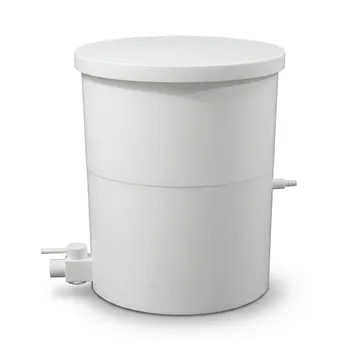
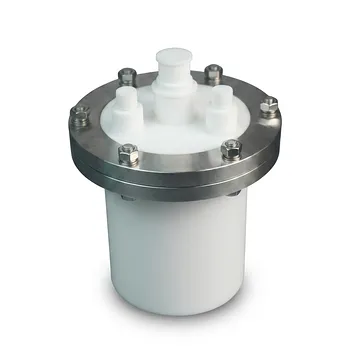
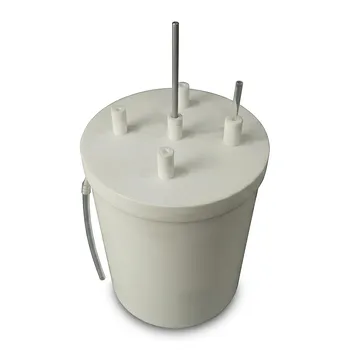
Reactor linings are the critical safeguard in hydrothermal crystal growth. They serve as a physical barrier between aggressive mineralizing agents and the steel pressure vessel. This prevents the chemical degradation of the equipment and ensures the high purity required for high-quality synthetic gemstones and industrial crystals.
Reactor linings protect hydrothermal equipment from catastrophic corrosion while ensuring the optical and structural integrity of synthetic crystals by preventing metallic contamination from the pressure vessel itself.
The Battle Against Aggressive Chemicals
Neutralizing Mineralizer Corrosion
The growth of single crystals often requires the use of aggressive mineralizers like sodium hydroxide or ammonium chloride. These chemicals are essential for dissolving raw materials but are highly corrosive to standard engineering materials.
Without a lining, these chemicals would rapidly attack and eat away at the interior of a steel reactor. This corrosion would significantly shorten the operational lifespan of expensive pressure vessels.
Preservation of Pressure Vessel Integrity
The pressure vessel is the most expensive and dangerous component of a hydrothermal system. By acting as a protective barrier, the lining ensures the structural steel does not lose its thickness or mechanical strength.
This protection is vital for maintaining the high-pressure environment required for the growth process. A compromised vessel wall could lead to catastrophic equipment failure under the intense stresses of crystal synthesis.
Safeguarding Crystal Purity and Aesthetics
Preventing Structural Defects
In single crystal growth, even trace amounts of foreign elements can disrupt the lattice structure. If the mineralizers react with an unprotected steel vessel, they leach iron and chromium into the growth solution.
These metallic impurities can introduce structural defects within the crystal. This reduces the mechanical and piezoelectric quality of industrial crystals like quartz, rendering them useless for precision applications.
Eliminating Unwanted Color Centers
For gem synthesis—specifically rubies, emeralds, and quartz—optical clarity is paramount. Metallic contamination from the reactor wall often creates unwanted color centers in the growing crystal.
These impurities can cause discoloration or cloudiness that ruins the value of the synthetic gemstone. The lining ensures that the growth environment remains chemically inert, allowing for the production of vibrant, high-purity gems.
Understanding the Trade-offs
Thermal Conductivity and Vessel Volume
While linings are essential, they introduce a layer of thermal resistance between the heating elements and the growth solution. This requires more precise temperature control to maintain the necessary thermal gradients for crystal growth.
Additionally, the presence of a lining reduces the effective internal volume of the reactor. Manufacturers must balance the thickness of the lining against the desired yield of crystals per growth cycle.
Maintenance and Material Compatibility
Linings are not permanent and must be inspected for leaks or thinning over time. A breach in the lining can lead to "hidden" corrosion between the liner and the vessel wall, which is difficult to detect.
Furthermore, the lining material must be specifically chosen to be chemically compatible with the mineralizer being used. A lining that works for sodium hydroxide may not be suitable for acidic environments like ammonium chloride.
How to Apply This to Your Project
Ensuring Success in Crystal Synthesis
The choice and maintenance of a reactor lining are fundamental to the success of any hydrothermal synthesis operation.
- If your primary focus is equipment longevity: Ensure your lining material is completely inert to your specific mineralizer to prevent "pitting" or gradual thinning of the pressure vessel.
- If your primary focus is optical-grade gemstones: Prioritize a high-purity lining that eliminates all potential iron or chromium leaching to prevent unwanted color centers.
- If your primary focus is industrial quartz production: Focus on a lining that prevents structural defects by maintaining a contamination-free environment for the crystal lattice to form perfectly.
Ultimately, a high-quality reactor lining is the primary line of defense that turns a volatile chemical process into a controlled environment for growing perfect crystals.
Summary Table:
| Function | Primary Benefit | Impact on Quality |
|---|---|---|
| Chemical Barrier | Prevents mineralizers from corroding steel | Extends pressure vessel lifespan |
| Contamination Control | Blocks leaching of iron and chromium | Prevents unwanted color centers in gems |
| Lattice Protection | Maintains a metal-free growth solution | Eliminates structural defects in crystals |
| Pressure Safety | Protects vessel wall thickness | Ensures structural integrity under high stress |
Elevate Your Synthesis Precision with KINTEK
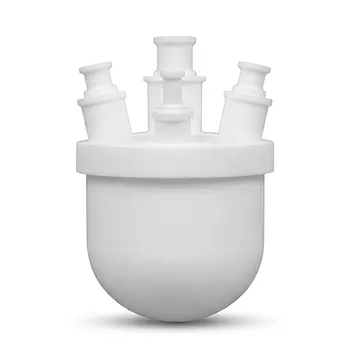
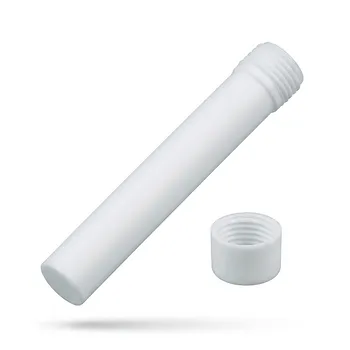
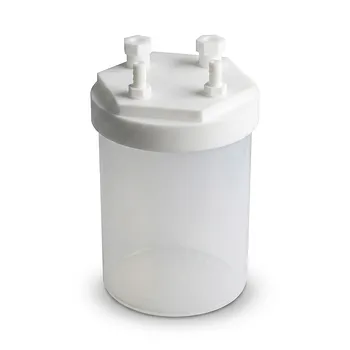
Achieve uncompromising purity and protect your critical equipment with KINTEK’s high-performance fluoropolymer solutions. Specialized in the growth of high-quality synthetic gems and industrial crystals, we offer everything from standard PTFE and PFA liners to bespoke hydrothermal synthesis vessels designed to withstand the most aggressive mineralizers.
Our expertise extends across a comprehensive range of laboratory essentials, including:
- Basic Labware: High-purity beakers, crucibles, and reagent bottles.
- Fluid Handling: Tubing, fittings, and precision valves.
- Advanced Apparatus: Custom microwave digestion vessels, microchannel reactors, and electrochemical cells.
- Custom Fabrication: End-to-end CNC machining for complex, non-standard parts tailored to your specific research needs.
Don't let metallic contamination compromise your crystal quality. Contact KINTEK today to discuss your project requirements and experience the performance of our absolute focus on high-performance fluoropolymer materials.
Related Products
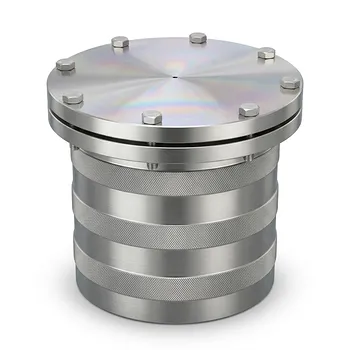
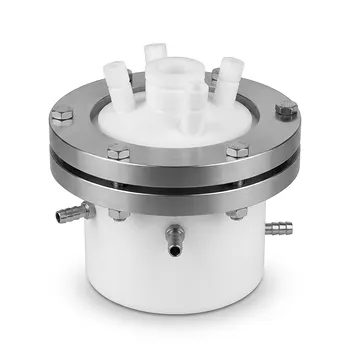
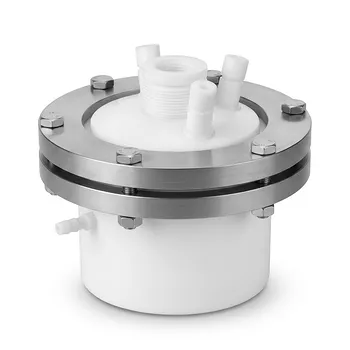
- Custom TFM Reaction Vessel with Stainless Steel Jacket and PTFE Inner Cup for High Corrosion Resistance
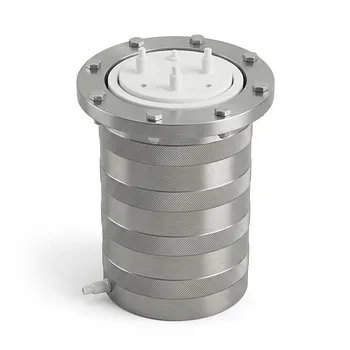
- High Pressure Custom TFM Reactor Stainless Steel Outer Vessel PTFE Inner Cup for Corrosive Synthesis
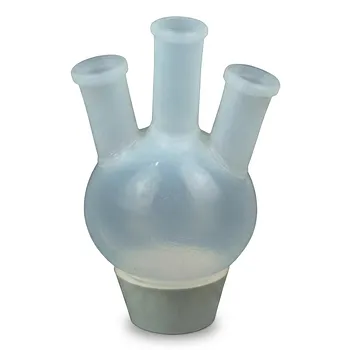
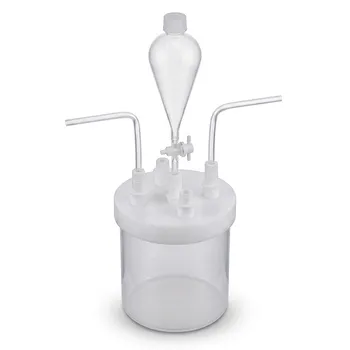
- Custom Corrosion Resistant PFA PTFE Multi Neck Laboratory Reaction Flask GL Standard Mouth Fluoropolymer Flasks
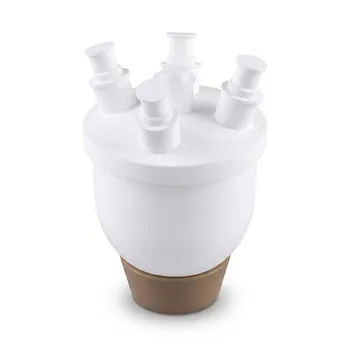
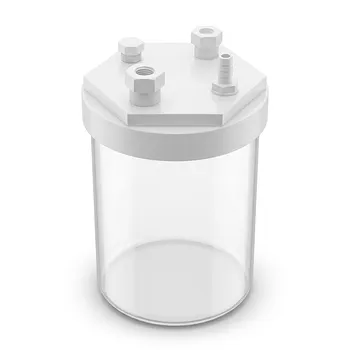
- High Performance Customizable PTFE Reaction Vessel and Corrosion Resistant Polytetrafluoroethylene Flask for Chemical Laboratory Use
- Large Scale PTFE Double Layer Reaction Tank with Integrated Filter Plate High Purity Polytetrafluoroethylene Chemical Vessel 25L
People Also Ask
- Why are high-performance pressure-resistant reaction vessels required for oxygen-assisted hydrothermal conversion at 150 °C?
- How do magnetic stirring and reaction vessels impact MOF-derived carbon quality? Optimize Your Composite Performance
- Why are high-quality fluoropolymer-lined reaction vessels required for alk-Ti3C2Tx MXene? Ensure Purity & HF Resistance
- Why are PTFE-lined reaction vessels necessary for forced degradation studies? Ensure high-purity results and accuracy.
- Why is a high-purity PTFE lined reaction vessel required for the acidic etching of MXenes? Ensure Material Purity.