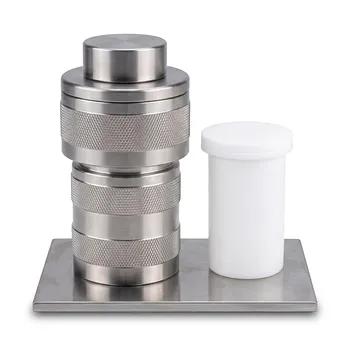
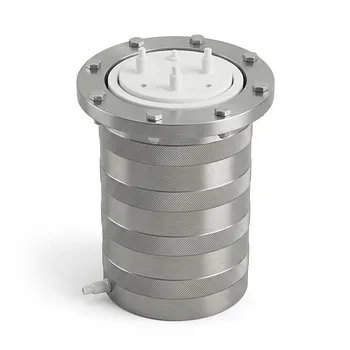
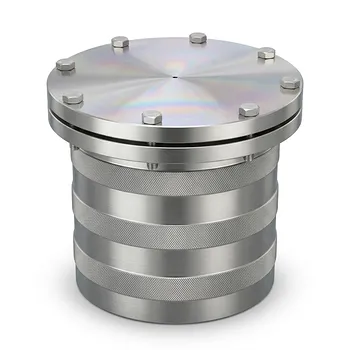
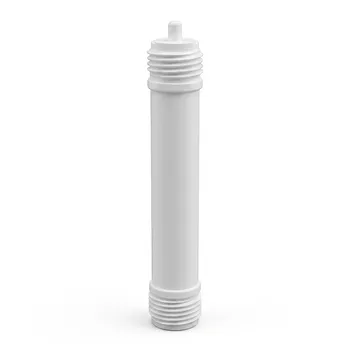
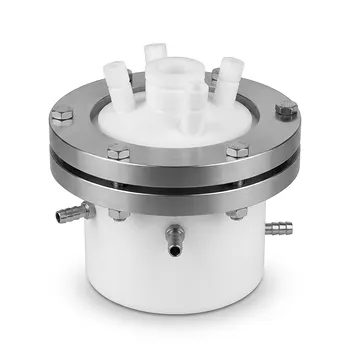
In the hydrothermal synthesis of ZGGO nanoparticles, PTFE and PFA liners function as the primary barrier to chemical contamination and reactor degradation. These liners provide a stable, chemically inert environment that isolates the reaction mixture—often containing alkaline precursors—from the stainless steel walls of the autoclave. By preventing the leaching of transition metals like iron or chromium into the solution, they ensure the high purity and structural integrity of the synthesized ZGGO nanocrystals.
The core role of PTFE or PFA liners is to create a "clean-room" environment within a high-pressure reactor, shielding the ZGGO reaction from metallic impurities. This isolation is essential for maintaining the precise stoichiometry and morphological uniformity required for high-performance nanoparticles.
Maintaining Elemental Purity in ZGGO Synthesis
Preventing Metal Ion Leaching
During hydrothermal processes, the high-temperature water acts as a powerful solvent that can draw metal ions out of the stainless steel autoclave walls. PTFE (Polytetrafluoroethylene) and PFA (Perfluoroalkoxy) liners act as a physical and chemical barrier that stops this leaching process entirely. Without this barrier, contaminants like iron or nickel would integrate into the ZGGO lattice, significantly altering its electronic and optical properties.
Corrosion Resistance against Alkaline Precursors
The synthesis of ZGGO often involves weak alkaline solutions (pH 8.0) and various metal precursors that can be corrosive to steel under heat. Polymer liners are chosen specifically for their exceptional chemical inertness, allowing them to resist attack from strong bases, acids, and organic solvents. This ensures that the chemical composition of the reaction medium remains exactly as intended by the researcher.
Structural and Thermal Stability Under Pressure
Withstanding Autogenous Pressure
Hydrothermal synthesis relies on autogenous pressure generated by heating a liquid in a sealed vessel. PTFE and PFA liners are engineered to maintain their seal and structural integrity even as internal pressures rise significantly. This creates a controlled reaction environment where ZGGO nucleation can occur consistently over long durations, such as 12-hour reaction cycles.
Thermal Performance and Limits
These fluoropolymers are stable at the temperatures required for ZGGO synthesis, typically ranging from 170°C to 200°C. While the stainless steel outer shell provides the mechanical strength to hold pressure, the liner provides the thermal stability and chemical resistance necessary to protect the sample. This combination allows for the safe preparation of nanocrystals and quantum dots that require sustained high-heat environments.
Ensuring Morphological Uniformity and Recovery
Facilitating Uniform Nucleation
A clean environment provided by the liner prevents "seeding" from wall impurities, which can lead to irregular crystal growth. By ensuring that nucleation only occurs from the precursors themselves, researchers achieve morphological uniformity across the nanoparticle batch. This consistency is vital for applications where particle size directly influences performance.
Non-Stick Properties for Sample Recovery
Fluoropolymer liners possess non-stick properties that prevent the synthesized ZGGO nanoparticles from adhering to the vessel walls. This simplifies the sample recovery process, ensuring that the maximum amount of material is collected after the experiment. Furthermore, these properties make the vessels easier to clean, reducing the risk of cross-contamination between different synthesis batches.
Understanding the Trade-offs
Temperature and Pressure Limitations
While PTFE and PFA are robust, they have a maximum operating temperature (typically 250°C for PTFE) beyond which they may soften or deform. Exceeding these limits can lead to liner failure or "creeping," where the polymer flows into the threads of the autoclave, potentially causing a dangerous pressure release.
Thermal Lag and Material Expansion
Polymer liners act as thermal insulators, meaning there is a slight delay between the furnace temperature and the internal reaction temperature. Additionally, these materials have a higher coefficient of thermal expansion than the steel shell. If the liner is filled too high, the expansion of the polymer and the liquid can lead to internal mechanical stress on the autoclave.
How to Apply This to Your Project
Making the Right Choice for Your Goal
- If your primary focus is maximum chemical purity: Prioritize high-purity PFA liners, as they often have even lower trace-metal leaching rates than standard PTFE.
- If your primary focus is high-temperature synthesis (above 220°C): Ensure your autoclave design accounts for PTFE thermal expansion to prevent liner deformation and potential safety hazards.
- If your primary focus is high-throughput or repetitive testing: Leverage the non-stick nature of these liners to ensure rapid cleaning and to prevent cross-contamination between ZGGO batches.
Selecting the appropriate liner is not merely a convenience but a fundamental requirement for ensuring the repeatable, high-purity synthesis of complex nanomaterials like ZGGO.
Summary Table:
| Feature | Function in ZGGO Synthesis | Impact on Final Nanoparticles |
|---|---|---|
| Chemical Inertness | Prevents leaching of Fe/Cr from steel | Maintains precise stoichiometry and high purity |
| Corrosion Resistance | Resists alkaline precursors (pH 8.0) | Protects reactor and ensures medium stability |
| Non-Stick Surface | Minimizes wall adhesion | Facilitates sample recovery and uniform nucleation |
| Thermal Stability | Operates safely at 170°C - 200°C | Provides a controlled environment for 12h+ cycles |
Elevate Your Synthesis with KINTEK’s High-Performance Fluoropolymer Solutions
Precision in ZGGO nanoparticle synthesis demands an environment free from metallic impurities. At KINTEK, we specialize in the engineering and manufacture of high-purity PTFE and PFA laboratory supplies designed to withstand the rigors of hydrothermal processes.
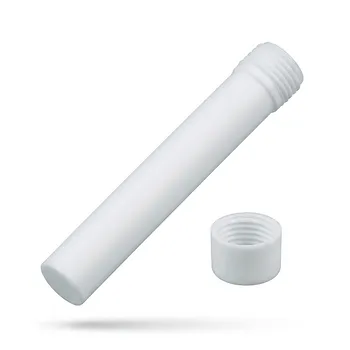
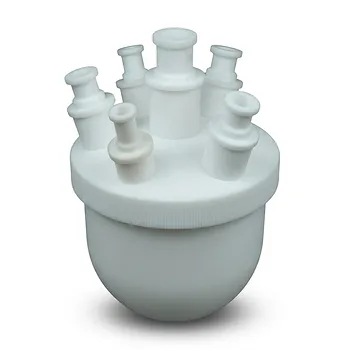
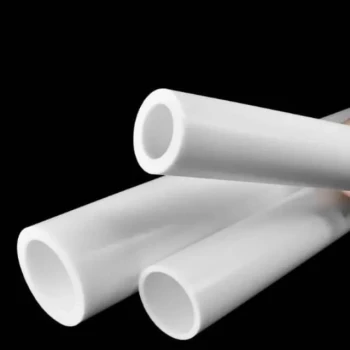
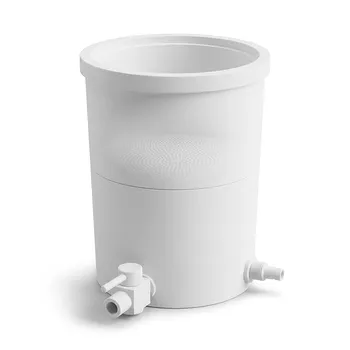
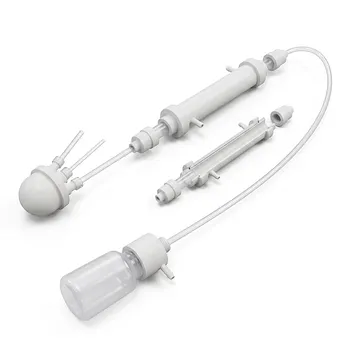
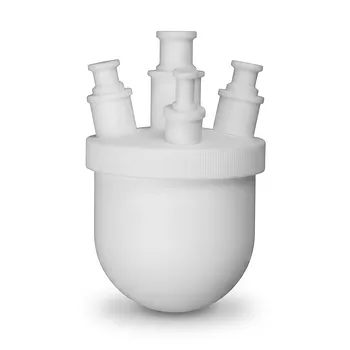
From standard liners, beakers, and digestion tubes to custom CNC-fabricated reaction apparatus and microchannel reactors, we provide the chemical inertness and thermal stability your research requires. Whether you need everyday consumables like stirring bars and fittings or complex, non-standard machined parts, our end-to-end fabrication capabilities ensure absolute quality for both bespoke setups and high-volume orders.
Ready to optimize your lab’s performance? Contact us today to discuss your custom fluoropolymer requirements.
References
- Yaqi Zhu, Zhen Lei. Crystal lattice site occupation-based optical properties in Co2+-doped ZGGO persistent luminescence nanoparticles. DOI: 10.1038/s41598-025-23381-5
This article is also based on technical information from Kintek Knowledge Base .
Related Products
- PTFE Lined High Pressure Digestion Vessel 50ml High Temperature Hydrothermal Synthesis Tank
- High Pressure Custom TFM Reactor Stainless Steel Outer Vessel PTFE Inner Cup for Corrosive Synthesis
- Custom TFM Reaction Vessel with Stainless Steel Jacket and PTFE Inner Cup for High Corrosion Resistance
- High Purity PTFE Microwave Digestion Vessel for Soil and Food Analysis Acid Resistant Fluoropolymer Sample Preparation Liners
- High Purity TFM Microwave Digestion Vessels PTFE Acid Evaporation Liners Domestic GT-400 Equivalent Laboratory Reaction Containers
People Also Ask
- What are the benefits of using a PTFE-lined vessel for carbon-sulfur cathode treatment? Maximize Purity & Performance
- Why are PTFE-lined pressure digestion vessels required for the preparation of Ag/CeO2 catalysts? Purity & Performance
- What safety features are typically incorporated into high-pressure PTFE digestion vessel designs? Ensure Lab Safety
- What is the function of PTFE lined high-pressure vessels in g-C3N4 synthesis? Achieve High-Purity Material Growth
- Role of High-Pressure Digestion Tanks in Perovskite Synthesis: Achieve Superior Stability and Latent Heat