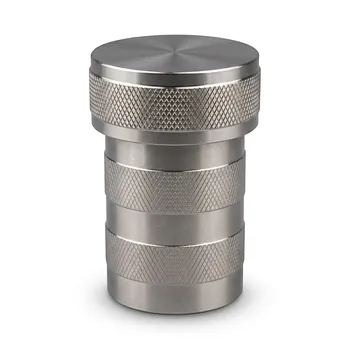
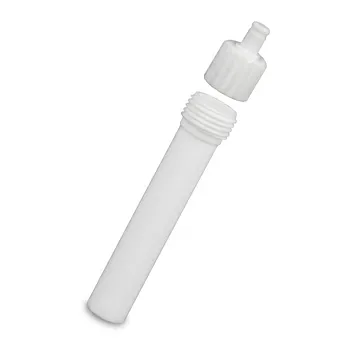
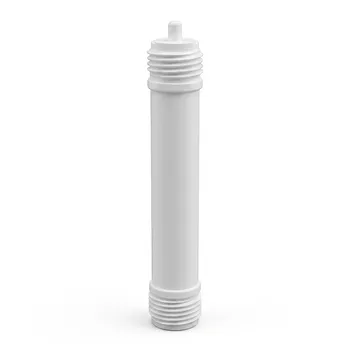
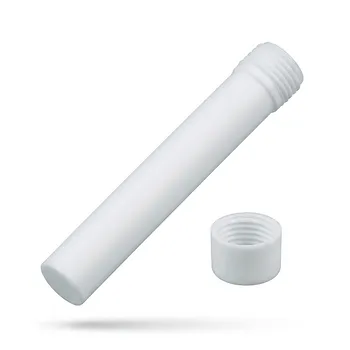
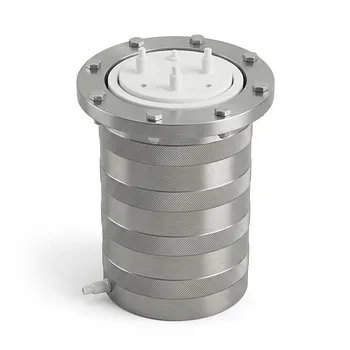
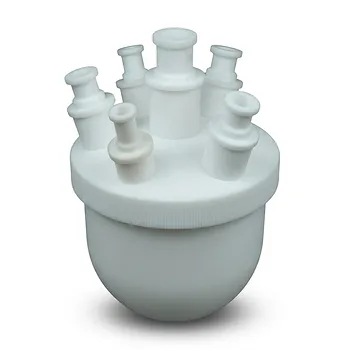
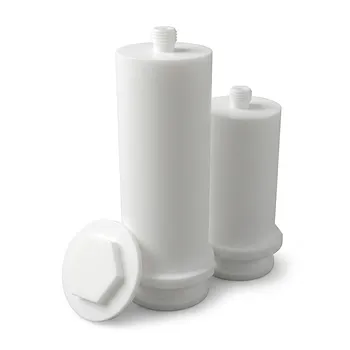
PTFE and PFA liners are the essential "reaction chambers" that provide a chemically inert and pressurized environment necessary for the high-purity synthesis of FL-MoS2 and rGO composites. These liners protect the stainless steel autoclave from corrosive precursors like thioacetamide while preventing metal ion contamination from leaching into the nanomaterials. By maintaining a sealed, high-pressure system, they enable the uniform growth of MoS2/rGO heterostructures and ensure the resulting composites possess the high crystal quality required for advanced applications.
Core Takeaway: PTFE and PFA liners act as critical barriers that isolate corrosive chemical reactions from the reactor's metal body, ensuring that FL-MoS2 and rGO composites remain free of impurities while facilitating the precise thermal conditions needed for molecular-level heterojunction growth.
Ensuring Chemical Purity and Integrity
Isolation from Metallic Contaminants
The primary role of the liner is to serve as a physical barrier between the reactive solution and the stainless steel body of the hydrothermal autoclave. Without this isolation, metal ions from the reactor wall can leach into the sample, compromising the electronic and catalytic properties of the FL-MoS2/rGO composite.
Resistance to Corrosive Precursors
Synthesis of MoS2 often involves corrosive sulfur sources such as thioacetamide. Fluoropolymer liners like PTFE and PFA are uniquely resistant to these aggressive chemicals, even under the intense heat and pressure of a hydrothermal process.
Preservation of Nanosheet Purity
By providing a chemically neutral environment, these liners prevent unintended side reactions with the vessel walls. This ensures that the final product consists only of high-purity molybdenum disulfide and reduced graphene oxide, which is vital for performance stability in electrochemical applications.
Facilitating Controlled Heterostructure Growth
Support for Autogenous Pressure
PTFE and PFA liners enable the reaction mixture to reach temperatures well above their standard boiling points within a sealed system. This autogenous pressure is necessary for the thorough pyrolysis and recrystallization of precursors into well-defined nanosheets.
Molecular-Level Uniformity
The stable thermal environment provided by the liner facilitates the uniform loading of MoS2 onto the rGO surface. This consistency is critical for forming the high-quality heterojunctions that define the synergistic performance of the composite material.
Morphology Control
The inert surface of the liner helps maintain the precise nanoflower-like morphology often desired in 2D materials. By eliminating external chemical interference, the liner allows the MoS2 to grow predictably according to the intended synthesis parameters.
Understanding the Trade-offs
Thermal Limitations
While PTFE and PFA are highly stable, they have strict temperature ceilings, typically around 220°C to 250°C. Exceeding these limits can lead to liner deformation or the release of toxic fluorinated vapors, potentially ruining the experiment and the equipment.
Structural Softening under Pressure
At high temperatures, fluoropolymers can become slightly porous or soft, which may lead to mechanical failure if the liner is not properly fitted to the stainless steel shell. Users must ensure a tight seal to prevent precursors from leaking into the gap between the liner and the autoclave wall.
Maintenance and Cross-Contamination
Despite their non-stick properties, micro-pores in the material can occasionally trap trace precursors from previous experiments. Rigorous cleaning protocols are necessary to ensure that one synthesis batch does not contaminate the next, particularly when working with different transition metals.
How to Apply This to Your Synthesis Project
Choosing the Right Setup
- If your primary focus is maximum chemical purity: Prioritize PFA liners, as they generally offer even lower trace-impurity levels and smoother surfaces than standard PTFE for sensitive quantum-dot or electronic applications.
- If your primary focus is cost-effective bulk production: Standard PTFE liners provide the necessary corrosion resistance and thermal stability for most MoS2/rGO synthesis workflows at a lower price point.
- If your primary focus is morphology and yield: Ensure the liner is used within its rated temperature range (typically below 220°C) to maintain the integrity of the seal and facilitate easy non-stick recovery of the nanosheets.
Utilizing high-performance fluoropolymer liners is the most reliable method for ensuring the structural and chemical excellence of two-dimensional composite materials.
Summary Table:
| Feature | PTFE Liners | PFA Liners |
|---|---|---|
| Primary Role | Chemical barrier & pressure vessel | Ultra-pure chemical barrier |
| Chemical Resistance | Excellent (Thioacetamide, acids) | Superior (Lowest trace impurities) |
| Temp. Limit | Up to 220°C - 250°C | Up to 260°C |
| Surface Texture | Non-stick, slightly porous | Ultra-smooth, non-porous |
| Best For | Cost-effective bulk synthesis | Sensitive electronic/quantum applications |
Elevate Your Synthesis with KINTEK’s High-Performance Fluoropolymers
Precision in hydrothermal synthesis demands materials that never compromise your results. At KINTEK, we specialize in high-performance PTFE and PFA solutions designed to withstand the most aggressive chemical environments while ensuring absolute purity for your FL-MoS2 and rGO composites.
From everyday basic labware like beakers, crucibles, and reagent bottles to advanced hydrothermal synthesis liners and microwave digestion vessels, our catalog covers every stage of your workflow. We provide:
- Comprehensive Labware: Measuring cylinders, dishes, centrifuge tubes, and high-purity trace analysis instruments.
- Fluid & Sample Prep: Tubing, valves, filtration tools, and precision-machined tweezers/spatulas.
- Advanced Reactors: Custom electrochemical cells, battery testing fixtures, and microchannel reactors.
Whether you need high-volume standard consumables or bespoke CNC-fabricated components tailored to your unique reactor geometry, KINTEK delivers unmatched fluoropolymer expertise.
Ready to optimize your lab’s performance? Contact us today to discuss your custom project or bulk order!
References
- Yi Zhang, Yongxing Zhang. Engineering few-layer MoS2 and rGO heterostructure composites for high-performance supercapacitors. DOI: 10.1007/s42114-024-01159-z
This article is also based on technical information from Kintek Knowledge Base .
Related Products
- PTFE Lined High Pressure Digestion Vessel 50ml High Temperature Hydrothermal Synthesis Tank
- High Temperature Corrosion Resistant Hydrothermal Synthesis Reactor with TFM Inner Liner and Straight Cylinder Design
- High Purity PTFE Microwave Digestion Vessel Replacement Liner for Acid Sample Preparation and Trace Analysis
- High Purity PTFE Microwave Digestion Vessel for Soil and Food Analysis Acid Resistant Fluoropolymer Sample Preparation Liners
- High Purity TFM Microwave Digestion Vessels PTFE Acid Evaporation Liners Domestic GT-400 Equivalent Laboratory Reaction Containers
People Also Ask
- What are the benefits of using a PTFE-lined vessel for carbon-sulfur cathode treatment? Maximize Purity & Performance
- Why are PTFE-lined pressure digestion vessels required for the preparation of Ag/CeO2 catalysts? Purity & Performance
- What safety features are typically incorporated into high-pressure PTFE digestion vessel designs? Ensure Lab Safety
- What is the function of PTFE lined high-pressure vessels in g-C3N4 synthesis? Achieve High-Purity Material Growth
- Role of High-Pressure Digestion Tanks in Perovskite Synthesis: Achieve Superior Stability and Latent Heat