PTFE and PFA hydrothermal synthesis liners serve as the critical reaction vessels that enable the controlled growth and molecular integration of $VS_2/MoS_2$ heterojunctions. These liners create a pressurized, chemically inert micro-environment where precursor solutions can undergo thorough pyrolysis and recrystallization at temperatures far exceeding their standard boiling points. This specific environment is essential for ensuring that the resulting nanocatalysts achieve high crystal quality and a uniform distribution of components at the molecular level.
Core Takeaway: PTFE and PFA liners provide the necessary combination of chemical isolation, high-pressure tolerance, and thermal stability to synthesize high-purity $VS_2/MoS_2$ nanocatalysts with precise morphologies. They act as both a protective barrier for the autoclave and a sterile theater for complex crystal growth.
Facilitating Molecular-Level Heterojunction Growth
Overcoming Thermodynamic Barriers
In the synthesis of $VS_2/MoS_2$ composites, the liners allow reactants to reach autogenous pressure, which facilitates reaction kinetics that are impossible at atmospheric pressure. This high-pressure environment enables the thorough pyrolysis of precursors, allowing atoms to rearrange into stable crystalline structures. Without this contained pressure, the precursors would likely evaporate or decompose unevenly before forming the desired heterojunctions.
Achieving High Crystal Quality
The sealed nature of the PTFE or PFA liner ensures a stable environment for recrystallization. This stability allows $VS_2$ and $MoS_2$ to grow synchronously, ensuring that the interface between the two materials is intimate and chemically bonded. This molecular-level integration is what gives the final nanocatalyst its superior catalytic performance and structural integrity.
Ensuring High Purity Through Chemical Isolation
Preventing Metal Ion Contamination
The primary role of these liners is to isolate the aggressive precursor solutions from the stainless steel shell of the hydrothermal autoclave. By preventing contact with the metal shell, the liners eliminate the risk of metal ion leaching, which would otherwise contaminate the $VS_2/MoS_2$ nanosheets. Maintaining this purity is critical, as even trace amounts of foreign metal ions can poison the catalyst and degrade its electronic properties.
Resisting Corrosive Precursor Chemistry
Synthesizing 2D transition metal dichalcogenides often requires the use of strong acids, bases, or organic solvents. PTFE and PFA are chosen for their exceptional chemical inertness, meaning they do not react with the precursors or the products. This ensures that the chemical potential within the vessel remains dictated solely by the intended reactants, leading to reproducible experimental results.
Precision Control of Nanomorphology
Supporting Complex Nanoflower Structures
The hydrothermal environment within a PTFE liner is ideal for the formation of specific geometries, such as nanoflowers or quantum dots. The uniform heat distribution and consistent pressure help regulate the nucleation rate of the $MoS_2$ and $VS_2$ crystals. This regulation is what allows for the production of two-dimensional materials with high surface areas and accessible active sites.
Non-Stick Properties and Sample Recovery
The non-stick surface of PTFE and PFA liners is a practical necessity for high-yield synthesis. It prevents the synthesized nanocatalysts from adhering to the walls of the vessel, ensuring complete sample recovery. Additionally, this property makes the liners easier to clean, preventing cross-contamination between different batches of materials.
Understanding the Trade-offs and Limits
Temperature Constraints
While highly durable, PTFE and PFA have strict thermal ceilings, typically around 220°C for PTFE and slightly lower for some PFA grades. Exceeding these temperatures can lead to mechanical deformation or "creeping" of the liner, which may cause the seal to fail and damage the autoclave. Users must balance the need for high-temperature pyrolysis with the physical limits of the fluoropolymer material.
Pressure Sensitivity and Safety
The pressure inside the liner is generated by the heating of the solvent; if the liner is filled too high (the fill factor), the pressure can exceed the structural limits of the vessel. A failure in the liner not only ruins the $VS_2/MoS_2$ synthesis but can also lead to catastrophic corrosion of the external metal autoclave. Careful calculation of the expansion of the precursor solution is mandatory for safe operation.
How to Apply This to Your Project
Selecting the Right Approach
- If your primary focus is maximum purity: Use PFA liners if available, as they often offer even lower impurity leaching rates and smoother surfaces than standard PTFE for sensitive nanocrystal growth.
- If your primary focus is high-temperature synthesis (up to 220°C): Utilize high-quality PTFE liners with a thick-walled design to ensure structural integrity during the long residence times required for $VS_2/MoS_2$ recrystallization.
- If your primary focus is morphology control: Maintain a consistent fill factor (usually 60-80%) within the liner to ensure stable autogenous pressure, which is the key variable for achieving nanoflower structures.
By understanding the dual role of the liner as both a chemical barrier and a pressurized reactor, researchers can consistently produce high-performance $VS_2/MoS_2$ nanocatalysts with precision.
Summary Table:
| Function | Benefit for $VS_2/MoS_2$ Synthesis |
|---|---|
| Pressure Containment | Facilitates pyrolysis and molecular-level recrystallization. |
| Chemical Inertness | Prevents metal ion leaching and precursor contamination. |
| Thermal Stability | Supports autogenous pressure environments up to 220°C. |
| Surface Property | Non-stick finish ensures high-yield sample recovery. |
| Morphology Control | Regulates nucleation for 2D nanoflowers and quantum dots. |
Elevate Your Research with KINTEK’s High-Performance Fluoropolymers
Precision in nanomaterial synthesis demands materials that never compromise on purity. KINTEK specializes in high-performance PTFE and PFA laboratory supplies designed to withstand the most aggressive hydrothermal environments. From everyday basic labware like beakers, crucibles, and reagent bottles to specialized hydrothermal synthesis liners and microwave digestion vessels, our products provide the ultimate chemical isolation for your $VS_2/MoS_2$ projects.
Whether you require standard tubing, fittings, and filtration tools or advanced custom CNC-machined reaction apparatus like electrochemical cells and battery testing fixtures, KINTEK delivers end-to-end solutions. We provide everything from high-volume consumables to bespoke, non-standard components, maintaining an absolute focus on high-purity fluoropolymers to ensure your catalysts achieve superior performance.
Ready to optimize your lab’s efficiency? Contact KINTEK today for custom solutions and high-purity labware!
References
- Thilini Boteju, Venkataraman Thangadurai. Synergistic Effect of VS<sub><b>2</b></sub>/MoS<sub><b>2</b></sub> as an Electrocatalyst for Accelerating Polysulfide Conversion in Lithium–Sulfur Batteries. DOI: 10.1021/acsami.5c12948
This article is also based on technical information from Kintek Knowledge Base .
Related Products
- PTFE Lined High Pressure Digestion Vessel 50ml High Temperature Hydrothermal Synthesis Tank
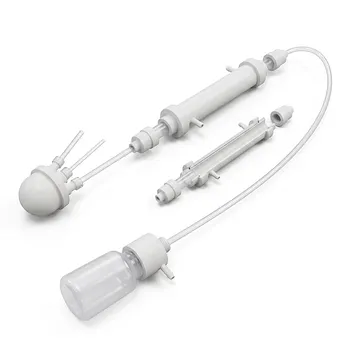
- High Temperature Corrosion Resistant PTFE Hydrogen Fluoride Condensation Reflux System with Separatory Funnel and PFA Collection Bottle
- PTFE PFA Vacuum Filtration System Corrosion Resistant Customizable Shatterproof Laboratory Device
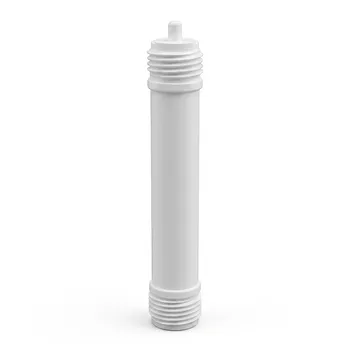
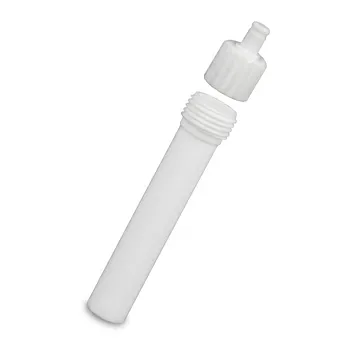
- High Purity PTFE Microwave Digestion Vessel for Soil and Food Analysis Acid Resistant Fluoropolymer Sample Preparation Liners
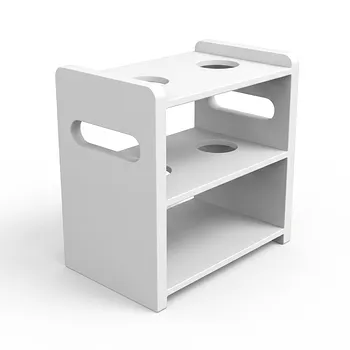
- Custom PTFE Acid Resistant Support Rack for PFA Hydrogen Absorption Systems Multi Hole Configurations
People Also Ask
- What are the benefits of using a PTFE-lined vessel for carbon-sulfur cathode treatment? Maximize Purity & Performance
- Why are PTFE-lined pressure digestion vessels required for the preparation of Ag/CeO2 catalysts? Purity & Performance
- What is the function of high-pressure PTFE digestion vessels in mineral analysis? Optimize Sample Mineralization
- What safety features are typically incorporated into high-pressure PTFE digestion vessel designs? Ensure Lab Safety
- What is the function of PTFE lined high-pressure vessels in g-C3N4 synthesis? Achieve High-Purity Material Growth