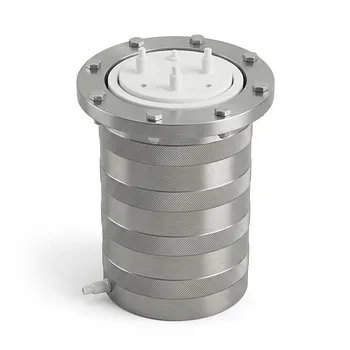
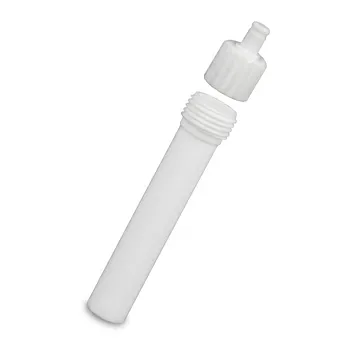
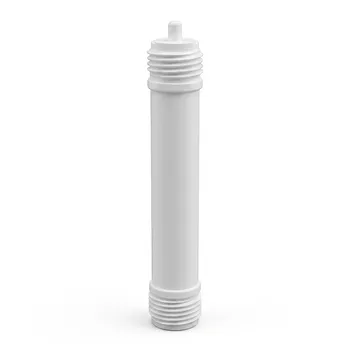
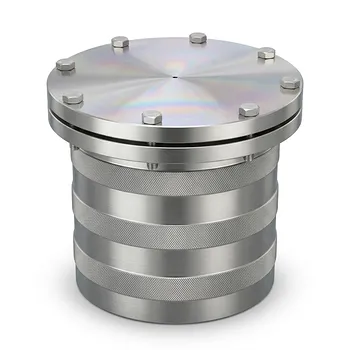
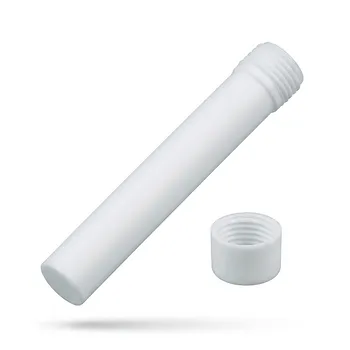
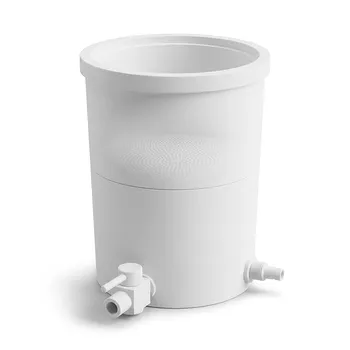
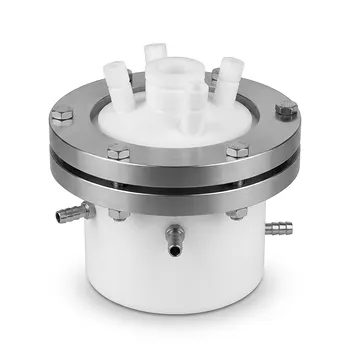
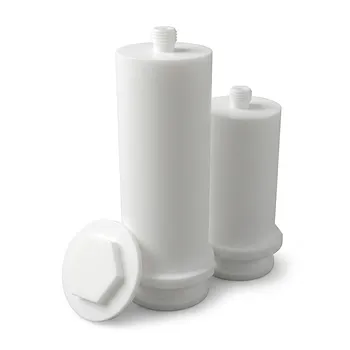
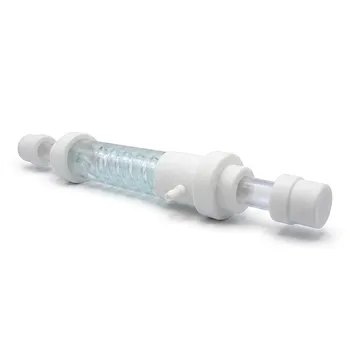
PTFE liners serve as the vital internal reaction vessel that enables the hydrothermal synthesis of NaLu(MoO$_4$)$_2$ phosphors by providing a chemically inert, high-pressure environment. These liners isolate the reactive precursors from the stainless steel autoclave shell at temperatures reaching 180°C, ensuring the high-purity conditions required for controlled crystal nucleation and growth.
The PTFE liner acts as a critical chemical barrier and containment system, preventing metal ion contamination from the reactor while allowing the phosphor crystals to form under extreme autogenous pressure.
Ensuring Chemical Purity and Structural Integrity
Prevention of Metal Ion Contamination
The primary role of the PTFE liner is to prevent the introduction of metal impurities from the stainless steel autoclave into the reaction mixture. In the synthesis of NaLu(MoO$_4$)$_2$ phosphors, even trace amounts of foreign metal ions can disrupt the crystal lattice or degrade the optoelectronic properties of the material.
Resistance to Corrosive Synthesis Media
Hydrothermal processes often involve acidic or alkaline solvents that would otherwise erode the metal reactor walls. The exceptional chemical inertness of PTFE allows it to withstand these corrosive conditions without reacting with the precursors, maintaining a stable environment for the synthesis.
Support for Precise Crystal Nucleation
By providing a sealed and "clean" interface, the liner ensures that nucleation and growth occur solely based on the intended chemical stoichiometry. This isolation is fundamental for achieving the highly regular crystalline structures and uniform morphology characteristic of high-quality NaLu(MoO$_4$)$_2$ phosphors.
Mechanical and Operational Advantages
Managing High Autogenous Pressure
As the autoclave is heated to 180°C, internal pressure rises significantly; the PTFE liner is designed to withstand these extreme pressures while nested within the metal shell. This pressure is essential for driving the hydrothermal reaction that transforms dissolved precursors into solid-state phosphors.
Facilitating Product Recovery
PTFE possesses well-known non-stick properties, which are highly beneficial during the post-synthesis phase. This allows researchers to easily recover the synthesized NaLu(MoO$_4$)$_2$ powder from the vessel without losing significant yield to the container walls.
Simplifying Maintenance and Cleaning
The non-adhesive nature of the material also simplifies the subsequent cleaning process of the reaction vessel. This ensures that no residual precursors or crystals remain to contaminate future synthesis batches, preserving the repeatability of the experiment.
Understanding the Trade-offs and Risks
Thermal Limits of PTFE
While PTFE is stable at the 180°C required for NaLu(MoO$_4$)$_2$ synthesis, it has a definite thermal ceiling (typically around 220°C–250°C). Exceeding these temperatures can cause the liner to soften or "creep," leading to potential leaks or structural failure of the seal.
Risk of Mechanical Deformation
Under high pressure, if the PTFE liner is not perfectly fitted to the stainless steel shell, it can undergo mechanical deformation. This may make the liner difficult to remove after the reaction or, in extreme cases, result in a breach of the internal reaction environment.
Applying This Knowledge to Your Synthesis
Making the Right Choice for Your Goal
- If your primary focus is Maximum Optical Performance: Ensure the PTFE liner is of high-purity grade to prevent any trace metal leaching that could quench the luminescence of the NaLu(MoO$_4$)$_2$ phosphors.
- If your primary focus is Morphological Uniformity: Maintain a consistent heating rate to allow the PTFE liner and the reactants to reach the 180°C target temperature evenly, promoting stable crystal growth.
- If your primary focus is Equipment Longevity: Inspect the liner for signs of "pitting" or permanent deformation after every use to prevent corrosive precursors from ever reaching the stainless steel autoclave shell.
The PTFE liner is the silent enabler of hydrothermal synthesis, bridging the gap between extreme reaction conditions and the delicate requirements of crystal purity.
Summary Table:
| Key Role | Technical Benefit | Impact on Synthesis |
|---|---|---|
| Contamination Control | Prevents metal ion leaching from stainless steel | Preserves optoelectronic & luminescent properties |
| Chemical Resistance | Inert to acidic/alkaline corrosive media | Maintains precursor stoichiometry and purity |
| Surface Property | Non-stick, low-friction PTFE surface | Simplifies product recovery and vessel cleaning |
| Pressure Stability | Withstands high autogenous pressure at 180°C | Enables crystal nucleation and growth environment |
| Thermal Barrier | Protects autoclave shell from reaction heat | Ensures structural integrity of the reaction vessel |
Elevate Your Material Synthesis with KINTEK Precision
Ensure the highest purity for your hydrothermal processes with KINTEK’s premium fluoropolymer solutions. From high-performance PTFE liners and microwave digestion vessels to high-purity trace analysis instruments, we provide the critical components needed for advanced crystal growth and phosphor synthesis.
Our expertise extends from everyday basic labware (beakers, crucibles, reagent bottles) to complex, bespoke laboratory setups crafted via end-to-end custom CNC fabrication. Whether you require standard PFA/PTFE components or non-standard machined parts for electrochemical cells and microchannel reactors, KINTEK delivers unmatched quality for high-volume orders and specialized research alike.
Ready to optimize your laboratory efficiency? Contact us today to discuss your custom requirements!
References
- Mingjie Dan, Kenneth R. Poeppelmeier. Regulation of color tunability of Dy<sup>3+</sup>/Eu<sup>3+</sup>-based double molybdate phosphors with high thermal stability. DOI: 10.1039/d5nj00044k
This article is also based on technical information from Kintek Knowledge Base .
Related Products
- PTFE Lined High Pressure Digestion Vessel 50ml High Temperature Hydrothermal Synthesis Tank
- High Pressure Custom TFM Reactor Stainless Steel Outer Vessel PTFE Inner Cup for Corrosive Synthesis
- High Purity PTFE Microwave Digestion Vessel Replacement Liner for Acid Sample Preparation and Trace Analysis
- High Purity PTFE Microwave Digestion Vessel for Soil and Food Analysis Acid Resistant Fluoropolymer Sample Preparation Liners
- Custom TFM Reaction Vessel with Stainless Steel Jacket and PTFE Inner Cup for High Corrosion Resistance
People Also Ask
- What are the benefits of using a PTFE-lined vessel for carbon-sulfur cathode treatment? Maximize Purity & Performance
- Why are PTFE-lined pressure digestion vessels required for the preparation of Ag/CeO2 catalysts? Purity & Performance
- What is the function of high-pressure PTFE digestion vessels in mineral analysis? Optimize Sample Mineralization
- What safety features are typically incorporated into high-pressure PTFE digestion vessel designs? Ensure Lab Safety
- What is the function of PTFE lined high-pressure vessels in g-C3N4 synthesis? Achieve High-Purity Material Growth