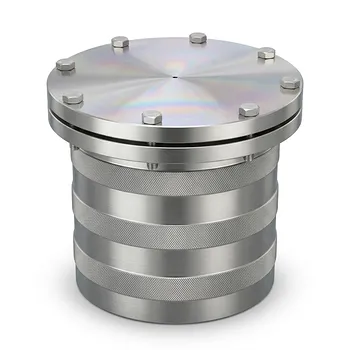
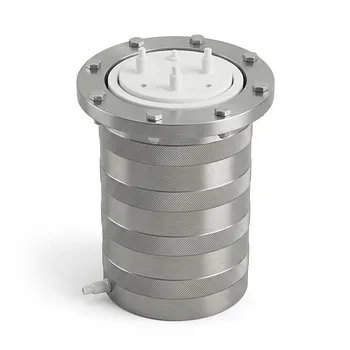
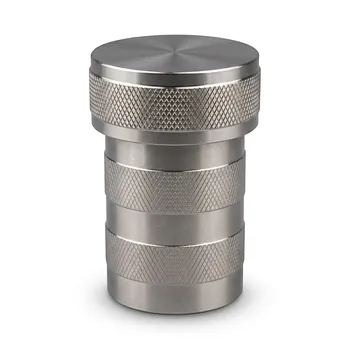
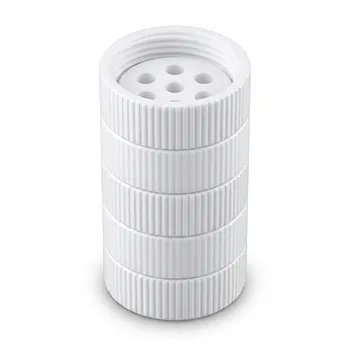
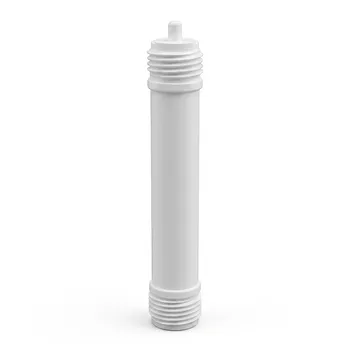
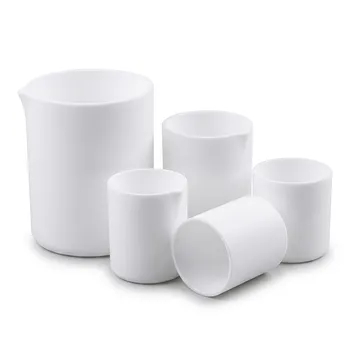
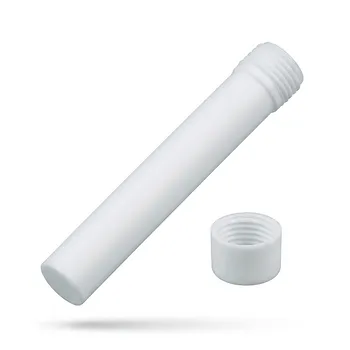
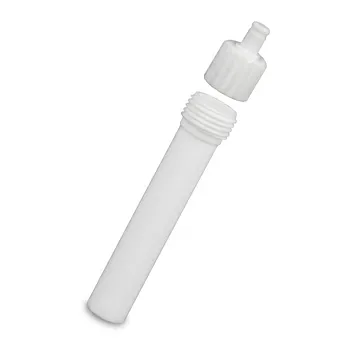
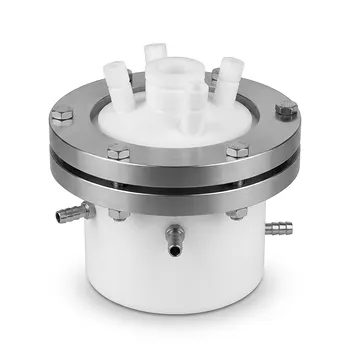
PTFE-lined high-pressure autoclaves act as the essential reaction vessel that provides a sealed, chemically inert, and high-pressure environment for the solvothermal synthesis of copper oxide (CuOx) precursors. By isolating the reaction mixture within a Polytetrafluoroethylene (PTFE) liner, these autoclaves allow solvents and precursor salts to react at temperatures reaching 160°C or higher without corroding the outer steel shell. This setup is critical for preventing metallic contamination and ensuring the high purity and specific morphology of the synthesized copper oxide nanoparticles.
Core Takeaway: The PTFE-lined autoclave enables high-purity CuOx synthesis by combining the mechanical strength of a stainless steel pressure vessel with the extreme chemical resistance of a PTFE liner, preventing secondary reactions between the precursors and the vessel walls.
Facilitating the Solvothermal Environment
Achieving Subcritical Reaction Conditions
The primary function of the autoclave is to provide a sealed environment where solvents can be heated significantly beyond their normal boiling points. This creates high internal pressure, which is necessary for the solvothermal synthesis of copper oxide precursors.
Under these subcritical conditions, the solubility and reactivity of precursor salts change, allowing for chemical processes that would not occur at atmospheric pressure. This environment is vital for the dehydration, polycondensation, and crystallization required to form CuOx structures.
Temperature and Pressure Resistance
The stainless steel outer shell provides the structural integrity needed to withstand the high pressures generated during heating. Simultaneously, the PTFE liner is capable of maintaining its stability at common reaction temperatures, such as 160°C to 220°C.
This synergy allows researchers to maintain constant, elevated temperatures for extended periods—sometimes up to 72 hours. Such stability is required for the slow, controlled growth of complex copper oxide morphologies.
Ensuring Chemical Purity and Structural Integrity
Prevention of Metallic Contamination
A critical role of the PTFE liner is its chemical inertness, which prevents solvents like N,N-dimethylformamide (DMF) or ethylene glycol from reacting with the stainless steel shell. Without this barrier, the reaction liquid could erode the steel, leaching metal ions into the solution.
By shielding the reaction from the metallic vessel, the PTFE liner ensures that the synthesized precursors remain free from impurities. This is fundamental for applications where the electronic or catalytic properties of the copper oxide are sensitive to trace metals.
Morphological Control and Secondary Reactions
The inert surface of the PTFE prevents secondary reactions between copper ions and the vessel walls. This isolation ensures that the chemical energy is directed solely toward the intended reaction pathway, such as the growth of regular cubic nanoparticles or nanoflowers.
By maintaining a consistent chemical environment, the autoclave allows for oriented growth onto support materials. This leads to the formation of specific metal oxide structures with predictable photophysical and chemical properties.
Understanding the Trade-offs and Limitations
Temperature Constraints of PTFE
While PTFE is exceptionally resistant to chemicals, it has a clear thermal ceiling, typically around 220°C to 250°C. Exceeding these temperatures can lead to the deformation of the liner or the release of toxic vapors, potentially compromising the seal of the autoclave.
Pressure Management Risks
The sealed nature of the autoclave means that pressure is determined by the "fill degree" and the temperature of the solvent. If the vessel is overfilled, the internal pressure can exceed the safety limits of the stainless steel shell, posing a risk of mechanical failure.
Heat Transfer Delays
PTFE is an effective thermal insulator, which means there is a lag between the temperature of the oven and the temperature of the reaction liquid. This must be accounted for in process timing to ensure the precursors reach the required activation energy for the intended duration.
How to Apply This to Your Project
When selecting or operating a PTFE-lined autoclave for copper oxide synthesis, your approach should vary based on your specific material requirements:
- If your primary focus is Maximum Chemical Purity: Ensure the PTFE liner is thoroughly cleaned with acid between uses to remove any embedded ions that could leach into your next CuOx batch.
- If your primary focus is Morphological Precision (e.g., Nanoflowers): Maintain a strict "fill degree" (typically 60-80%) to ensure consistent pressure, which governs the slow hydrolysis and oriented growth of the particles.
- If your primary focus is High-Yield Recovery: Leverage the non-stick properties of the PTFE liner to easily collect solid precipitates and sediments after the reaction is cooled.
By mastering the controlled environment of the PTFE-lined autoclave, you can consistently produce copper oxide precursors with the exact purity and structure required for advanced technical applications.
Summary Table:
| Feature | Role in CuOx Synthesis | Key Benefit |
|---|---|---|
| PTFE Liner | Provides a chemically inert barrier | Prevents metallic contamination and secondary reactions. |
| Steel Outer Shell | Maintains structural integrity | Withstands high pressures for subcritical reaction conditions. |
| Sealed Design | Enables high-pressure environment | Allows solvents to reach temperatures above their boiling point. |
| Non-stick Surface | Facilitates sample collection | Enhances recovery of solid CuOx precipitates and nanoflowers. |
Elevate Your Solvothermal Synthesis with KINTEK’s Precision Fluoropolymers
Achieving high-purity copper oxide precursors and complex morphologies requires equipment that can withstand aggressive chemical environments without compromising sample integrity. KINTEK provides the ultimate solution with our exclusive focus on high-performance fluoropolymer materials.
From everyday basic labware like beakers, reagent bottles, and centrifuge tubes to advanced reaction apparatus such as PTFE-lined hydrothermal synthesis liners, microwave digestion vessels, and custom electrochemical cells, we ensure your research is backed by chemical excellence. Our end-to-end custom CNC fabrication allows us to deliver everything from high-volume standard consumables (O-rings, fittings, tubing) to bespoke, non-standard machined parts tailored to your specific reactor setup.
Why partner with KINTEK?
- Absolute Purity: Eliminate trace metal leaching with our premium PTFE and PFA components.
- Custom Engineering: Bespoke laboratory setups designed for your unique pressure and temperature requirements.
- Full-Spectrum Support: We manufacture virtually all laboratory supplies, ensuring compatibility across your entire fluid transfer and reaction chain.
Ready to optimize your material synthesis? Contact KINTEK today to discover how our high-performance fluoropolymer expertise can drive your next breakthrough.
References
- Xiaoyang He, Ye Wang. Roles of copper(I) in water-promoted CO2 electrolysis to multi-carbon compounds. DOI: 10.1038/s41467-024-54282-2
This article is also based on technical information from Kintek Knowledge Base .
Related Products
- PTFE Lined High Pressure Digestion Vessel 50ml High Temperature Hydrothermal Synthesis Tank
- Custom TFM Reaction Vessel with Stainless Steel Jacket and PTFE Inner Cup for High Corrosion Resistance
- High Pressure Custom TFM Reactor Stainless Steel Outer Vessel PTFE Inner Cup for Corrosive Synthesis
- High Temperature Corrosion Resistant Hydrothermal Synthesis Reactor with TFM Inner Liner and Straight Cylinder Design
- High Temperature PTFE Reaction Sieve with Customizable Layers and Precision Pore Sizes for Threaded Sample Separation Devices
People Also Ask
- What are the benefits of using a PTFE-lined vessel for carbon-sulfur cathode treatment? Maximize Purity & Performance
- Why are PTFE-lined pressure digestion vessels required for the preparation of Ag/CeO2 catalysts? Purity & Performance
- What safety features are typically incorporated into high-pressure PTFE digestion vessel designs? Ensure Lab Safety
- What is the function of PTFE lined high-pressure vessels in g-C3N4 synthesis? Achieve High-Purity Material Growth
- Role of High-Pressure Digestion Tanks in Perovskite Synthesis: Achieve Superior Stability and Latent Heat