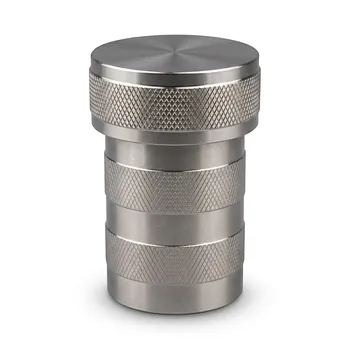
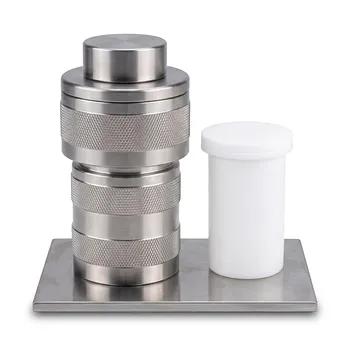
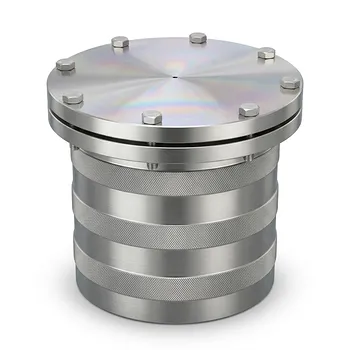
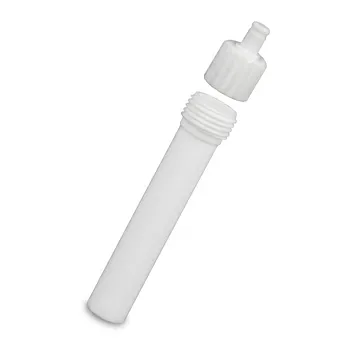
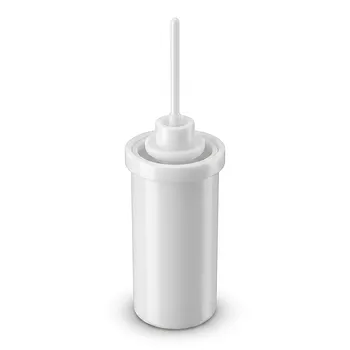
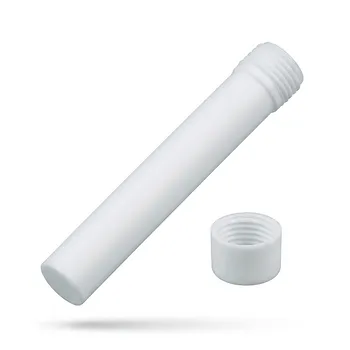
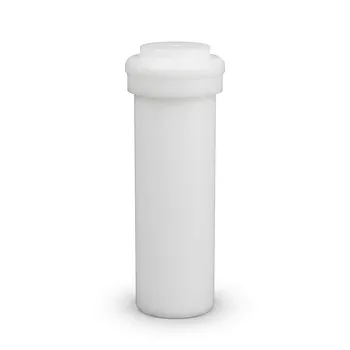
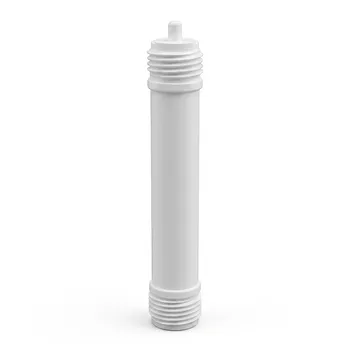
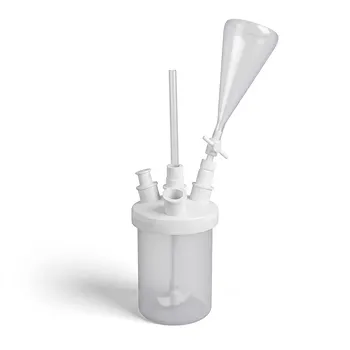
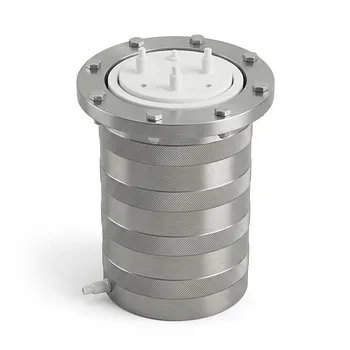
Pressure-resistant chemical reaction vessels and hydrothermal liners are the critical infrastructure required to create a confined, high-pressure environment that enables the in-situ growth and crystallization of cadmium sulfide (CdS) directly onto the Ce-UiO-66 framework. By maintaining a stable temperature of 100°C and generating autogenous pressure, these tools facilitate strong interfacial bonding and ensure that CdS nanoparticles are securely stabilized within the metal-organic framework’s (MOF) pore structure.
Core Takeaway: These vessels act as specialized micro-environments that drive the chemical coordination and physical stabilization of CdS/Ce-UiO-66 composites, transforming a simple mixture into a high-performance hybrid system through controlled pressure and temperature.
Facilitating the Solvothermal Environment
Generating Autogenous Pressure
The sealed nature of the reaction vessel allows the internal temperature to exceed the boiling point of the solvent. This generates autogenous pressure, which is essential for forcing precursors into the internal pore structures of the Ce-UiO-66 framework.
Driving In-Situ Crystallization
The high-pressure environment lowers the energy barrier for nucleation and growth. This ensures that CdS does not merely precipitate as a separate phase but instead crystallizes directly on the MOF, leading to a more integrated and effective heterojunction.
Enhancing Interfacial Bonding Strength
Under these confined conditions, the physical and chemical contact between the CdS nanoparticles and the Ce-UiO-66 framework is significantly intensified. This results in enhanced interfacial bonding, which is vital for efficient charge transfer in photocatalytic or electronic applications.
The Role of the Hydrothermal Liner
Corrosion Resistance and Purity
Liners, typically made of PTFE (Polytetrafluoroethylene) or PPL (Polyphenylene), provide a chemically inert barrier. This protects the outer steel vessel from corrosive reagents and prevents metal ions from the vessel wall from contaminating the CdS/Ce-UiO-66 composite.
Managing Surface Energy
Fluoropolymer liners like PTFE possess low surface energy, which minimizes the adhesion of reactants to the vessel walls. This ensures a higher yield of the composite and promotes uniform nucleation throughout the solution rather than localized growth on the container surface.
Thermal Stability and Safety
The liner acts as a thermal buffer, ensuring that the internal reaction temperature remains consistent. It also provides an additional layer of containment, which is crucial when dealing with the volatile solvents used in solvothermal MOF synthesis.
Understanding the Trade-offs
Temperature Limitations of Liners
While effective, standard PTFE liners are generally limited to temperatures below 250°C. Exceeding these limits can cause the liner to deform or release toxic vapors, which can compromise both the experiment and the safety of the laboratory.
Complexity of Pressure Monitoring
In most standard hydrothermal reactors, the autogenous pressure is not directly measured during the reaction. This lack of real-time data means researchers must rely on fill-level ratios and theoretical calculations, which can lead to inconsistencies between batches.
Thermal Lag and Gradient Issues
The thick walls of the pressure vessel and the internal liner can create thermal lag, where the internal temperature takes significant time to reach the setpoint of the oven. This delay can affect the kinetics of the CdS crystallization if not properly accounted for in the reaction timing.
How to Optimize Your Solvothermal Process
When synthesizing complex composites like CdS/Ce-UiO-66, the choice of equipment parameters directly dictates the quality of the final material.
- If your primary focus is maximizing crystallinity: Ensure the vessel is filled to approximately 60-80% of its capacity to generate optimal autogenous pressure.
- If your primary focus is preventing contamination: Utilize high-quality PTFE liners and implement a rigorous pre-cleaning cycle using the same solvent intended for the reaction.
- If your primary focus is strong interfacial bonding: Maintain a steady temperature of 100°C for a duration sufficient to allow the in-situ growth of CdS within the MOF pores, typically 12 to 24 hours.
By precisely controlling the high-pressure environment, these vessels ensure the successful synthesis of robust and high-performing hybrid materials.
Summary Table:
| Feature | Role in CdS/Ce-UiO-66 Synthesis | Key Advantage |
|---|---|---|
| Autogenous Pressure | Forces precursors into internal MOF pores | Enables in-situ growth and crystallization |
| PTFE/PPL Liner | Provides a chemically inert reaction barrier | Prevents metal ion contamination and corrosion |
| Confined Environment | Intensifies physical and chemical contact | Strengthens interfacial bonding and charge transfer |
| Thermal Buffering | Maintains consistent internal temperature | Ensures uniform nucleation and reaction kinetics |
Optimize Your Solvothermal Synthesis with KINTEK Expertise
Achieve uncompromising precision in your material research with KINTEK’s high-performance fluoropolymer solutions. From hydrothermal synthesis liners and microwave digestion vessels to everyday basics like beakers, reagent bottles, and centrifuge tubes, we provide the high-purity environment your composites require.
Whether you need standard PTFE and PFA labware, comprehensive fluid transfer components (tubing, valves, fittings), or bespoke laboratory setups produced via our end-to-end custom CNC fabrication, KINTEK delivers. We specialize in everything from high-volume orders of general consumables to advanced electrochemical cells and reaction apparatus, maintaining an absolute focus on materials that resist corrosion and prevent contamination.
Ready to enhance your lab’s efficiency? Contact us today to discuss your custom fabrication needs or to explore our full range of high-performance laboratory supplies.
References
- DINGETEGNA GODANA BOYNITO, G. Neelaiah. Synthesis and Characterization of Cerium Metal Organic Frameworks (Ce-UiO-66) and Its Inorganic Hybrids. DOI: 10.11648/j.am.20251401.11
This article is also based on technical information from Kintek Knowledge Base .
Related Products
- High Temperature Corrosion Resistant Hydrothermal Synthesis Reactor with TFM Inner Liner and Straight Cylinder Design
- PTFE Lined High Pressure Digestion Vessel 50ml High Temperature Hydrothermal Synthesis Tank
- Custom TFM Reaction Vessel with Stainless Steel Jacket and PTFE Inner Cup for High Corrosion Resistance
- High Purity PTFE Microwave Digestion Vessel Replacement Liner for Acid Sample Preparation and Trace Analysis
- Custom High Purity TFM Microwave Digestion Vessel 100ml Capacity Compatible Replacement Liner for Professional Analytical Instruments
People Also Ask
- What is the role of a corrosion-resistant reactor in the synthesis of lignin-based carbon dots? Ensure Maximum Purity
- What are the technical advantages of using hydrothermal synthesis reactors for advanced electronic & optical nanomaterials?
- How does a hydrothermal synthesis reactor facilitate the production of crystalline materials with tailored morphologies? Precision Crystal Growth
- Why is the sealing reliability of a hydrothermal synthesis reactor critical for 24-hour cycles? Ensure Nano-Precision
- What role do hydrothermal synthesis reactors play in CQD preparation? Achieve High-Purity Nanomaterial Synthesis