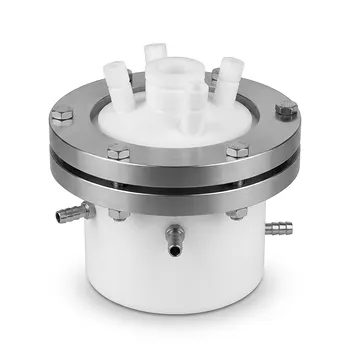
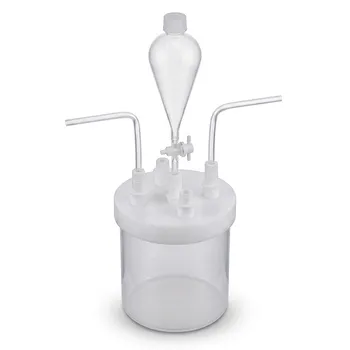
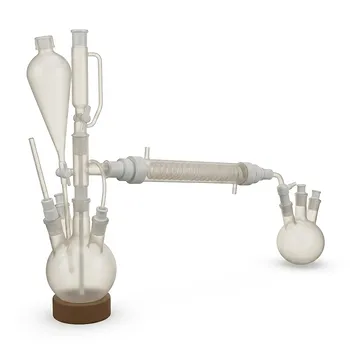
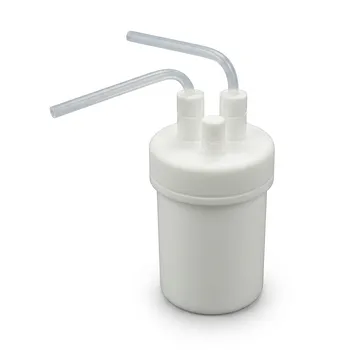
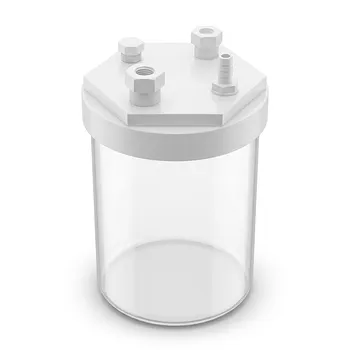
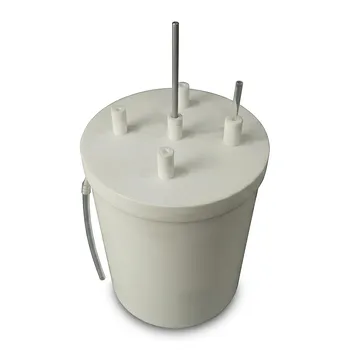
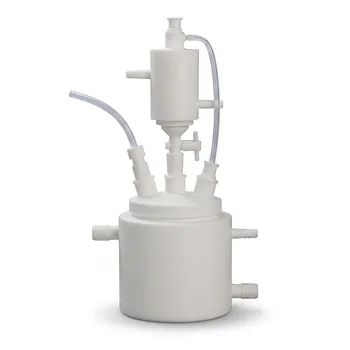
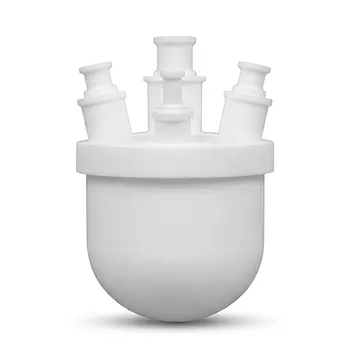
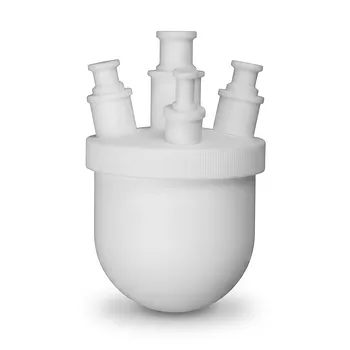
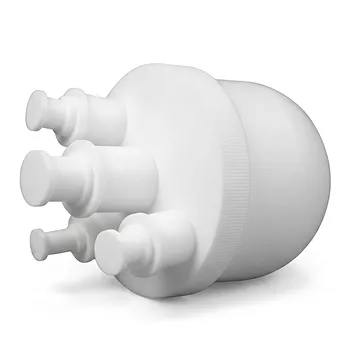
Hydrothermal synthesis reactors and their high-performance fluoropolymer liners provide the extreme thermal and chemical environment required to transform liquid precursors into structured Zinc Oxide (ZnO) nanorod clusters. These reactors create a pressurized "micro-laboratory" where temperature and concentration can be precisely tuned to drive the oriented growth of crystals. The fluoropolymer liner, typically made of PTFE, acts as a critical purity shield, preventing the reaction from being compromised by the reactor’s metal walls.
The hydrothermal reactor functions as a high-pressure vessel that facilitates the anisotropic growth of ZnO nanorods by maintaining a state of stable supersaturation. The fluoropolymer liner is indispensable for this process, as it ensures chemical inertness and prevents metal ion contamination, which is vital for preserving the crystalline quality of the nanostructures.
The Reactor: Creating the Growth Environment
Facilitating High-Pressure Solubility
The stainless steel autoclave allows the aqueous solvent to reach temperatures exceeding its boiling point, generating high internal pressure. This environment facilitates the dissolution of precursor salts, such as zinc nitrate, which would behave differently under standard atmospheric conditions.
Controlling Supersaturation and Nucleation
By maintaining a constant temperature (often around 90°C), the reactor stabilizes the kinetic environment necessary for moderate supersaturation. This precision allows zinc ions to react with hydroxyl groups released by hexamethylenetetramine (HMTA), triggering nucleation on pre-existing seed layers.
Enabling Anisotropic Crystal Growth
The sealed environment enables oriented heteroepitaxial growth, where crystals grow along specific crystallographic directions. This results in hierarchical, dandelion-like structures with uniform diameters and high aspect ratios, ensuring the nanorods develop the desired morphology.
The Fluoropolymer Liner: Ensuring Purity and Longevity
Chemical Inertness Against Corrosive Precursors
Reaction solutions often contain strong bases (like NaOH) or fluoride ions that would aggressively corrode a standard metal vessel. High-performance liners made of Polytetrafluoroethylene (PTFE) or Perfluoroalkoxy (PFA) are chemically inert, meaning they do not react with these harsh reagents.
Preventing Metal Ion Contamination
At high temperatures and pressures, metal ions from the reactor’s stainless steel body could leach into the solution. The fluoropolymer liner has extremely low leachable characteristics, ensuring a high-purity environment that prevents impurities from degrading the optoelectronic properties of the ZnO nanorods.
Protecting Structural Integrity
Beyond protecting the sample, the liner protects the autoclave itself from erosion. By acting as a physical barrier, it prevents side reactions between the chemical precursors and the metal walls, extending the lifespan of the equipment and ensuring consistent results across multiple experiments.
Understanding the Trade-offs and Limits
Temperature Constraints of Fluoropolymers
While PTFE and PFA offer exceptional chemical resistance, they have strict thermal limits, typically around 250°C. Exceeding these temperatures can cause the liner to soften or undergo "cold flow," leading to seal failure or potential safety hazards within the high-pressure system.
Thermal Lag and Equilibration
The thickness of the fluoropolymer liner introduces a degree of thermal insulation. This can create a lag between the temperature set on the external heating element and the actual temperature of the internal precursor solution, requiring careful calibration for precise kinetic control.
Maintenance of the Sealing Surface
The effectiveness of the reactor depends entirely on the integrity of the liner's rim. Over time, repeated heating cycles can deform the plastic, leading to pressure leaks that disrupt the supersaturation state and ruin the batch of nanorod clusters.
How to Apply This to Your Research
Making the Right Choice for Your Goal
- If your primary focus is high-aspect-ratio morphology: Prioritize reactors with precise digital temperature control to maintain the exact supersaturation levels required for long, uniform nanorods.
- If your primary focus is optoelectronic performance: Invest in high-purity PFA liners to minimize leachable metal impurities that could introduce unwanted defects into the ZnO crystal lattice.
- If your primary focus is high-throughput production: Use standardized PTFE-lined autoclaves that allow for easy cleaning and rapid swapping of liners to prevent cross-contamination between batches.
By mastering the balance between the reactor's physical environment and the liner's chemical protection, you can reliably synthesize high-quality ZnO nanostructures for advanced technological applications.
Summary Table:
| Component | Primary Function | Key Benefit for ZnO Synthesis |
|---|---|---|
| Stainless Steel Autoclave | High-pressure containment | Enables solubility and anisotropic growth above boiling points |
| Fluoropolymer Liner | Chemical inertness (PTFE/PFA) | Prevents metal ion contamination and protects reactor from corrosion |
| Thermal Control | Kinetic stabilization | Maintains moderate supersaturation for uniform nanorod morphology |
| Sealing System | Pressure maintenance | Ensures stable growth environment and prevents precursor leakage |
Elevate Your Research with KINTEK’s High-Performance Fluoropolymers
Precision in nanomaterial synthesis demands uncompromising purity. KINTEK specializes in high-performance fluoropolymer solutions tailored for the most demanding laboratory environments. From everyday basic labware—including beakers, measuring cylinders, crucibles, and reagent bottles—to high-purity trace analysis instruments and cleaning tanks, we ensure your samples remain free from contamination.
Our expertise extends to comprehensive fluid transfer components (tubing, fittings, valves), sample prep tools (filters, pipettes, tweezers), and essential consumables (stirring bars, O-rings, gaskets). For advanced research, we provide derivative and reaction apparatus such as custom electrochemical cells, battery testing fixtures, and microwave digestion vessels crafted from premium PTFE and PFA.
Whether you require complex non-standard machined parts via our end-to-end custom CNC fabrication or high-volume standard orders, KINTEK is your partner for high-performance laboratory supplies.
Contact KINTEK today to optimize your synthesis workflow
References
- Jiayu Song, King Lun Yeung. Enhancing liquid–vapor phase behavior through multiscale anisotropic wettability gradient in dandelion-inspired nanostructures. DOI: 10.1039/d5mh00408j
This article is also based on technical information from Kintek Knowledge Base .
Related Products
- High Temperature Corrosion Resistant Hydrothermal Synthesis Reactor with TFM Inner Liner and Straight Cylinder Design
- PTFE Lined High Pressure Digestion Vessel 50ml High Temperature Hydrothermal Synthesis Tank
- Custom PTFE Reaction System with Hose Barb Fittings Corrosion Resistant High Sealing 2L 4L Lab Reactor with Separatory Funnel
- High Pressure Custom TFM Reactor Stainless Steel Outer Vessel PTFE Inner Cup for Corrosive Synthesis
- High Purity PFA Reaction Vessel for Biopharmaceutical Synthesis and Corrosive Chemical Fluid Handling with Customizable Tube Fittings
People Also Ask
- What is the role of a corrosion-resistant reactor in the synthesis of lignin-based carbon dots? Ensure Maximum Purity
- What are the technical advantages of using hydrothermal synthesis reactors for advanced electronic & optical nanomaterials?
- How does a hydrothermal synthesis reactor facilitate the production of crystalline materials with tailored morphologies? Precision Crystal Growth
- Why is the sealing reliability of a hydrothermal synthesis reactor critical for 24-hour cycles? Ensure Nano-Precision
- What role do hydrothermal synthesis reactors play in CQD preparation? Achieve High-Purity Nanomaterial Synthesis