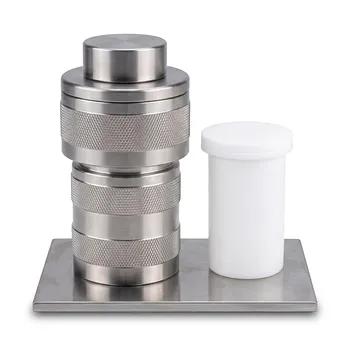
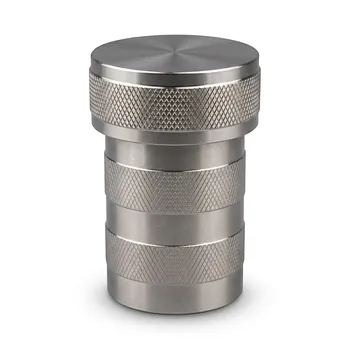
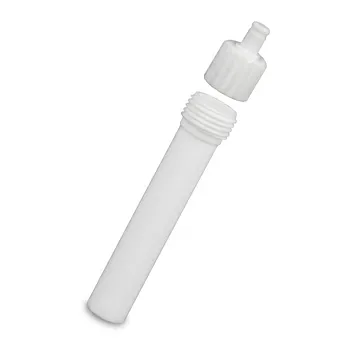
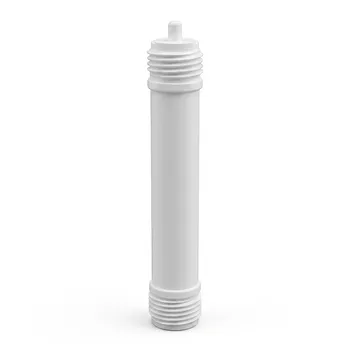
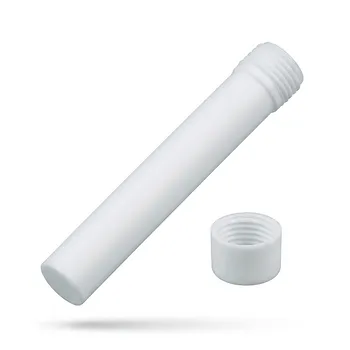
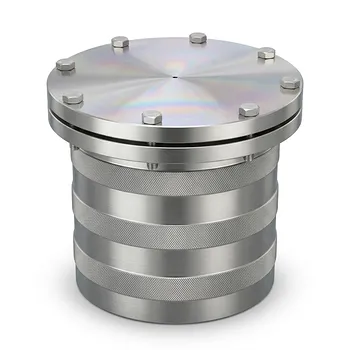
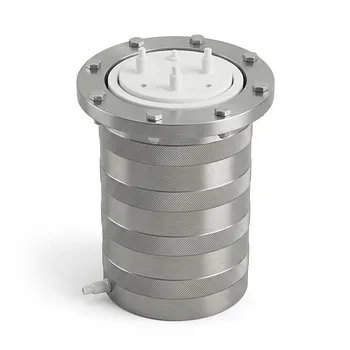
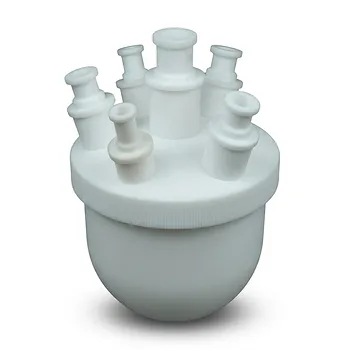
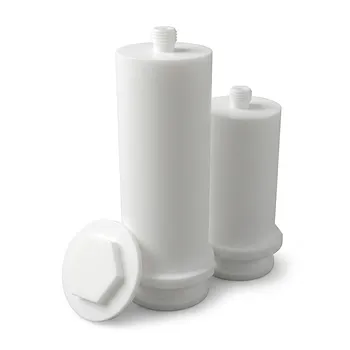
High-purity PTFE or PFA liners are the critical "enablers" of high-fidelity ZIF synthesis. These liners provide a chemically inert, ultra-pure environment that isolates corrosive reactants from the autoclave's metal body. By preventing contamination and maintaining pressure stability between 40°C and 170°C, they ensure the precise coordination required for ZIF-7-III and ZIF-9-III structures.
High-purity liners serve as a sacrificial yet highly resistant barrier that prevents metallic leaching from the reactor walls into the reaction medium. This isolation is vital for ensuring the crystallization of ZIF-7-III and ZIF-9-III remains undisturbed by external impurities, allowing for the formation of dense, uniform core-shell architectures.
Chemical Isolation and Purity Maintenance
Preventing Metallic Impurity Leaching
The primary role of PTFE (polytetrafluoroethylene) and PFA (perfluoroalkoxy) liners is to prevent metal ion contamination. When metal salts like nitrates or sulfates are heated, they can become highly corrosive to the stainless steel walls of a standard autoclave.
Without a high-purity liner, iron, nickel, or chromium ions from the vessel could leach into the solution. These rogue ions interfere with the intended crystal framework, potentially halting the formation of the specific ZIF-7-III or ZIF-9-III phases.
Resistance to Corrosive Precursors
ZIF synthesis often involves high concentrations of benzimidazole ligands and aggressive metal precursors. High-purity polymers are chosen because they are virtually non-reactive to the strong acids, bases, and organic solvents used in these reactions.
This chemical neutrality ensures that the stoichiometry of the reaction remains exactly as intended. It allows the metal-ligand coordination to proceed without competing side reactions involving the vessel surface.
Facilitating Complex Structural Development
Enabling Precise Coordination Chemistry
The synthesis of ZIF-7-III and ZIF-9-III requires a stable environment to facilitate the in-situ spherical growth of crystals. The liner provides a "clean slate" where metal ions and ligands can coordinate under controlled hydrothermal pressure.
Because the liner does not participate in the chemistry, researchers can maintain tight control over the reaction kinetics. This is essential for achieving the specific polymorphic transitions required for the "III" phase designation.
Support for Dense Core-Shell Morphology
The liners enable the growth of dense core-shell structures by maintaining a steady state of pressure and temperature. The uniformity of the PTFE/PFA surface helps prevent irregular nucleation that could occur on a rougher metal surface.
This results in materials with uniform morphology, which is a prerequisite for high-performance applications in gas separation or catalysis. The stability provided by the liner ensures that the core and shell layers bond correctly without structural defects caused by impurities.
Understanding the Trade-offs and Limitations
Temperature and Pressure Constraints
While PTFE and PFA are highly durable, they have distinct thermal limits, typically becoming unstable above 250-260°C. For ZIF synthesis occurring between 40-170 °C, they are well within their safety margin, but exceeding these limits can cause the liner to soften or deform.
Physical Memory and Deformation
Repeated use at high pressures can lead to "creep" or permanent deformation of the liner. If a liner becomes warped, it may no longer provide an airtight seal with the autoclave lid, leading to pressure loss and failed crystal growth.
Cleaning and Cross-Contamination
While the non-stick properties of fluoropolymers facilitate easy cleaning, microscopic pores can occasionally trap trace residues. If not meticulously cleaned with acid digestion between runs, a liner can inadvertently "seed" the next reaction with unwanted crystal nuclei.
Making the Right Choice for Your Goal
To achieve the best results in the synthesis of ZIF-7-III and ZIF-9-III, consider your specific experimental priorities:
- If your primary focus is maximum framework purity: Use high-purity PFA liners, as they typically offer lower trace-metal leaching rates than standard-grade PTFE.
- If your primary focus is achieving uniform core-shell morphology: Ensure the liner surface is free of scratches or pitting, as surface imperfections can trigger heterogeneous nucleation.
- If your primary focus is equipment longevity and safety: Monitor liners for signs of "bowing" or discoloration, and replace them immediately if they show thinning or permanent deformation.
The selection of a high-purity liner is not merely a convenience, but a fundamental requirement for the reproducible and precise synthesis of advanced zeolitic imidazolate frameworks.
Summary Table:
| Key Function | Impact on ZIF Synthesis | Material Advantage |
|---|---|---|
| Chemical Isolation | Prevents metal ion leaching (Fe, Ni, Cr) from autoclave walls | Inert, high-purity PTFE/PFA surface |
| Purity Maintenance | Ensures precise metal-ligand coordination without side reactions | Resistance to aggressive benzimidazole ligands |
| Morphology Control | Facilitates uniform, dense core-shell architectures | Smooth surface prevents irregular nucleation |
| Stability (40-170°C) | Maintains pressure for specific polymorphic transitions | High-performance fluoropolymer durability |
Optimize Your Synthesis with KINTEK High-Performance Fluoropolymers
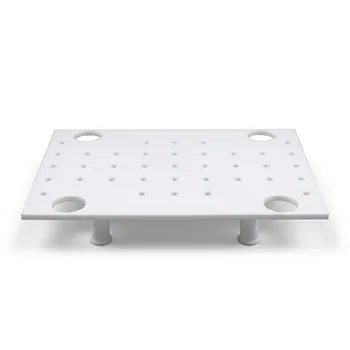
Elevate your research fidelity with KINTEK, your premier partner for high-performance PTFE and PFA laboratory solutions. We understand that the success of advanced materials like ZIF-7-III and ZIF-9-III depends on an environment free of metallic leaching and contamination.
From high-purity hydrothermal synthesis liners, microwave digestion vessels, and custom microchannel reactors to everyday essentials like beakers, crucibles, reagent bottles, and centrifuge tubes, KINTEK manufactures virtually every fluoropolymer lab supply imaginable. Our catalog extends to:
- Fluid Transfer: Precision tubing, fittings, and valves.
- Sample Prep & Filtration: Separatory funnels, filters, pipettes, and spatulas.
- General Consumables: High-purity stirring bars, O-rings, and seal tapes.
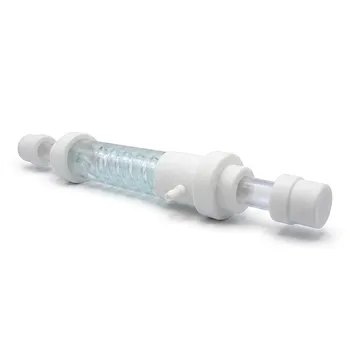
- Advanced Apparatus: Custom electrochemical cells, battery testing fixtures, and condensation devices.
Backed by end-to-end custom CNC fabrication, we deliver everything from complex non-standard machined parts to high-volume orders with an absolute focus on high-performance materials. Ensure your laboratory setups meet the highest standards of purity and precision—Contact KINTEK today to discuss your custom requirements!
References
- Despoina Andriotou, David Peralta. New Approach of In Situ Dense Sphere Shaping of ZIF-7-III and ZIF-9-III in Water without Additive. DOI: 10.1021/acs.cgd.5c01155
This article is also based on technical information from Kintek Knowledge Base .
Related Products
- PTFE Lined High Pressure Digestion Vessel 50ml High Temperature Hydrothermal Synthesis Tank
- High Temperature Corrosion Resistant Hydrothermal Synthesis Reactor with TFM Inner Liner and Straight Cylinder Design
- High Purity PTFE Microwave Digestion Vessel Replacement Liner for Acid Sample Preparation and Trace Analysis
- High Purity PTFE Microwave Digestion Vessel for Soil and Food Analysis Acid Resistant Fluoropolymer Sample Preparation Liners
- High Purity TFM Microwave Digestion Vessels PTFE Acid Evaporation Liners Domestic GT-400 Equivalent Laboratory Reaction Containers
People Also Ask
- What are the benefits of using a PTFE-lined vessel for carbon-sulfur cathode treatment? Maximize Purity & Performance
- Why are PTFE-lined pressure digestion vessels required for the preparation of Ag/CeO2 catalysts? Purity & Performance
- What safety features are typically incorporated into high-pressure PTFE digestion vessel designs? Ensure Lab Safety
- What is the function of PTFE lined high-pressure vessels in g-C3N4 synthesis? Achieve High-Purity Material Growth
- Role of High-Pressure Digestion Tanks in Perovskite Synthesis: Achieve Superior Stability and Latent Heat