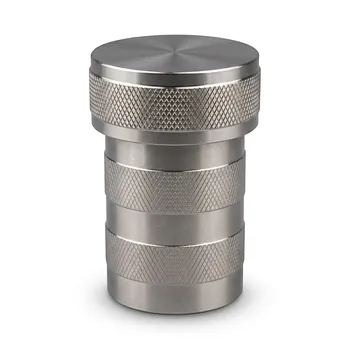
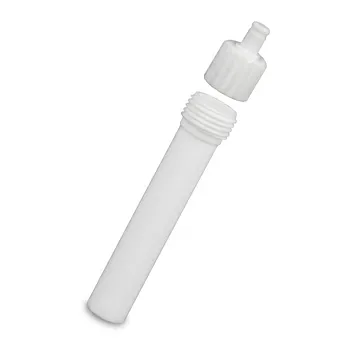
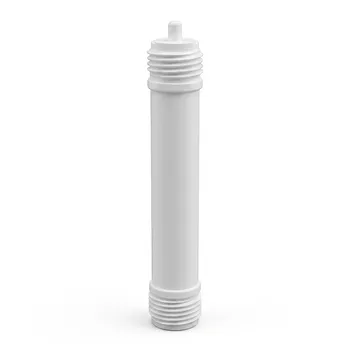
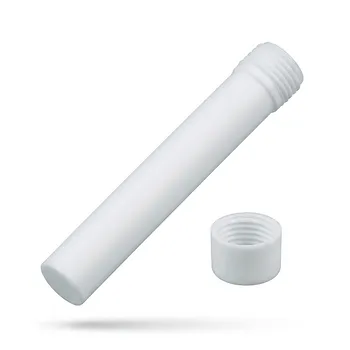
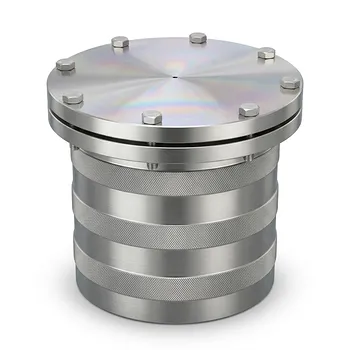
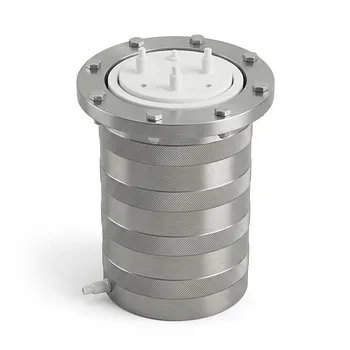
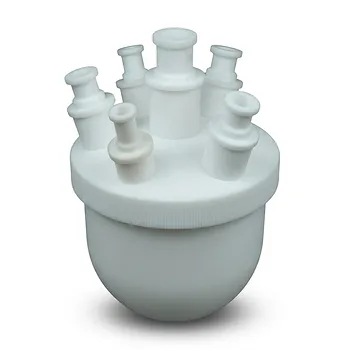
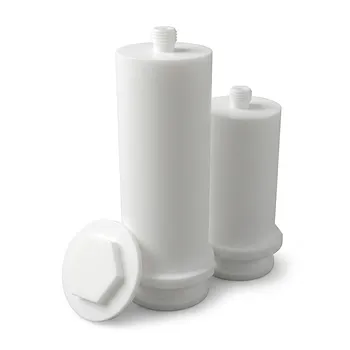
High-purity PTFE or PFA hydrothermal synthesis liners serve as the critical isolation barrier that ensures the chemical integrity and structural purity of GeMFI zeolites. By providing an inert reaction environment, these liners prevent corrosive mineralizing agents—specifically fluoride ions and strong alkalis—from leaching metal impurities from the autoclave walls into the zeolite framework during crystallization.
Core Takeaway: The primary role of PTFE or PFA liners is to provide a contamination-free, corrosion-resistant micro-environment that allows for the precise crystallization of high-germanium MFI structures without interference from the metallic pressure vessel.
Maintaining Chemical Purity in the GeMFI Framework
Prevention of Metallic Contamination
In the synthesis of GeMFI zeolites, the introduction of even trace amounts of iron, chromium, or nickel from the autoclave body can disrupt the delicate framework assembly. PTFE and PFA liners act as a physical shield, ensuring that the synthesis gel only interacts with the inert polymer surface rather than the metal reactor.
Neutralizing Corrosive Mineralizing Agents
The synthesis of high-germanium zeolites often requires fluoride ions or highly alkaline systems to facilitate the dissolution of silica and germanium sources. These chemicals are highly aggressive toward stainless steel; however, high-purity polymers are virtually immune to this corrosion, maintaining the chemical balance of the reaction.
Ensuring Low Impurity Leaching Rates
Standard materials can "leak" ions into a solution under the intense heat of a hydrothermal process. High-purity PTFE/PFA is selected specifically for its low leaching rate, which is essential for synthesizing high-performance nanomaterials where framework precision is the priority.
Structural and Physical Benefits During Synthesis
Support for High-Pressure Crystallization
Hydrothermal synthesis relies on maintaining high pressure at elevated temperatures to drive crystal growth. These liners are designed to fit precisely within a stainless steel jacket, allowing the polymer to provide chemical resistance while the metal provides the mechanical strength to withstand internal pressure.
Thermal Stability and Clean Growth
PTFE remains stable under the typical temperature ranges required for zeolite crystallization, usually up to 220°C–250°C. This thermal stability ensures that the liner does not degrade or release organic fragments that could act as unintended templates or impurities within the GeMFI structure.
Product Recovery via Low Surface Energy
One of the most practical roles of these liners is their non-stick property, derived from low surface energy. This allows researchers to easily detach and recover the synthesized zeolite powders from the vessel walls, maximizing yield and simplifying the cleaning process for subsequent batches.
Understanding the Trade-offs and Limitations
Temperature Ceiling Constraints
While excellent for chemical resistance, PTFE and PFA have definitive thermal limits compared to metallic or ceramic vessels. Exceeding 250°C can lead to polymer deformation or "creep," which may compromise the seal of the hydrothermal autoclave and lead to synthesis failure.
Thermal Expansion Mismatch
Polymers expand at different rates than the metal jackets they sit within. This differential expansion requires careful engineering of the autoclave cap and seal to prevent the liner from deforming or leaking during the heating and cooling cycles of the GeMFI synthesis.
How to Apply This to Your Project
- If your primary focus is Maximum Framework Purity: Always opt for high-purity PFA liners, as they typically offer even lower leaching profiles and smoother surface finishes than standard PTFE.
- If your primary focus is Fluoride-Mediated Synthesis: Ensure the liner is inspected for micro-cracks before use, as fluoride ions can penetrate surface imperfections and eventually reach the metal shell.
- If your primary focus is High-Yield Recovery: Utilize the non-stick properties of a fresh PTFE liner to ensure that fine-grained GeMFI nanoparticles do not become embedded in the vessel wall.
By correctly utilizing these high-purity liners, you transform a potentially reactive metal vessel into a controlled, ultra-clean laboratory for advanced zeolite engineering.**
Summary Table:
| Feature | Impact on GeMFI Zeolite Synthesis |
|---|---|
| Chemical Isolation | Prevents metallic contamination (Fe, Cr, Ni) from autoclave walls into the framework. |
| Corrosion Resistance | Withstands aggressive fluoride ions and strong alkalis used as mineralizing agents. |
| Low Leaching Rate | Minimizes ion leakage to ensure precise crystallization of germanium structures. |
| Non-Stick Surface | Increases product recovery yield and simplifies cleaning of fine nanoparticles. |
| Thermal Stability | Maintains integrity up to 250°C, preventing organic impurities from entering the gel. |
Optimize Your Advanced Material Synthesis with KINTEK
Precision in zeolite engineering starts with an ultra-clean reaction environment. KINTEK specializes in high-performance fluoropolymer solutions tailored for the most demanding laboratory applications. From everyday basic labware like beakers, crucibles, and centrifuge tubes to advanced high-purity PTFE and PFA hydrothermal synthesis liners, we ensure your samples remain free from metallic contamination.
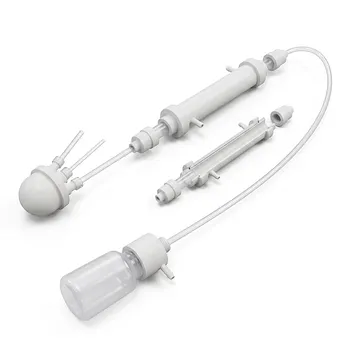
Our expertise extends to comprehensive fluid transfer components (tubing, valves), filtration tools (filters, pipettes), and sophisticated reaction apparatus including standard or custom electrochemical cells and microchannel reactors. Backed by end-to-end custom CNC fabrication, KINTEK can deliver everything from complex non-standard machined parts to high-volume orders with absolute focus on material purity.
Ready to enhance your lab's efficiency and yield? Contact us today to discuss your bespoke fluoropolymer requirements!
References
- Eddy Dib, Svetlana Mintova. Germanium Atoms Exceed the Tetrahedral Coordination in MFI Zeolite. DOI: 10.1021/jacs.4c13278
This article is also based on technical information from Kintek Knowledge Base .
Related Products
- PTFE Lined High Pressure Digestion Vessel 50ml High Temperature Hydrothermal Synthesis Tank
- High Temperature Corrosion Resistant Hydrothermal Synthesis Reactor with TFM Inner Liner and Straight Cylinder Design
- High Purity PTFE Microwave Digestion Vessel Replacement Liner for Acid Sample Preparation and Trace Analysis
- High Purity PTFE Microwave Digestion Vessel for Soil and Food Analysis Acid Resistant Fluoropolymer Sample Preparation Liners
- High Purity TFM Microwave Digestion Vessels PTFE Acid Evaporation Liners Domestic GT-400 Equivalent Laboratory Reaction Containers
People Also Ask
- What are the benefits of using a PTFE-lined vessel for carbon-sulfur cathode treatment? Maximize Purity & Performance
- Why are PTFE-lined pressure digestion vessels required for the preparation of Ag/CeO2 catalysts? Purity & Performance
- What safety features are typically incorporated into high-pressure PTFE digestion vessel designs? Ensure Lab Safety
- What is the function of PTFE lined high-pressure vessels in g-C3N4 synthesis? Achieve High-Purity Material Growth
- Role of High-Pressure Digestion Tanks in Perovskite Synthesis: Achieve Superior Stability and Latent Heat