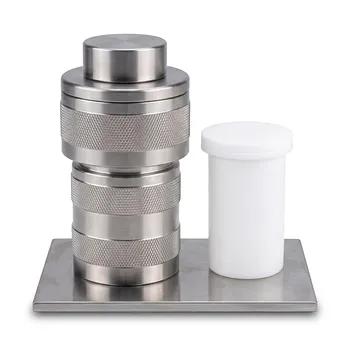
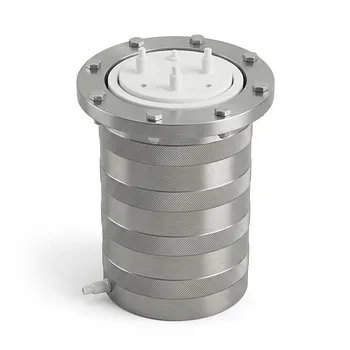
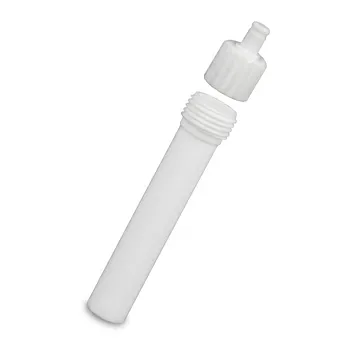
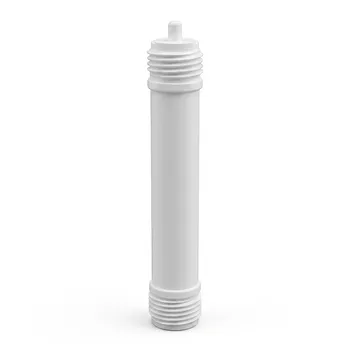
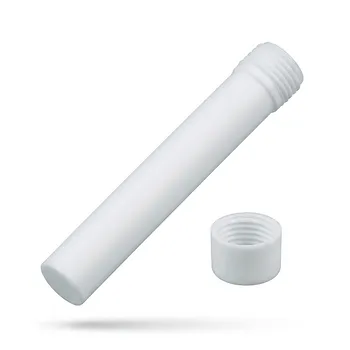
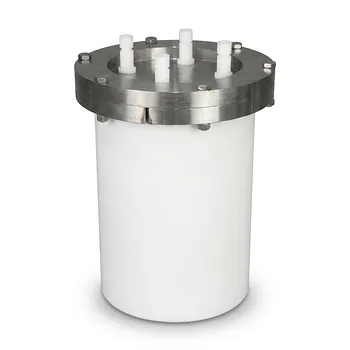
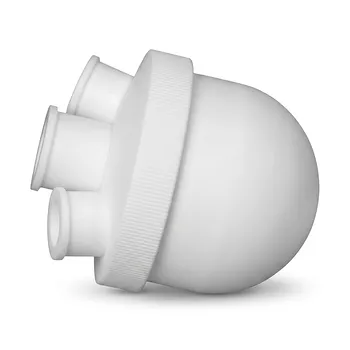
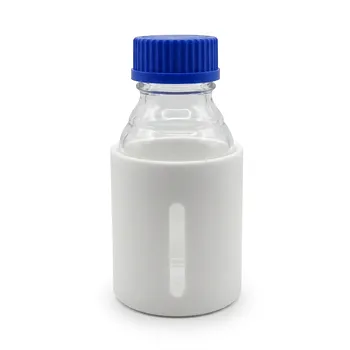
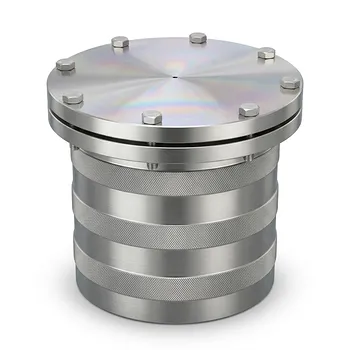
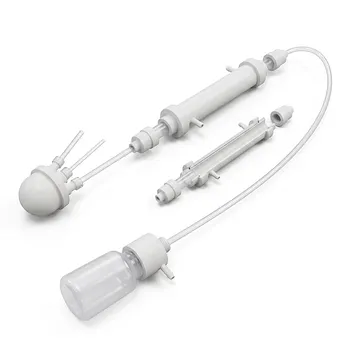
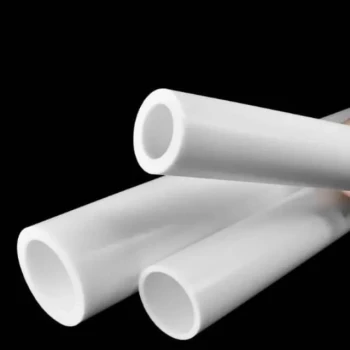
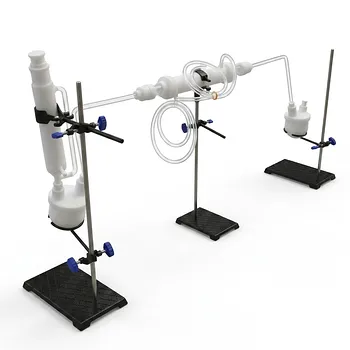
High-purity PTFE liners serve as the primary chemical barrier in hydrothermal synthesis. These liners isolate reaction substrates from the metal shell of the reactor, preventing unwanted catalytic interference and the introduction of metallic impurities. By providing a chemically inert and non-stick environment, they ensure the high purity of synthesized organic bioactive molecules—such as xanthene and quinazolinone derivatives—while streamlining the collection of the final product.
Core Takeaway: High-purity PTFE liners are essential for maintaining a sterile, non-reactive environment that protects the molecular integrity of organic compounds from metallic contamination and corrosive reagents during high-pressure synthesis.
Maintaining Chemical Inertness and Molecular Purity
Prevention of Catalytic Interference
The primary role of the PTFE liner is to prevent direct contact between the reaction mixture and the stainless steel autoclave shell. Many organic reactions are sensitive to transition metals; without a liner, the iron, nickel, or chromium in the reactor shell could act as an unintended catalyst, leading to side reactions or degraded bioactive products.
Mitigation of Impurity Leaching
High-purity PTFE is characterized by extremely low leaching rates, meaning it does not release trace elements into the solvent. This is critical when preparing organic bioactive molecules where even parts-per-billion levels of metal contamination can alter the biological activity or toxicity of the compound.
Isolation from Corrosive Media
Hydrothermal synthesis often involves strong acids, bases, or aggressive organic solvents that would otherwise erode the metal reactor. The liner acts as a robust shield, ensuring that the chemical environment remains neutral and the structural integrity of the autoclave is preserved.
Physical Performance under Extreme Conditions
Thermal Stability and Pressure Resistance
High-purity PTFE maintains its structural integrity under the high-temperature and high-pressure conditions required for hydrothermal synthesis. This stability allows for a consistent reaction environment, which is necessary for the uniform growth of crystals and the predictable synthesis of complex organic structures.
Facilitating Product Recovery
The non-stick properties of PTFE are a significant operational advantage when dealing with micro- and nano-powders. These properties prevent the synthesized bioactive molecules from adhering to the vessel walls, ensuring maximum yield and simplifying the transition from the reactor to the purification stage.
Streamlined Cleaning and Reusability
Because organic residues do not easily bond to the PTFE surface, the liners are easy to clean and decontaminate between runs. This reduces the risk of cross-contamination between different batches of bioactive molecules, ensuring the repeatability of the experimental results.
Understanding the Trade-offs
Temperature Limitations
While PTFE is highly stable, it has a distinct upper temperature limit (typically around 220°C–250°C). Exceeding these temperatures can cause the liner to soften or deform, potentially leading to a seal failure or the release of fluorinated vapors.
Physical Deformation (Creep)
Under prolonged high pressure, PTFE is subject to "creep" or mechanical deformation. Users must monitor the shape of the liner over time, as a warped liner may not seat correctly within the stainless steel shell, compromising the safety of the high-pressure system.
Comparison with PFA Liners
In some ultra-trace applications, Perfluoroalkoxy (PFA) liners may be preferred over PTFE due to even lower metal backgrounds and better transparency. However, PTFE remains the industry standard for organic synthesis due to its superior cost-to-performance ratio and excellent overall chemical resistance.
How to Apply This to Your Project
Recommendations for Success
- If your primary focus is Maximum Bioactive Purity: Ensure you use high-purity, virgin PTFE liners to eliminate the risk of trace metal leaching that could interfere with biological assays.
- If your primary focus is High-Yield Recovery: Leverage the non-stick nature of PTFE by using a polished liner surface, which is particularly effective for collecting fine organic precipitates or powders.
- If your primary focus is Reactor Longevity: Regularly inspect the liner for cracks or thinning, as even a microscopic breach can allow corrosive solvents to compromise the expensive stainless steel outer shell.
The strategic use of high-purity PTFE liners is the most effective way to ensure a controlled, contaminant-free environment for the synthesis of sensitive organic bioactive molecules.
Summary Table:
| Feature | Function in Synthesis | Impact on Bioactive Molecules |
|---|---|---|
| Chemical Inertness | Prevents contact with metal shell | Eliminates catalytic interference and metal leaching |
| Non-Stick Property | Reduces adhesion to vessel walls | Maximizes product yield and streamlines recovery |
| Corrosion Resistance | Protects against acids/bases/solvents | Ensures a neutral environment and reactor longevity |
| Thermal Stability | Maintains integrity up to 250°C | Provides a stable, high-pressure reaction environment |
Elevate Your Synthesis Precision with KINTEK
Protect the integrity of your research with high-performance fluoropolymer solutions from KINTEK. We specialize in providing the most comprehensive range of laboratory supplies crafted exclusively from high-purity PTFE and PFA to ensure zero contamination in your most sensitive applications.
From everyday basic labware like beakers, crucibles, and reagent bottles to advanced components for fluid transfer (tubing, valves) and sample preparation (filters, pipettes, tweezers), KINTEK has you covered. Our expertise extends to sophisticated reaction apparatus, including hydrothermal synthesis liners, microwave digestion vessels, electrochemical cells, and microchannel reactors.
Why choose KINTEK?
- End-to-End Customization: Our advanced CNC fabrication allows us to deliver everything from complex non-standard machined parts to bespoke laboratory setups.
- Unmatched Material Focus: We maintain an absolute focus on high-performance fluoropolymers to support trace analysis and high-pressure synthesis.
- Scalable Solutions: Whether you need a single custom component or high-volume orders, we maintain the highest quality standards.
Ready to optimize your lab’s efficiency and secure your molecular purity? Contact us today to discuss your project!
References
- Zhiqiang Wu, Wanyi Liu. Mild and Efficient Preparation of Organic Molecules with Different Structural Characteristics: Catalyst-Free and Solvent-Free Methods in Hydrothermal Synthesis Reactors. DOI: 10.2139/ssrn.4283399
This article is also based on technical information from Kintek Knowledge Base .
Related Products
- PTFE Lined High Pressure Digestion Vessel 50ml High Temperature Hydrothermal Synthesis Tank
- High Pressure Custom TFM Reactor Stainless Steel Outer Vessel PTFE Inner Cup for Corrosive Synthesis
- High Purity PTFE Microwave Digestion Vessel Replacement Liner for Acid Sample Preparation and Trace Analysis
- High Purity PTFE Microwave Digestion Vessel for Soil and Food Analysis Acid Resistant Fluoropolymer Sample Preparation Liners
- High Purity TFM Microwave Digestion Vessels PTFE Acid Evaporation Liners Domestic GT-400 Equivalent Laboratory Reaction Containers
People Also Ask
- What are the benefits of using a PTFE-lined vessel for carbon-sulfur cathode treatment? Maximize Purity & Performance
- Why are PTFE-lined pressure digestion vessels required for the preparation of Ag/CeO2 catalysts? Purity & Performance
- What safety features are typically incorporated into high-pressure PTFE digestion vessel designs? Ensure Lab Safety
- What is the function of PTFE lined high-pressure vessels in g-C3N4 synthesis? Achieve High-Purity Material Growth
- Role of High-Pressure Digestion Tanks in Perovskite Synthesis: Achieve Superior Stability and Latent Heat