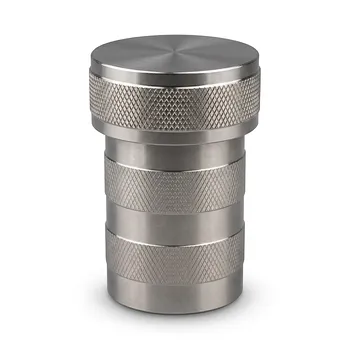
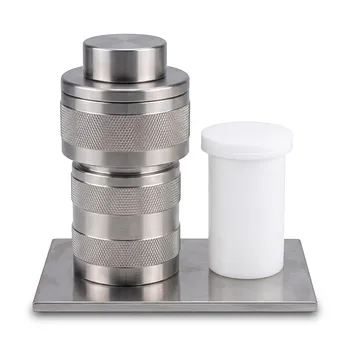
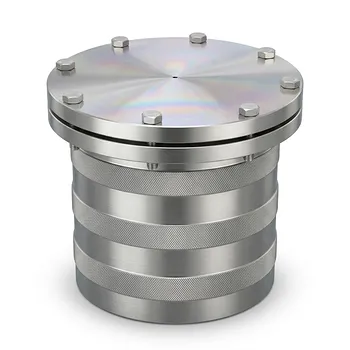
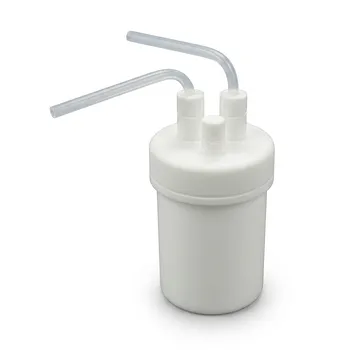
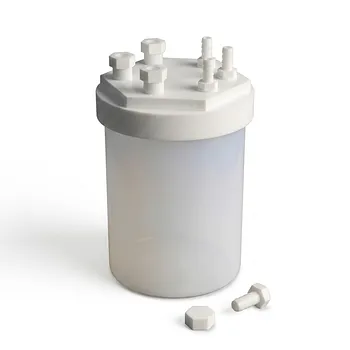
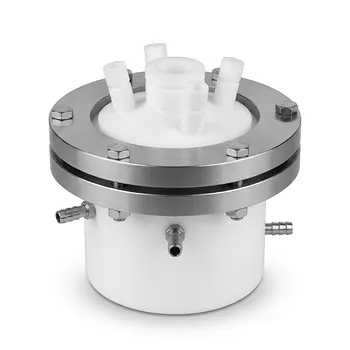
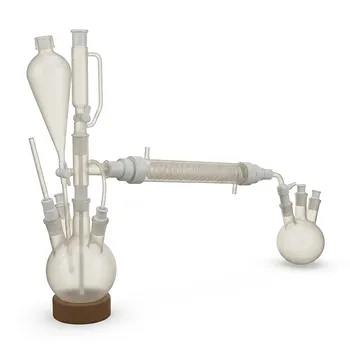
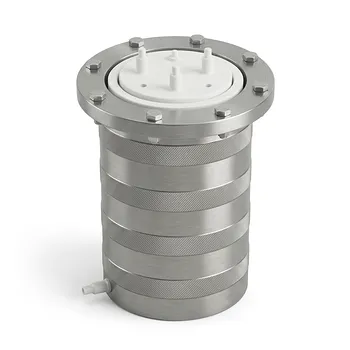
High-pressure synthesis autoclaves with fluoropolymer liners serve as the fundamental reactor environment for engineering the precise morphology and chemical purity of copper nanosheet tandem catalysts. They provide a sealed, high-pressure, and uniformly heated space that induces the directional growth of copper crystals along specific facets, such as Cu(100) and Cu(111). This physical control is essential for creating the interaction interfaces of tandem active sites, which are required to convert nitrate to nitrite and then to ammonia during the nitrate reduction reaction (NO3RR).
The core role of these autoclaves is to provide a chemically inert and pressurized environment that maintains solvents in a liquid phase above their boiling points. This allows for the controlled nucleation and anisotropic growth of copper precursors into high-purity nanosheets with the specific crystal structures needed for tandem catalysis.
Establishing the Thermodynamic Environment
Maintaining Liquid Phase at Extreme Temperatures
Solvothermal synthesis often requires heating solvents like N,N-dimethylformamide or aqueous solutions to temperatures reaching 120°C to 160°C.
The sealed autoclave environment generates spontaneous pressure, allowing these solvents to remain in a liquid phase well beyond their standard boiling points. This state is critical for the continuous dissolution and reaction of copper salt precursors.
Uniform Heat and Pressure Distribution
The autoclave's stainless steel outer shell provides the structural integrity to withstand high internal pressures while ensuring uniform heat transfer.
This consistency throughout the reaction volume prevents localized temperature gradients, which is vital for the synchronized nucleation and growth of uniform nanosheet structures.
Engineering the Catalyst Structure
Inducing Directional Crystal Growth
The high-pressure environment acts as a catalyst for anisotropic growth, forcing the copper crystals to develop along preferred orientations rather than forming bulk particles.
By precisely managing the growth environment, researchers can target specific facets like Cu(100) and Cu(111), which dictate the catalytic activity of the final material.
Facilitating Tandem Active Sites
Tandem catalysts rely on the proximity of different active sites to perform multi-step reactions, such as the nitrate-to-nitrite-to-ammonia pathway.
The controlled physical environment of the autoclave ensures these interfaces are formed consistently, allowing the intermediates of the NO3RR process to move efficiently from one active site to the next.
Ensuring Chemical Purity and Integrity
Preventing Metal Ion Contamination
Fluoropolymer liners, typically made of PTFE (Polytetrafluoroethylene) or PFA (Perfluoroalkoxy), are used for their exceptional chemical inertness.
Without these liners, the corrosive precursor solutions containing nitrates or chlorides would react with the stainless steel shell, leaching metal impurities like iron or nickel into the catalyst and poisoning the active sites.
Low Surface Energy for Product Recovery
Fluoropolymers possess extremely low surface energy, which prevents the synthesized copper nanosheets from adhering to the walls of the vessel.
This characteristic ensures the complete collection of reaction products and maintains the high-purity coordination structure required for atomic-level catalytic performance.
Understanding the Trade-offs
Thermal Limitations of Fluoropolymers
While PTFE and PFA offer high chemical resistance, they have strict thermal ceilings, typically around 250°C to 260°C. Exceeding these temperatures can lead to liner deformation or the release of toxic vapors, limiting the temperature range available for certain solvothermal processes.
Pressure Sensitivity and Safety
The spontaneous pressure generated inside the autoclave is highly dependent on the filling degree (the ratio of liquid to total volume). Overfilling can cause a rapid, non-linear increase in pressure that may exceed the safety limits of the stainless steel shell, requiring careful calculation and monitoring to prevent vessel failure.
How to Apply This to Your Project
Recommendations for Effective Catalyst Synthesis
- If your primary focus is facet-specific growth: Ensure the autoclave is heated uniformly and the filling degree is calibrated to generate the exact pressure profile required for anisotropic growth along Cu(100) or Cu(111).
- If your primary focus is atomic-level purity: Utilize high-purity PFA liners instead of standard PTFE to further minimize the risk of trace element leaching during long-duration solvothermal reactions.
- If your primary focus is maximizing product yield: Take advantage of the low surface energy of fluoropolymer liners to ensure all synthesized nanosheets are recovered during the collection phase.
By mastering the high-pressure environment of the fluoropolymer-lined autoclave, you can transform simple copper precursors into highly sophisticated, facet-engineered tandem catalysts.
Summary Table:
| Feature | Role in Solvothermal Synthesis | Impact on Copper Nanosheets |
|---|---|---|
| High-Pressure Seal | Maintains liquid phase above boiling point | Enables continuous precursor dissolution |
| Fluoropolymer Liner | Provides complete chemical inertness | Prevents metal ion leaching and poisoning |
| Thermal Uniformity | Eliminates localized temperature gradients | Ensures synchronized, anisotropic crystal growth |
| Low Surface Energy | Minimizes material adhesion to vessel walls | Maximizes recovery of high-purity catalysts |
| Facet Engineering | Facilitates growth along Cu(100)/Cu(111) | Creates necessary tandem active sites |
Precision Engineering for Advanced Catalysis
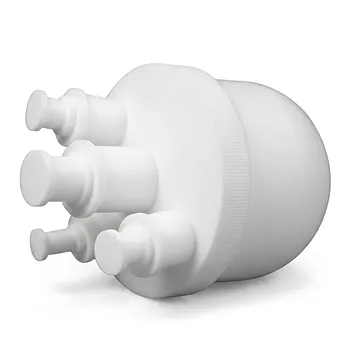
Build your research on a foundation of absolute purity. KINTEK specializes in high-performance fluoropolymer solutions tailored for the most demanding solvothermal processes. From standard PTFE and PFA labware—including beakers, centrifuge tubes, and digestion vessels—to advanced hydrothermal synthesis liners and custom-machined reaction apparatus, we provide the inert environment your tandem catalysts require.
Whether you need high-volume consumables like O-rings and seal tapes or bespoke non-standard machined parts and electrochemical cells, our end-to-end CNC fabrication ensures your equipment meets exact specifications. Don't let trace contamination compromise your Cu(100) or Cu(111) facet integrity.
Contact KINTEK today to discuss your custom laboratory setup and discover how our expertise in high-performance fluoropolymers can elevate your material synthesis.
References
- Ziyang Wu, Jianping Yang. Tandem catalysis in electrocatalytic nitrate reduction: Unlocking efficiency and mechanism. DOI: 10.1002/idm2.12152
This article is also based on technical information from Kintek Knowledge Base .
Related Products
- High Temperature Corrosion Resistant Hydrothermal Synthesis Reactor with TFM Inner Liner and Straight Cylinder Design
- PTFE Lined High Pressure Digestion Vessel 50ml High Temperature Hydrothermal Synthesis Tank
- Custom TFM Reaction Vessel with Stainless Steel Jacket and PTFE Inner Cup for High Corrosion Resistance
- Custom PTFE Continuous Reaction Bottles Virgin Fluoropolymer High Purity Low Background Synthesis Vessels
- PFA Chemical Reaction Tank with Customizable Fittings for Corrosive Solvent Synthesis and High Purity Lab Applications
People Also Ask
- What is the role of a corrosion-resistant reactor in the synthesis of lignin-based carbon dots? Ensure Maximum Purity
- What are the technical advantages of using hydrothermal synthesis reactors for advanced electronic & optical nanomaterials?
- How does a hydrothermal synthesis reactor facilitate the production of crystalline materials with tailored morphologies? Precision Crystal Growth
- Why is the sealing reliability of a hydrothermal synthesis reactor critical for 24-hour cycles? Ensure Nano-Precision
- What role do hydrothermal synthesis reactors play in CQD preparation? Achieve High-Purity Nanomaterial Synthesis