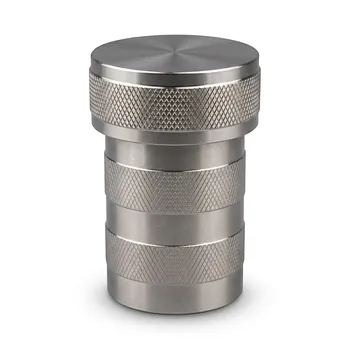
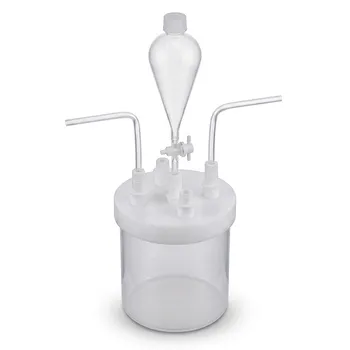
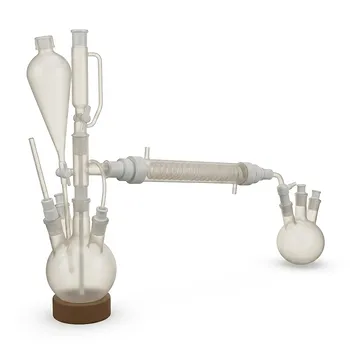
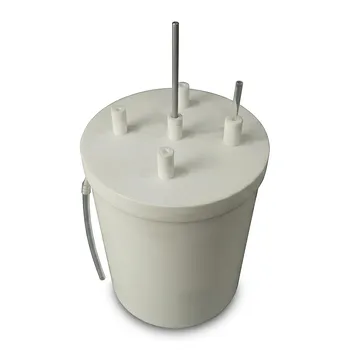
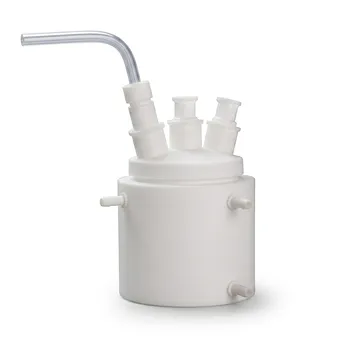
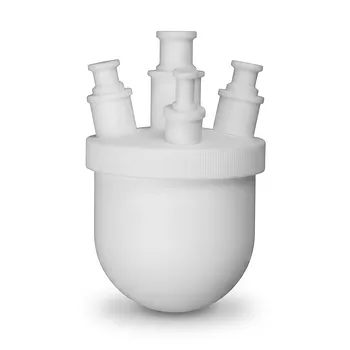
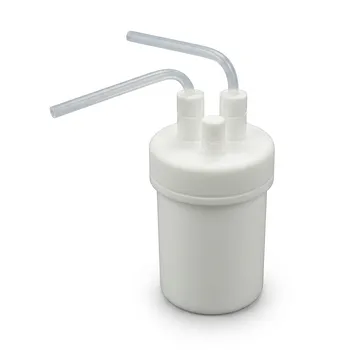
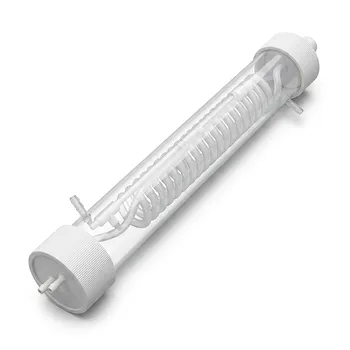
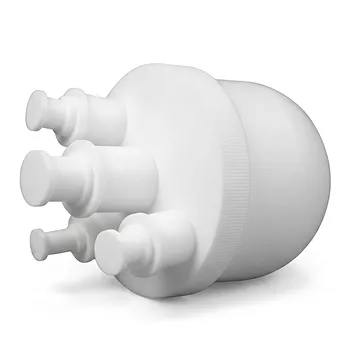
High-pressure hydrothermal synthesis reactors are the fundamental tools used to engineer the surface architecture of cerium dioxide (CeO2). By providing a sealed environment capable of maintaining high temperatures and autogenous pressures, these reactors allow for the precise control of growth kinetics. This enables the synthesis of specific morphologies—such as nanorods, nanocubes, and nano-octahedra—which are characterized by the dominance of the (110), (100), and (111) crystal facets, respectively.
Core Takeaway: The reactor functions as a thermodynamic "pressure cooker" that forces cerium precursors to grow along specific crystallographic directions. By tuning the chemical environment and temperature within the vessel, researchers can dictate which crystal facets are exposed, directly influencing the material's catalytic reactivity.
Driving Anisotropic Growth through Environmental Control
Thermodynamic Stability and Pressure
In a standard environment, crystals naturally grow into shapes that minimize their surface energy, often hiding more reactive facets. The high-pressure hydrothermal reactor overrides these natural tendencies by creating a sealed, high-temperature environment that facilitates the dissolution and recrystallization of precursors. This process allows the system to reach the energetic thresholds required to stabilize less naturally stable crystallographic planes.
Promoting Controlled Nucleation
The reactor environment ensures that cerium precursors, such as cerium nitrate, undergo controlled nucleation in a high-temperature aqueous solution. Because the system is closed, it maintains autogenous pressure, which increases the solubility of the precursors. This allows for a uniform distribution of solutes, ensuring that crystal growth occurs consistently across all particles in the batch.
Achieving High Purity and Crystallinity
High-pressure conditions are essential for ensuring that the resulting $CeO_2$ carriers possess high crystallinity and framework integrity. The reactor facilitates the interaction between silicon or aluminum sources and organic templates if used, or simply ensures that the cerium ions are fully incorporated into the desired lattice structure. This results in a high-purity product with a precise, predictable morphology.
Facilitating Chemical Control of Facet Exposure
The Role of Mineralizers and pH
Within the reactor, the addition of mineralizers like sodium hydroxide (NaOH) or sodium phosphate ($Na_3PO_4$) is critical for facet selection. These chemicals interact with the cerium ions under high pressure to "cap" or protect certain crystal faces, forcing growth to occur on others. By adjusting the concentration of these mineralizers, the reactor environment can be tuned to produce specific shapes.
Engineering Specific Morphologies
The synergy between the reactor's physical parameters and the chemical additives determines the final shape of the $CeO_2$. Nanorods typically expose the (110) and (100) facets, nanocubes expose the (100) facets, and nano-octahedra are dominated by the (111) facets. Each of these shapes offers different levels of catalytic activity and oxygen storage capacity.
Continuous-Flow and Supercritical States
Advanced high-pressure systems can reach supercritical or near-critical states rapidly. In these states, the distinction between liquid and gas disappears, allowing for non-equilibrium control of the synthesis process. This is particularly useful for uniform doping of the $CeO_2$ lattice with elements like Chromium (Cr), ensuring the dopants are integrated into the crystal structure rather than just sitting on the surface.
Understanding the Trade-offs
Equipment Limitations and Safety
While high-pressure reactors are powerful, they require specialized corrosion-resistant liners, typically made of Polytetrafluoroethylene (PTFE) or Polyphenylene (PPL). These liners are essential when using aggressive mineralizers or acidic catalysts, as the combination of high heat and pressure can quickly degrade standard metallic containers. Furthermore, the reliance on autogenous pressure means that pressure is a function of temperature, which can limit independent control of these two variables.
Scalability and Reaction Time
Hydrothermal synthesis is often a slow process, sometimes requiring 24 to 48 hours for full crystallization. While this time is necessary to achieve high crystallinity, it can be a bottleneck in industrial production. Additionally, the batch nature of traditional hydrothermal reactors can lead to slight variations between runs if temperature gradients within the reactor are not perfectly controlled.
How to Apply This to Your Project
When selecting your synthesis parameters within a high-pressure reactor, your choice should be driven by the specific catalytic application of the cerium dioxide.
- If your primary focus is Maximum Catalytic Activity: Aim for the synthesis of nanorods, which expose the highly reactive (110) and (100) facets; this usually requires higher concentrations of NaOH as a mineralizer.
- If your primary focus is Thermal Stability: Optimize for the growth of nano-octahedra, as the (111) facet is the most thermodynamically stable plane of the $CeO_2$ fluorite structure.
- If your primary focus is Uniform Surface Area: Target nanocubes exposing (100) facets, which provide a balanced profile of surface energy and structural regularity.
By mastering the high-pressure environment of the hydrothermal reactor, you can precisely tailor the atomic landscape of cerium dioxide to meet the specific demands of your chemical process.
Summary Table:
| Morphology | Dominant Facets | Key Characteristics | Recommended Application |
|---|---|---|---|
| Nanorods | (110) & (100) | High Surface Energy | Maximum Catalytic Activity |
| Nanocubes | (100) | Structural Regularity | Uniform Surface Area |
| Nano-octahedra | (111) | Highest Thermodynamic Stability | High Thermal Stability |
| Doped CeO2 | Lattice Integrated | Enhanced Oxygen Storage | Advanced Oxidation Processes |
Elevate Your Materials Engineering with KINTEK
Precision in crystal facet engineering starts with the right equipment. KINTEK specializes in high-performance fluoropolymer laboratory supplies, providing the essential PTFE and PFA hydrothermal synthesis liners and corrosion-resistant reaction vessels needed to withstand aggressive mineralizers and high-pressure environments.
Whether you require high-purity trace analysis instruments, bespoke laboratory setups, or standard consumables like beakers, centrifuge tubes, and stirring bars, our end-to-end custom CNC fabrication ensures your equipment meets exact research specifications. From advanced microwave digestion vessels and microchannel reactors to high-volume orders of fluoropolymer fittings and valves, we deliver the durability and purity your lab demands.
Ready to optimize your synthesis process? Contact us today to discover how KINTEK’s expert-crafted fluoropolymer solutions can enhance your catalytic research.
References
- Song Shi, Dionisios G. Vlachos. Facet-dependent strong metal-support interactions control the C–O bond activation. DOI: 10.1016/j.checat.2023.100788
This article is also based on technical information from Kintek Knowledge Base .
Related Products
- High Temperature Corrosion Resistant Hydrothermal Synthesis Reactor with TFM Inner Liner and Straight Cylinder Design
- PTFE Lined High Pressure Digestion Vessel 50ml High Temperature Hydrothermal Synthesis Tank
- High Pressure Custom TFM Reactor Stainless Steel Outer Vessel PTFE Inner Cup for Corrosive Synthesis
- Custom TFM Reaction Vessel with Stainless Steel Jacket and PTFE Inner Cup for High Corrosion Resistance
- High Purity PFA Reaction Vessel for Biopharmaceutical Synthesis and Corrosive Chemical Fluid Handling with Customizable Tube Fittings
People Also Ask
- What is the role of a corrosion-resistant reactor in the synthesis of lignin-based carbon dots? Ensure Maximum Purity
- What are the technical advantages of using hydrothermal synthesis reactors for advanced electronic & optical nanomaterials?
- How does a hydrothermal synthesis reactor facilitate the production of crystalline materials with tailored morphologies? Precision Crystal Growth
- Why is the sealing reliability of a hydrothermal synthesis reactor critical for 24-hour cycles? Ensure Nano-Precision
- What role do hydrothermal synthesis reactors play in CQD preparation? Achieve High-Purity Nanomaterial Synthesis