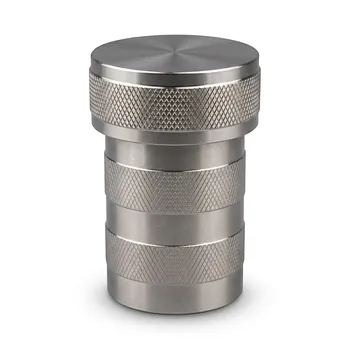
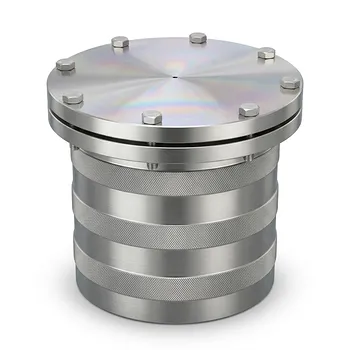
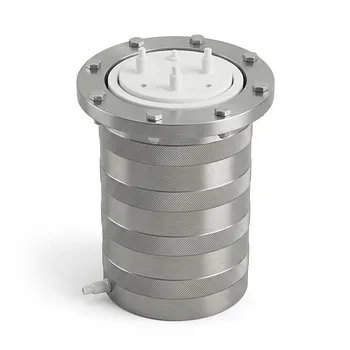
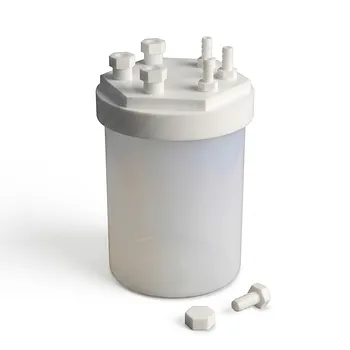
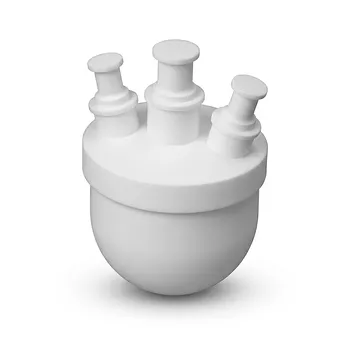
High-pressure hydrothermal synthesis autoclaves and their liners serve as the foundational reactors for creating high-performance MXene-based photocatalysts by providing a controlled, high-energy environment. These tools facilitate the growth of well-defined crystals and heterojunctions while protecting the material from contamination and chemical degradation. They specifically enable precursors to react in solvents at temperatures exceeding their normal boiling points, a process critical for improving crystallinity and enabling the in-situ growth of secondary semiconductor materials onto MXene nanosheets.
The use of high-pressure autoclaves and fluoropolymer liners is essential for overcoming the physical and chemical barriers to MXene functionalization, ensuring the production of high-purity, structurally precise photocatalysts with efficient charge transfer properties.
Facilitating Structural Integrity and Crystallinity
Promoting High-Energy Crystal Growth
Autoclaves create a sealed environment where solvents can reach subcritical or supercritical states. This significantly increases the solubility and reactivity of precursor molecules, allowing for rapid crystal nucleation and the development of superior crystallinity in the final photocatalyst.
Inhibiting Nanosheet Restacking
The high-pressure environment is vital for maintaining the high specific surface area of MXenes. By promoting the uniform nucleation of nanoparticles onto the MXene surface, the reactor helps firmly anchor these materials, which physically inhibits the natural tendency of MXene layers to restack.
Overcoming Interplanar Forces
High pressure provides the necessary kinetic energy for organic intercalants to enter the narrow spaces between MXene layers. This is required to overcome interplanar Van der Waals forces, allowing for efficient intercalation and the expansion of the material’s active surface area.
Engineering the Photocatalytic Interface
Enabling In-Situ Heterojunction Formation
The hydrothermal process allows for the direct, in-situ growth of secondary materials—such as titanium dioxide (TiO2) or molybdenum disulfide (MoS2)—onto the MXene backbone. This creates a tight, intimate interface between the materials, which is the primary driver for efficient interfacial charge transfer.
Tailoring Crystalline Phases
Precise control over the temperature and pressure within the autoclave allows researchers to tailor the microstructure of the catalyst. This includes adjusting the ratio between different crystalline phases, a factor that directly influences the overall photocatalytic activity and redox potential.
Creating Efficient Ion Diffusion Channels
By facilitating the growth of hybrid structures, these reactors help establish efficient ion diffusion channels. This architectural control ensures that reactants can reach active sites more easily, enhancing the speed of the photocatalytic reaction.
The Critical Role of the Liner Material
Ensuring Chemical Purity
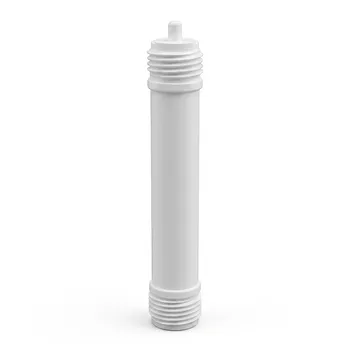
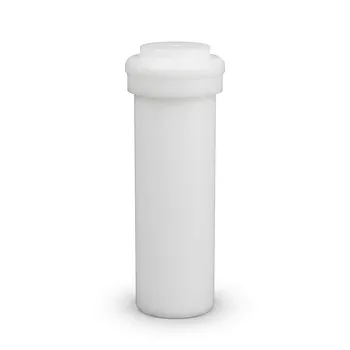
High-purity liners, typically made of Polytetrafluoroethylene (PTFE) or Perfluoroalkoxy (PFA), are chemically inert. They prevent the reaction solution from contacting the metallic walls of the autoclave, effectively eliminating metal ion contamination and ensuring the precise stoichiometry of the catalyst.
Resisting Corrosive Media
MXene synthesis and functionalization often involve strong acids, bases, or fluoride-containing precursors. Fluoropolymer liners provide the necessary corrosion resistance to withstand these harsh chemicals at elevated temperatures without degrading or leaching impurities.
Providing a Non-Adhesive Interface
The non-stick properties of PTFE and PFA liners ensure that the synthesized nanomaterials can be easily recovered. This property also facilitates coordination crystallization in a clean environment, which is essential for the reproducibility of the specific surface area and pore structure.
Understanding the Trade-offs
Temperature and Pressure Limitations
While PTFE liners are highly versatile, they generally have a maximum operating temperature of approximately 180°C to 200°C. Exceeding these limits can lead to liner deformation or the release of toxic vapors, necessitating the use of Polyphenylene (PPL) liners for higher-temperature reactions.
Safety and Seal Integrity
Operating at high pressures requires rigorous adherence to safety protocols, as seal failure can lead to explosive decompression. Furthermore, the thermal expansion of the liner must be accounted for to ensure it does not compromise the seal of the stainless steel autoclave body during heating.
How to Apply This to Your Project
Making the Selection for Your Goal
- If your primary focus is high-temperature synthesis (>220°C): Utilize a high-pressure autoclave equipped with a PPL liner rather than standard PTFE to ensure structural integrity.
- If your primary focus is preventing trace metal contamination: Ensure the use of high-purity PFA liners, which offer superior chemical resistance and lower leaching profiles than standard grades.
- If your primary focus is intercalating large organic molecules: Maximize the reactor’s pressure rating to provide the kinetic energy necessary to overcome the Van der Waals forces between MXene layers.
- If your primary focus is achieving specific phase ratios: Implement precise, incremental temperature controls on your autoclave to navigate the narrow windows of phase stability for your chosen semiconductor.
Selecting the appropriate combination of autoclave pressure rating and liner material is the most critical step in ensuring the reproducibility and efficiency of MXene-based photocatalytic systems.
Summary Table:
| Feature | Role in MXene Synthesis | Key Benefit |
|---|---|---|
| High-Pressure Environment | Overcomes Van der Waals forces | Prevents nanosheet restacking and increases active surface area |
| Subcritical Solvents | Enhances precursor solubility | Promotes rapid crystal nucleation and high crystallinity |
| PTFE/PFA Liners | Provides a chemically inert barrier | Prevents metal ion contamination and ensures material purity |
| In-Situ Processing | Facilitates heterojunction growth | Enables efficient interfacial charge transfer (e.g., TiO2/MXene) |
| Temperature Control | Manages crystalline phase ratios | Tailors microstructure for optimal redox potential |
Elevate Your MXene Research with KINTEK Precision
Achieving the perfect MXene-based photocatalyst requires more than just a recipe—it demands high-performance reactor components that can withstand extreme chemical environments without compromising purity. KINTEK specializes in the manufacture of high-performance laboratory supplies crafted exclusively from PTFE and PFA to support your most demanding hydrothermal processes.
Whether you need standard consumables or advanced reaction apparatus, we provide:
- Essential Labware: Beakers, measuring cylinders, crucibles, dishes, and reagent/wash bottles.
- Sample Prep & Analysis: Centrifuge and digestion tubes, high-purity trace analysis instruments, filters, and pipettes.
- Fluid & Gas Handling: Comprehensive transfer components including tubing, fittings, valves, and seal tapes.
- Advanced Reaction Tools: Standard or custom electrochemical cells, battery testing fixtures, and hydrothermal synthesis liners (PTFE/PFA/PPL).
- Bespoke Fabrication: End-to-end custom CNC machining for non-standard parts and complex laboratory setups.
From high-volume orders of stirring bars and gaskets to complex, custom-engineered reaction vessels, KINTEK is your partner in high-performance fluoropolymer materials. Contact us today to optimize your laboratory setup!
References
- Jamil A. Buledi, Amber R. Solangi. MXene-integrated two-dimensional photo-catalysts: A new frontier in sustainable degradation of organic dyes. DOI: 10.15407/spqeo28.03.306
This article is also based on technical information from Kintek Knowledge Base .
Related Products
- High Temperature Corrosion Resistant Hydrothermal Synthesis Reactor with TFM Inner Liner and Straight Cylinder Design
- PTFE Lined High Pressure Digestion Vessel 50ml High Temperature Hydrothermal Synthesis Tank
- Custom TFM Reaction Vessel with Stainless Steel Jacket and PTFE Inner Cup for High Corrosion Resistance
- High Purity PTFE Microwave Digestion Vessel for Soil and Food Analysis Acid Resistant Fluoropolymer Sample Preparation Liners
- PTFE Distillation Condensation Apparatus High Temperature Hydrofluoric Acid Resistant Fluorination Reaction Flask
People Also Ask
- What is the role of a corrosion-resistant reactor in the synthesis of lignin-based carbon dots? Ensure Maximum Purity
- What are the technical advantages of using hydrothermal synthesis reactors for advanced electronic & optical nanomaterials?
- How does a hydrothermal synthesis reactor facilitate the production of crystalline materials with tailored morphologies? Precision Crystal Growth
- Why is the sealing reliability of a hydrothermal synthesis reactor critical for 24-hour cycles? Ensure Nano-Precision
- What role do hydrothermal synthesis reactors play in CQD preparation? Achieve High-Purity Nanomaterial Synthesis