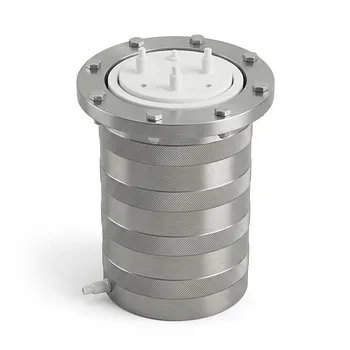
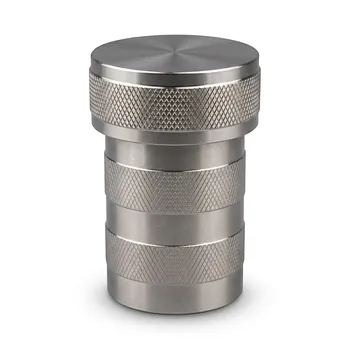
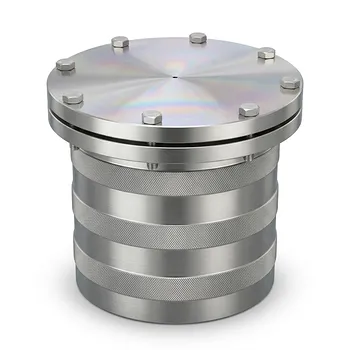
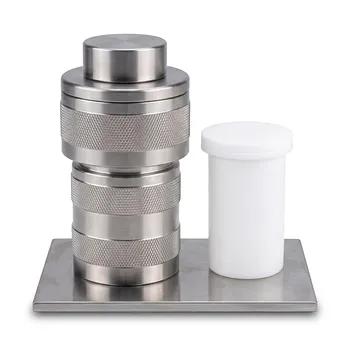
High-pressure hydrothermal reactors and liners function as the essential "nanochemical pressure cookers" that enable the phase transformation of organic biomass into crystalline Carbon Quantum Dots (CQDs).
The reactor provides a sealed, high-energy environment that forces biomass precursors through a cascade of chemical reactions—including pyrolysis, carbonization, and nucleation—that would be impossible at atmospheric pressure. Meanwhile, the internal liners (typically PTFE or PFA) serve as a critical chemical barrier, preventing the leaching of metal contaminants into the dots and protecting the reactor vessel from corrosive catalysts.
Core Takeaway: Hydrothermal reactors provide the extreme heat and autogenous pressure necessary to trigger the carbonization of biomass, while specialized liners ensure the resulting quantum dots maintain the high optical purity and structural integrity required for fluorescence.
The Reactor: Engineering a High-Energy Environment
Facilitating the Carbonization Cascade
High-pressure reactors create a closed system where temperature and autogenous pressure work in tandem to decompose complex biomass. This environment triggers a sequence of dehydration, polymerization, and carbonization, condensing small organic molecules from precursors like lignin, glucose, or corncobs into nanoscale carbon cores.
Enhancing Solvent Reactivity
Under high-pressure conditions, the reactivity of the solvent (often water or acetic acid) is significantly increased. This "superheated" state allows the solvent to more effectively break down biomass residues and facilitates the passivation of surface functional groups, which is vital for the quantum size effects seen in CQDs.
Promoting Homogeneous Nucleation
The stable, sealed environment of the reactor ensures that carbon nuclei grow uniformly. This consistency is what allows for the in-situ growth of nanocrystals and the development of a graphitized core, which are the primary drivers of the material’s stable optical properties.
The Liner: Safeguarding Chemical and Optical Purity
Prevention of Metal Ion Leaching
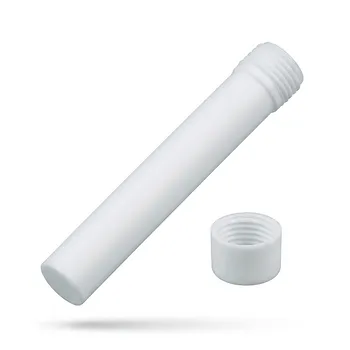
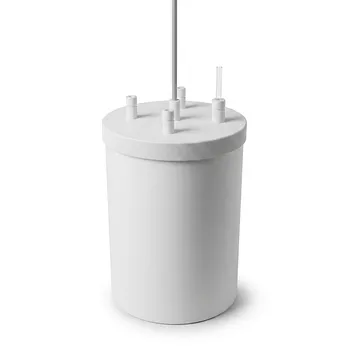
Reaction environments for CQD synthesis often reach temperatures up to 200°C, which can cause stainless steel reactor walls to leach metal ions into the solution. Polytetrafluoroethylene (PTFE) or PFA liners provide a chemically inert barrier that prevents these ions from contaminating the carbon dots, ensuring their "fluorescent purity."
Resistance to Corrosive Catalysts
Biomass synthesis frequently involves strong acidic or alkaline catalysts, such as acetic acid or urea. The liner’s excellent chemical inertness protects the metal body of the reactor from corrosion, extending the equipment's lifespan and maintaining a stable pH environment for the reaction.
Maintaining Surface Functional Integrity
The use of an inert liner ensures that the surface active groups—such as hydroxyl, amino, and carboxyl groups—remain uncontaminated. This is crucial because the specific arrangement of these groups determines the solubility and light-emitting characteristics of the final Nitrogen-doped or functionalized CQDs.
Understanding the Trade-offs and Limitations
Temperature Constraints of Liner Materials
While PTFE is the industry standard for its inertness, it has a functional ceiling (typically around 220°C–250°C) before it begins to deform or release toxic vapors. If a synthesis requires higher temperatures for deeper carbonization, researchers must move to more expensive materials like Polyphenylene (PPL) or specialized metallic alloys, which may sacrifice some chemical inertness.
Pressure Safety and "Cold Spots"
Hydrothermal reactors rely on autogenous pressure, meaning the pressure is generated by the heating of the liquid. If the reactor is overfilled (exceeding 70-80% capacity), the pressure can rise exponentially and lead to vessel failure; conversely, improper sealing can create thermal gradients that lead to non-uniform particle sizes.
How to Apply This to Your Project
Guidelines for Equipment Selection
Successful synthesis depends on matching the reactor specifications to the specific biomass chemistry and desired optical output.
- If your primary focus is high fluorescent yield: Use a high-purity PTFE liner to ensure zero metal contamination, as even trace iron or chrome ions can quench fluorescence.
- If your primary focus is nitrogen-doping or surface functionalization: Ensure the reactor is rated for at least 200°C to facilitate the effective condensation of urea or citric acid into the carbon framework.
- If your primary focus is scalability and safety: Never fill the liner beyond 75% of its volume to allow for the safe expansion of gases and the maintenance of autogenous pressure.
By precisely controlling the high-pressure environment and isolating the chemical reaction within an inert liner, you can reliably transform raw biomass into high-performance carbon nanomaterials.
Summary Table:
| Component | Role in CQD Synthesis | Key Performance Benefit |
|---|---|---|
| Hydrothermal Reactor | Creates high-energy sealed environment | Triggers dehydration, polymerization, and carbonization. |
| PTFE/PFA Liner | Provides an inert chemical barrier | Prevents metal ion leaching to ensure fluorescent purity. |
| Autogenous Pressure | Enhances solvent reactivity | Facilitates surface functionalization and uniform nucleation. |
| Temperature Control | Drives the carbonization cascade | Enables in-situ growth of stable graphitized nanocrystal cores. |
Elevate Your Material Synthesis with KINTEK’s Fluoropolymer Expertise
Precision in Carbon Quantum Dot synthesis demands zero contamination and absolute chemical resistance. KINTEK specializes in high-performance fluoropolymer solutions tailored for the most demanding laboratory environments.
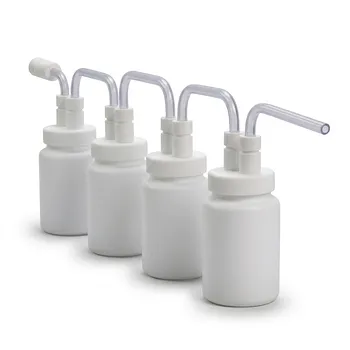
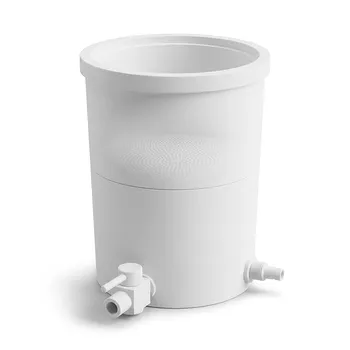
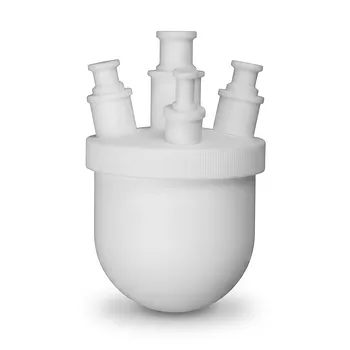
From everyday basic labware like beakers, crucibles, and reagent bottles to specialized PTFE and PFA liners, hydrothermal synthesis vessels, and microwave digestion containers, we provide the tools necessary for high-purity trace analysis and complex chemical reactions. Whether you require standard consumables—such as tubing, fittings, and stirring bars—or custom CNC-fabricated components and bespoke reaction apparatus, KINTEK delivers end-to-end solutions with an exclusive focus on high-performance fluoropolymers.
Ready to optimize your hydrothermal processes? Contact our technical team today to discuss your custom requirements and discover how our precision-engineered labware can enhance your research outcomes.
References
- Xiangping Xu, Yabin Zhou. Hydrothermal synthesis of biomass-derived CQDs: Advances and applications. DOI: 10.1515/ntrev-2025-0184
This article is also based on technical information from Kintek Knowledge Base .
Related Products
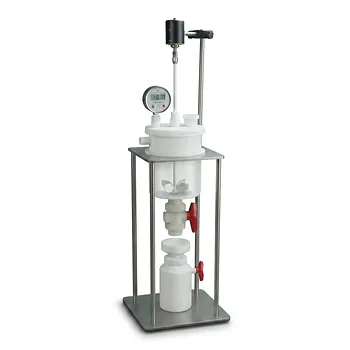
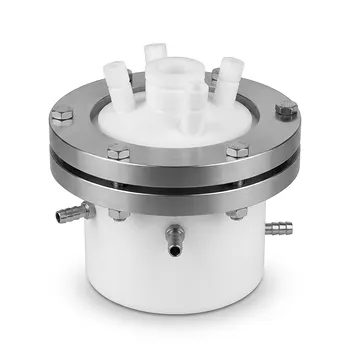
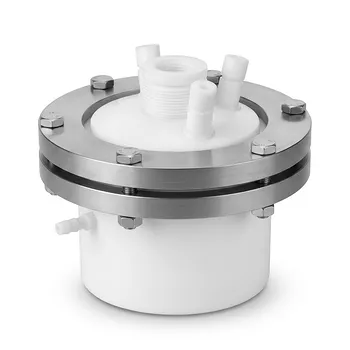
- High Pressure Custom TFM Reactor Stainless Steel Outer Vessel PTFE Inner Cup for Corrosive Synthesis
- High Temperature Corrosion Resistant Hydrothermal Synthesis Reactor with TFM Inner Liner and Straight Cylinder Design
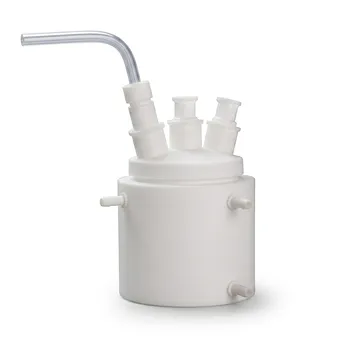
- Custom TFM Reaction Vessel with Stainless Steel Jacket and PTFE Inner Cup for High Corrosion Resistance
- PTFE Lined High Pressure Digestion Vessel 50ml High Temperature Hydrothermal Synthesis Tank
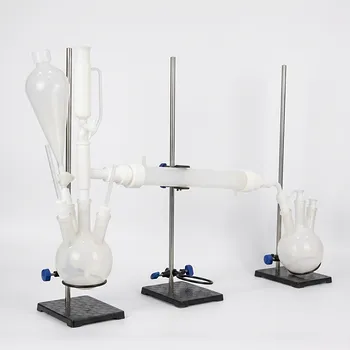
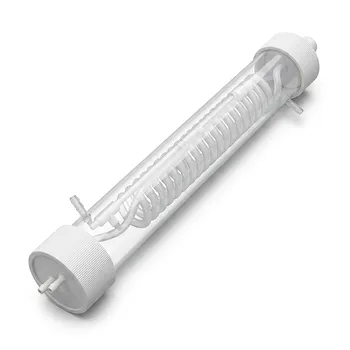
- PTFE Distillation Condensation Apparatus High Temperature Hydrofluoric Acid Resistant Fluorination Reaction Flask
People Also Ask
- Why is a PTFE-lined reactor required for Mn2O3 synthesis? Achieve High Purity & Corrosion Resistance
- What is the technical value of 180 bar pressure for MgO nanostructures? Unlock Superior Crystallinity and Morphology
- What are the technical advantages of using high-pressure PTFE reaction vessels during metal digestion? Expert Insights.
- How does the regulation of initial pressure within a high-pressure reaction system affect the production of MIL-100(Fe)?
- Why is a high-pressure reactor necessary for the esterification reaction between oleic acid and methanol at 150°C? Guide