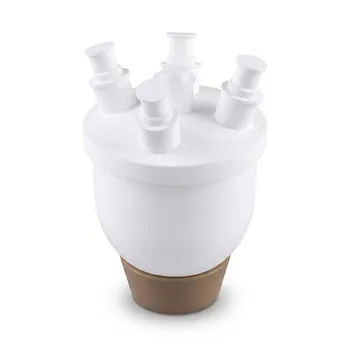
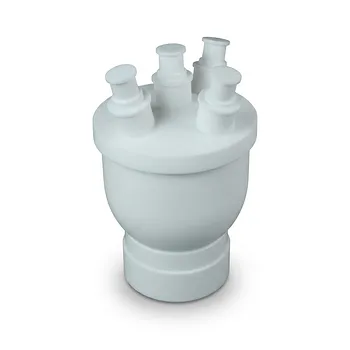
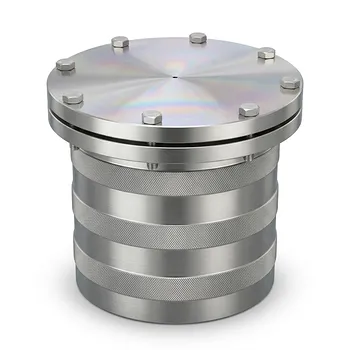
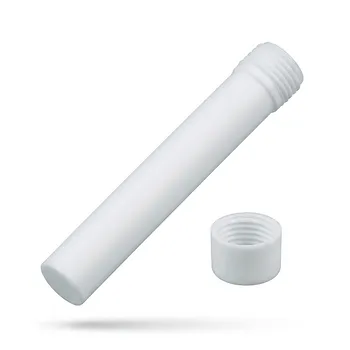
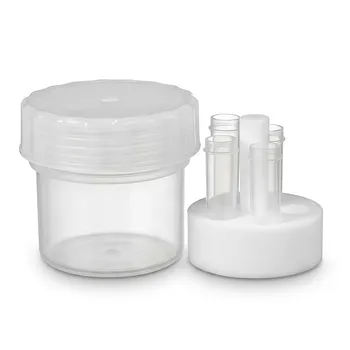
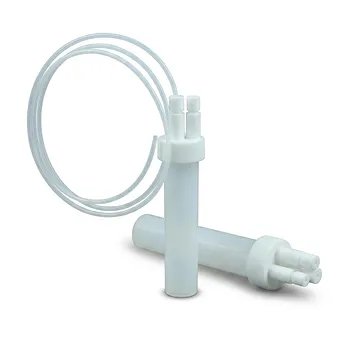
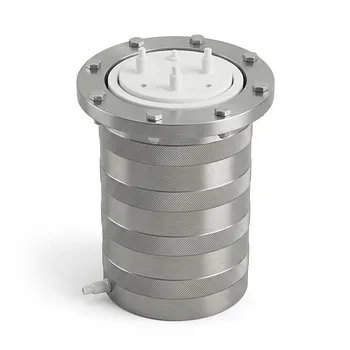
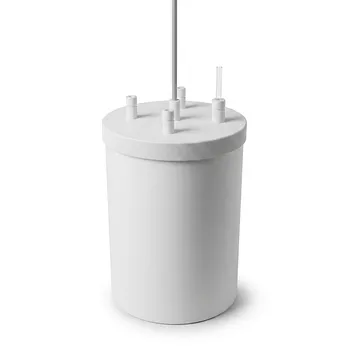
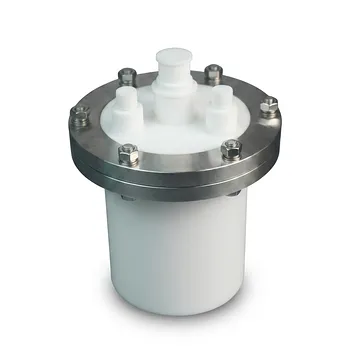
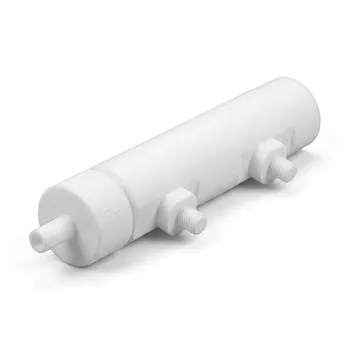
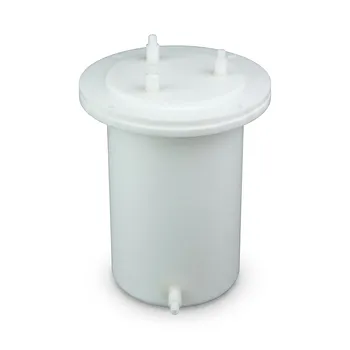
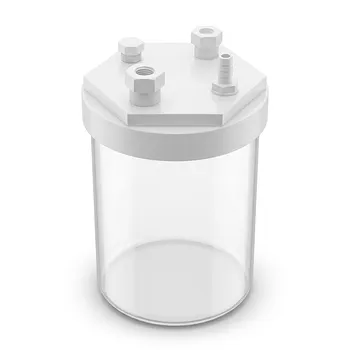
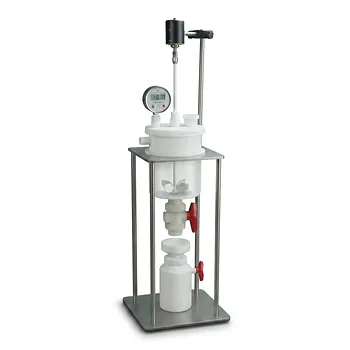
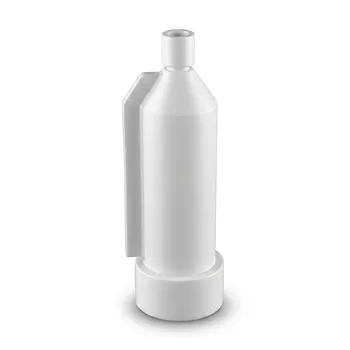
High-precision reactors and corrosion-resistant liners are the essential hardware components required to manage the extreme thermal and chemical demands of polybenzimidazole (PBI) membrane synthesis. These components facilitate the critical dehydration and thermal cyclization phases while protecting the polymer from acid-driven degradation and physical surface defects. By maintaining a strictly controlled physicochemical environment, they ensure the production of self-phosphorylated membranes with a uniform microstructure and chemical composition.
The integration of precise thermal management and chemically inert liners creates a stable environment that prevents localized overheating and impurity contamination. This synergy is the primary factor in producing high-performance PBI membranes with consistent chemical and physical properties.
The Role of High-Precision Thermal Control
Enabling Critical Chemical Transitions
High-precision reactors are necessary to provide the specific, controlled thermal environment required for dehydration and thermal cyclization. These steps are the most sensitive phases of PBI synthesis, where the polymer’s final properties are determined.
Preventing Microstructural Defects
Precision hardware ensures even heat distribution throughout the reaction vessel. This uniformity is vital for preventing localized overheating, which can lead to chemical inconsistencies or physical defects within the membrane’s microstructure.
Ensuring Chemical Uniformity
By maintaining a stable temperature, these reactors facilitate the creation of self-phosphorylated membranes with a consistent chemical makeup. This consistency is what allows the membrane to perform reliably in demanding industrial applications.
The Necessity of Advanced Liner Materials
Resistance to Corrosive Acid Precursors
PBI synthesis involves strong acid precursors that would degrade standard metallic or low-grade plastic surfaces. Liners made from materials like PFA (Perfluoroalkoxy) or PTFE (Polytetrafluoroethylene) are utilized for their exceptional chemical resistance.
Facilitating Uniform Film Formation
The smooth surface profile of PFA and PTFE liners is critical during the film-forming stage. A low-friction, smooth surface allows the polymer film to settle and form uniformly without snagging or adhering unevenly to the reactor walls.
Eliminating Impurity Contamination
Corrosion-resistant liners act as a barrier that prevents the reaction mixture from leaching contaminants from the reactor vessel. This ensures that the resulting membrane remains free of metallic impurities that could compromise its electrochemical or mechanical integrity.
Understanding the Trade-offs
Equipment Cost and Complexity
The primary trade-off in utilizing high-precision reactors is the significant capital investment required. Specialized PFA/PTFE-lined equipment is substantially more expensive than standard industrial reactors and requires more rigorous maintenance protocols.
Thermal Transfer Limitations
While PFA and PTFE provide excellent chemical resistance, they have lower thermal conductivity than metal. This means that while the reactor provides precision, the system may require longer heating or cooling cycles to achieve the target temperature throughout the mixture.
Structural Sensitivity
Liners, while chemically robust, are physically softer than the underlying reactor steel. They are susceptible to mechanical damage or "cold flow" deformation if handled incorrectly, which can introduce surface irregularities that negate their benefit.
Making the Right Choice for Your Goal
To achieve the best results in PBI membrane production, your equipment strategy should align with your specific performance requirements.
- If your primary focus is membrane purity: Prioritize PFA liners and high-precision thermal sensors to eliminate leaching and prevent localized degradation.
- If your primary focus is mechanical uniformity: Focus on the surface finish of your PTFE liners to ensure the film forms without physical stress points or thickness variations.
- If your primary focus is high-temperature cyclization: Invest in reactors with advanced thermal feedback loops to manage the precise heat required for the cyclization step without exceeding the liner's safety limits.
By meticulously controlling the thermal and chemical interface of the production process, manufacturers can ensure that PBI membranes meet the rigorous standards required for advanced filtration and energy applications.
Summary Table:
| Component | Primary Function | Key Benefit |
|---|---|---|
| High-Precision Reactors | Thermal Cyclization & Dehydration | Prevents microstructural defects and localized overheating. |
| PFA/PTFE Liners | Chemical Resistance & Smooth Surface | Eliminates metallic impurity leaching and ensures uniform film formation. |
| Thermal Feedback Systems | Precise Heat Management | Maintains consistent chemical composition and self-phosphorylation. |
| Fluoropolymer Hardware | Corrosion Protection | Extends equipment lifespan against strong acid precursors. |
Elevate Your PBI Synthesis with KINTEK’s High-Performance Fluoropolymer Solutions
Achieving perfection in PBI membrane production requires hardware that can withstand the harshest chemical and thermal environments. KINTEK specializes in the precision engineering of laboratory supplies crafted exclusively from PTFE and PFA, ensuring your research and production processes remain free from contamination and thermal instability.
Whether you need everyday essentials like high-purity beakers, reagent bottles, and digestion tubes, or advanced components such as custom-machined hydrothermal synthesis liners and microwave digestion vessels, we provide the expertise to optimize your workflow. Our capabilities extend from comprehensive fluid transfer systems (tubing, valves, and fittings) to bespoke CNC-fabricated reaction apparatus tailored to your unique specifications.
Why choose KINTEK?
- End-to-End Customization: From complex non-standard parts to high-volume orders.
- Absolute Material Focus: Exclusive use of high-performance fluoropolymers for maximum corrosion resistance.
- Precision Engineering: Backed by advanced CNC fabrication for flawless surface finishes.
Ensure your advanced materials meet the most rigorous industrial standards. Contact KINTEK today to discuss your custom laboratory requirements!
References
- I. I. Ponomarev, Ivan I. Ponomarev. A chemical approach for probing the interphase boundary between polymer electrolyte membrane and HT-PEM fuel cell carbon nanofiber anode. DOI: 10.71267/mencom.7562
This article is also based on technical information from Kintek Knowledge Base .
Related Products
- High Performance Customizable PTFE Reaction Vessel and Corrosion Resistant Polytetrafluoroethylene Flask for Chemical Laboratory Use
- Customizable Polytetrafluoroethylene PTFE Reactor and Corrosion Resistant Teflon Flask
- Custom TFM Reaction Vessel with Stainless Steel Jacket and PTFE Inner Cup for High Corrosion Resistance
- High Purity TFM Microwave Digestion Vessels PTFE Acid Evaporation Liners Domestic GT-400 Equivalent Laboratory Reaction Containers
- Corrosion Resistant PTFE Support with PFA Transparent Reaction Tank and High Purity PFA Sampling Tube for Trace Analysis
People Also Ask
- What are the key steps for structural integrity in molded PTFE lab reaction vessels? Master fine powder processing.
- Why is a PTFE reaction vessel required for Ti3C2Tx MXene synthesis? Ensure Safe HF Etching & High Purity
- Why are fluoroplastic (PTFE) reaction vessels recommended for Methylene Blue (MB) adsorption kinetic experiments?
- Ion Activation Reaction Vessel Requirements: Why PTFE is Critical for Membrane Performance
- What reaction vessel and fluid handling considerations are necessary for living cationic polymerization of fluorinated monomers involving Lewis acid catalysts? Key design and safety tips