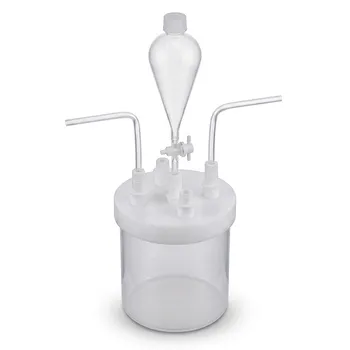
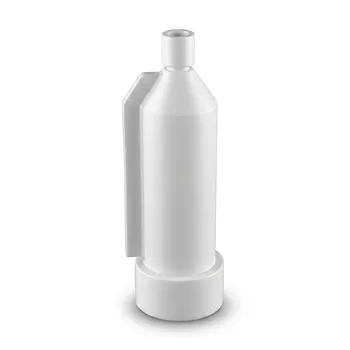
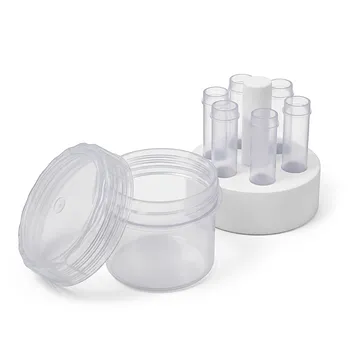
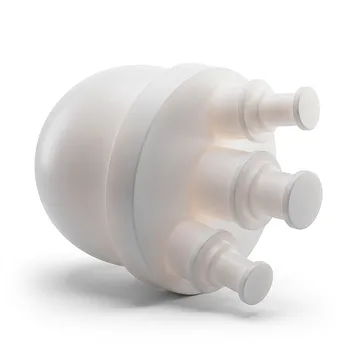
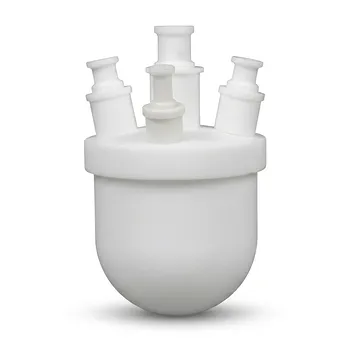
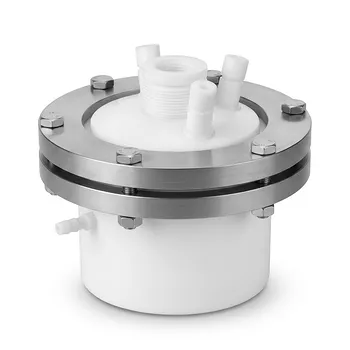
High-precision reaction vessels are the critical infrastructure required to facilitate the surgical degradation of cellulose amorphous regions while preserving its crystalline core. These vessels provide the exact thermal, chemical, and mechanical environment necessary to produce cellulose nanocrystals (CNC) with high crystallinity and superior mechanical properties. Without this level of control, the hydrolysis process often results in either incomplete degradation or the total destruction of the desired crystalline structure.
Core Takeaway: High-precision vessels transform acid hydrolysis from a blunt chemical reaction into a controlled manufacturing process, ensuring the selective removal of non-crystalline segments to yield high-purity, structurally sound nanocrystals.
The Critical Role of Environmental Consistency
Precise Control of Acid Concentration
The preparation of CNC requires the use of strong acids, most commonly sulfuric acid, to break down the amorphous regions of cellulose. High-precision vessels allow researchers to maintain a strict acid concentration, which is vital because even minor fluctuations can lead to over-hydrolysis, where the acid begins to dissolve the crystalline regions intended for preservation.
Thermal Stability for Selective Degradation
The hydrolysis of cellulose is highly sensitive to temperature, often requiring a constant environment (such as 50 degrees Celsius). High-precision reactors ensure that heat is distributed evenly throughout the vessel, preventing hot spots that would cause uneven degradation and result in a non-uniform final product.
Regulating Reaction Time
Precision vessels are designed to allow for rapid quenching or precise timing of the reaction. Because the window between the successful removal of amorphous regions and the destruction of crystalline regions is narrow, strict control over reaction time is essential for maximizing the yield of high-quality nanocrystals.
Material Integrity and Chemical Resistance
Utilization of High-Performance Fluoropolymers
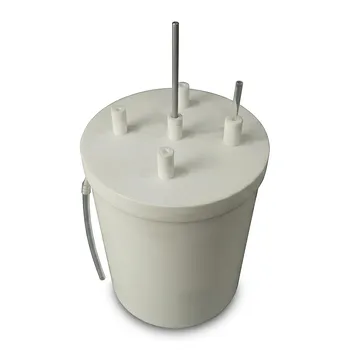
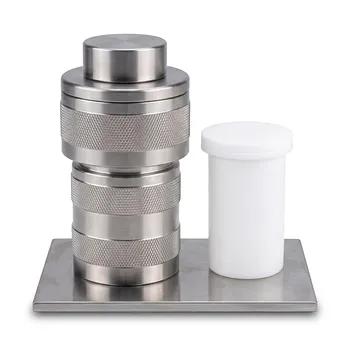
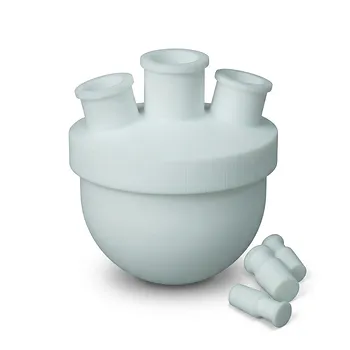
Standard glass or metal containers are often insufficient for CNC production due to the aggressive nature of high-concentration acids. Precision vessels typically utilize PFA or PTFE (Teflon) linings, which offer exceptional resistance to acid corrosion, ensuring the vessel does not degrade during the process.
Preventing Sample Contamination
Maintaining the purity of CNC is essential for its performance in mechanical reinforcement. High-purity reaction vessels prevent the leaching of trace metal ions or other impurities into the reaction mixture, which could otherwise compromise the structural integrity or chemical purity of the resulting nanocellulose.
Mechanical Homogeneity and Contact
Uniform Stirring for Surface Area Exposure
A precision reactor often incorporates integrated magnetic or mechanical stirring systems to maintain a homogeneous mixture. This constant motion ensures that the microcrystalline cellulose remains in full contact with the acid, preventing the sedimentation that leads to inconsistent hydrolysis.
Managing Kinetic Energy
The consistency of stirring directly impacts the degree of hydrolysis in non-crystalline regions. By providing uniform mechanical energy, these vessels ensure that the acid acts equally across all cellulose fibers, resulting in a batch of nanocrystals with uniform size and shape.
Understanding the Trade-offs
The Risk of Over-Processing
The primary danger in acid hydrolysis is the transition from selective degradation to total dissolution. If the precision vessel's sensors fail or the material allows for thermal drift, the mechanical reinforcement properties of the CNC can be permanently lost as the crystalline structures are attacked.
Material Limitations and Cost
While fluoropolymers like PFA and PTFE provide excellent chemical resistance, they have lower thermal conductivity than metal. This requires more sophisticated heating jackets or microwave-transparent designs to ensure that the internal temperature remains accurate, significantly increasing the cost of the equipment compared to standard laboratory glassware.
How to Apply This to Your CNC Production
Implementation Strategies Based on Goals
- If your primary focus is Maximum Reinforcement Strength: Prioritize vessels with the highest thermal stability and precise stirring to ensure the crystalline cores remain entirely untouched.
- If your primary focus is High Purity and Optical Clarity: Invest in PFA or PTFE-lined vessels to eliminate the risk of ion leaching and contamination from the reaction environment.
- If your primary focus is Scalability and Yield: Focus on reactors that allow for rapid quenching and tight control over acid concentration to prevent the loss of product through over-hydrolysis.
Precision in the reaction environment is the defining factor that separates raw cellulose degradation from the successful synthesis of high-performance cellulose nanocrystals.
Summary Table:
| Key Feature | Role in CNC Acid Hydrolysis | Benefit to Final Product |
|---|---|---|
| Acid Concentration Control | Maintains strict molarity to prevent over-hydrolysis. | Preserves crystalline core integrity. |
| Thermal Stability | Ensures even heat distribution and prevents hot spots. | Results in uniform nanocrystal size. |
| Chemical Resistance | PFA/PTFE linings resist aggressive sulfuric acid. | Prevents sample contamination and leaching. |
| Mechanical Homogeneity | Integrated stirring for constant acid-cellulose contact. | Eliminates sedimentation and inconsistent degradation. |
| Reaction Quenching | Allows for precise timing and rapid termination. | Maximizes yield of high-quality nanocrystals. |
Elevate Your CNC Research with KINTEK’s Precision Fluoropolymer Solutions
Precision in the reaction environment is the defining factor in successful cellulose nanocrystal synthesis. At KINTEK, we specialize in high-performance fluoropolymer materials designed to withstand the most aggressive acid hydrolysis conditions.
Whether you require everyday basic labware (beakers, reagent bottles, and digestion tubes), comprehensive fluid transfer components, or advanced reaction apparatus like custom hydrothermal synthesis liners and microwave digestion vessels, our products are crafted from premium PTFE and PFA to ensure zero contamination and total chemical resistance.
Backed by end-to-end custom CNC fabrication, we deliver everything from high-volume standard consumables to complex, bespoke laboratory setups tailored to your specific research needs.
Ready to optimize your lab’s efficiency and purity? Contact KINTEK today to discuss your custom requirements and discover the difference high-performance materials can make.
References
- Ilyace Korodowou. Lignocellulosic Fibers for Nonwovens: Description, Manufacturing Processes, and Applications. DOI: 10.37628/ijpb.v11i02.21981
This article is also based on technical information from Kintek Knowledge Base .
Related Products
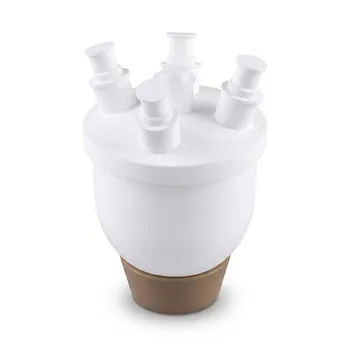
- High Purity PFA Reaction Vessel for Biopharmaceutical Synthesis and Corrosive Chemical Fluid Handling with Customizable Tube Fittings
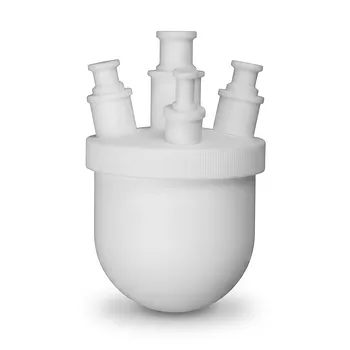
- High Purity PTFE Corrosion Resistant Reaction Vessel with Luer Fittings and Caps for Trace Analysis
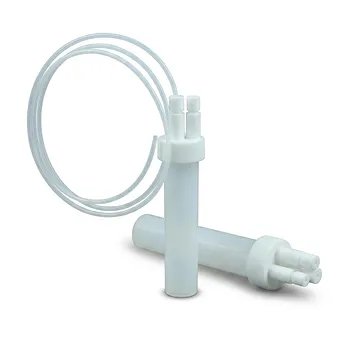
- High Purity Corrosion Resistant PFA Reaction Vessel with PTFE Holder and Integrated Sampling Tube for Trace Analysis
- High Purity Custom PTFE Large Volume 15L Flask Corrosion Resistant Low Trace Background Fluoropolymer Reaction Vessel
- High Purity PTFE Reaction Vessel with Electric Stirring System and Customizable 5L Tank including Buchner Funnel Filtration Assembly
People Also Ask
- Why is a stable reaction vessel essential for CuO nanoflower growth? Ensure Purity and Structural Integrity.
- Why are the reaction vessel and steam environment critical for alpha-FeOOH conversion? Achieve Superior Phase Purity.
- Why is the choice of reaction vessel material critical during B-NiBDC synthesis? Optimize MOF Purity & Performance
- How does hardware selection optimize research? Enhance Workflows with Custom Reaction Vessels
- Why is PFA preferred over FEP for high-temperature reaction vessels and fluid handling fittings in demanding chemical analysis? Explore its superior thermal stability and chemical resistance.