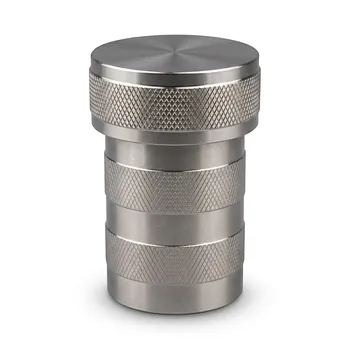
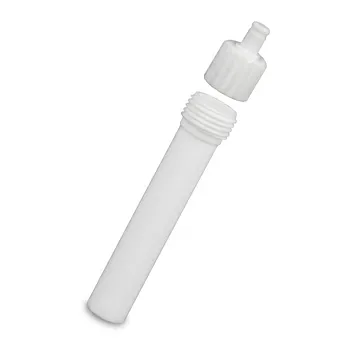
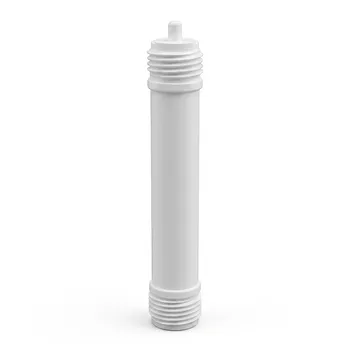
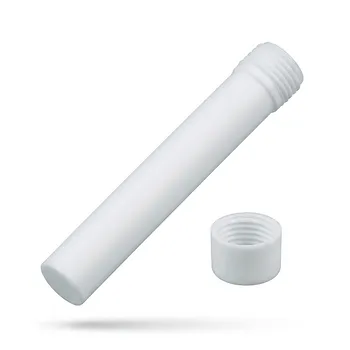
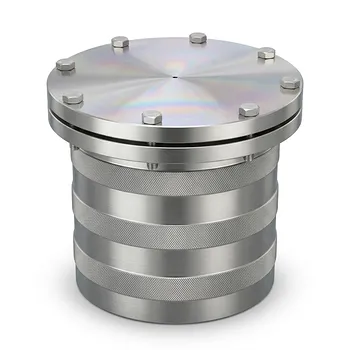
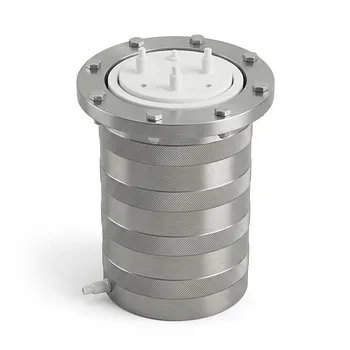
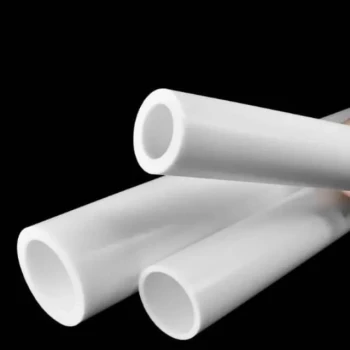
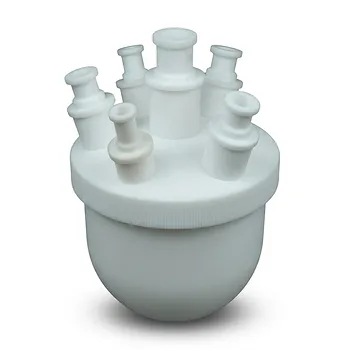
High-performance PTFE hydrothermal synthesis liners act as the fundamental reaction environment for the controlled growth of nanomaterials. They serve as a chemically inert, pressurized vessel capable of withstanding the aggressive conditions required to synthesize the precursors used in next-generation batteries, catalysts, and solar cells. By providing a sealed, non-reactive space, these liners ensure that high-temperature and high-pressure reactions can proceed without contaminating the final product.
Core Takeaway: PTFE liners are the "chemical shield" of the hydrothermal process, isolating sensitive reactions from metallic contamination while enabling the precise temperature and pressure control necessary for uniform crystal growth and high-purity material production.
The Critical Role of PTFE in Chemical Isolation
Protecting the Integrity of the Reaction
In the production of new energy materials, even trace amounts of metallic impurities can degrade performance. The PTFE (Polytetrafluoroethylene) liner acts as a critical barrier, preventing the reaction solvents—often strong acids or bases—from coming into contact with the stainless steel outer shell of the autoclave.
Preventing Metal Ion Leaching
If the reaction fluid were to erode the metal reactor walls, metal ions would leach into the synthesis system. This contamination can disrupt the crystal structure or negatively impact the optoelectronic properties of functional materials, rendering them useless for high-efficiency energy applications.
Ensuring Chemical Stability
PTFE is renowned for its extraordinary corrosion resistance. It remains stable when exposed to nearly all chemical reagents, providing a neutral environment that allows researchers to focus on the phase transformation of nanomaterials without worrying about side reactions with the vessel itself.
Enhancing Material Quality and Morphology
Controlled Crystal Growth
Hydrothermal synthesis relies on the behavior of water and solvents under high pressure to dissolve and recrystallize substances. The sealed environment of a high-performance PTFE liner maintains the constant pressure levels required for the controlled growth and uniform morphology of nanoparticles.
Minimizing Product Adhesion
The internal walls of high-quality PTFE liners are exceptionally smooth and possess non-stick properties. This minimizes product adhesion, ensuring that the synthesized materials do not get stuck to the container walls, which is vital for maintaining high yields.
Facilitating Easy Recovery and Cleaning
Because the material does not stick to the surface, the complete recovery of samples is significantly easier. This non-stick nature also simplifies the cleaning process between batches, reducing the risk of cross-contamination in sensitive laboratory or production environments.
Understanding the Trade-offs and Limitations
Thermal Temperature Thresholds
While PTFE is thermally stable, it has a definite upper limit, typically around 220°C to 240°C. Exceeding these temperatures can cause the liner to soften or undergo "cold flow," leading to deformation or even seal failure within the autoclave.
Pressure and Deformation Risks
Under extreme pressure, PTFE can exhibit slight deformation over time. It is a viscoelastic material, meaning that frequent cycling between high and low pressures requires regular inspection of the liner's shape and seal integrity to prevent leaks.
Heat Transfer Rate
PTFE is a thermal insulator compared to the metal shell of the autoclave. This results in a lag in heat transfer, meaning the internal temperature of the reaction may take longer to stabilize than the external temperature readings suggest, requiring careful calibration of heating protocols.
Applying PTFE Technology to Your Synthesis Goals
How to Choose the Right Strategy
To achieve the best results in new energy material production, your approach to using PTFE liners should be dictated by your specific technical requirements.
- If your primary focus is High-Purity Battery Cathodes: Prioritize liners with the highest-grade, medical, or laboratory-purity PTFE to eliminate any possibility of trace metal leaching that could cause battery self-discharge.
- If your primary focus is Large-Scale Yield: Focus on liners with ultra-smooth, polished internal surfaces to maximize material recovery and reduce downtime during the cleaning phase.
- If your primary focus is High-Temperature Phase Stability: Consider PPL (Polyphenylene polymers) liners as an alternative if your reaction consistently approaches or exceeds 250°C, as standard PTFE may fail.
By serving as a robust, inert, and non-stick containment system, high-performance PTFE liners empower researchers to push the boundaries of material science and develop the high-purity components essential for the energy transition.
Summary Table:
| Key Feature | Benefit for New Energy Materials | Operational Consideration |
|---|---|---|
| Chemical Inertness | Prevents metal ion leaching and contamination. | Effective up to 220°C - 240°C. |
| Non-stick Surface | Maximizes product yield and simplifies recovery. | Requires regular inspection for deformation. |
| Corrosion Resistance | Withstands aggressive acidic/basic precursors. | Material acts as a thermal insulator. |
| Sealed Environment | Enables precise control of crystal morphology. | Prone to "cold flow" under extreme pressure. |
Achieve Unmatched Purity in Your Synthesis with KINTEK
Precision in material science starts with a contamination-free environment. KINTEK specializes in high-performance fluoropolymer solutions tailored for the most demanding laboratory applications. From essential PTFE and PFA labware (beakers, crucibles, reagent bottles) and sample prep tools to advanced hydrothermal synthesis liners, microwave digestion vessels, and custom electrochemical cells, we provide the chemical isolation your research requires.
Leveraging our end-to-end custom CNC fabrication, we deliver everything from complex non-standard machined parts and bespoke laboratory setups to high-volume consumables like O-rings and fluid transfer components. Partner with KINTEK to ensure your new energy materials meet the highest standards of performance and purity.
Ready to upgrade your lab's capabilities?
Contact our experts today to discuss your bespoke fluoropolymer needs!
References
- Xinyi Li, Dandan Ma. Rational Fabrication of One‐Dimensional TiO <sub>2</sub> Nanowires for Enhanced Supercapacitor and Rechargeable Lithium Ion Battery. DOI: 10.1002/slct.202500115
This article is also based on technical information from Kintek Knowledge Base .
Related Products
- PTFE Lined High Pressure Digestion Vessel 50ml High Temperature Hydrothermal Synthesis Tank
- High Temperature Corrosion Resistant Hydrothermal Synthesis Reactor with TFM Inner Liner and Straight Cylinder Design
- High Purity PTFE Microwave Digestion Vessel Replacement Liner for Acid Sample Preparation and Trace Analysis
- High Purity PTFE Microwave Digestion Vessel for Soil and Food Analysis Acid Resistant Fluoropolymer Sample Preparation Liners
- High Purity TFM Microwave Digestion Vessels PTFE Acid Evaporation Liners Domestic GT-400 Equivalent Laboratory Reaction Containers
People Also Ask
- What are the benefits of using a PTFE-lined vessel for carbon-sulfur cathode treatment? Maximize Purity & Performance
- Why are PTFE-lined pressure digestion vessels required for the preparation of Ag/CeO2 catalysts? Purity & Performance
- What is the function of high-pressure PTFE digestion vessels in mineral analysis? Optimize Sample Mineralization
- What safety features are typically incorporated into high-pressure PTFE digestion vessel designs? Ensure Lab Safety
- What is the function of PTFE lined high-pressure vessels in g-C3N4 synthesis? Achieve High-Purity Material Growth