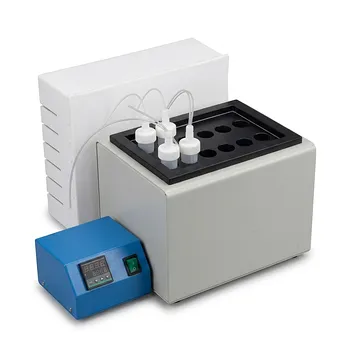
The primary role of external heating hydrothermal pressure vessels is to establish and maintain the extreme thermodynamic conditions required to dissolve otherwise insoluble silicate precursors. By sustaining high-pressure and high-temperature environments, these vessels allow rubidium calcium silicate to crystallize from a supercritical aqueous solution over a period of several weeks.
These vessels transform the chemical behavior of water, turning it into a potent solvent that facilitates the slow, atomic-level assembly of rubidium-based single crystals. Without this precisely controlled environment, the necessary silicate components would remain insoluble and unable to form high-quality crystalline structures.
Creating the Supercritical Environment
Achieving Solubility through Pressure
In standard laboratory conditions, silicate components are notoriously difficult to dissolve in water. The hydrothermal vessel overcomes this by applying intense pressure, which increases the solubility of these components significantly.
This process ensures that the precursors are fully integrated into the aqueous solution. Once dissolved, they are available for the slow precipitation required to form a single crystal.
The Impact of Near-Critical States
By managing the temperature through external heating, the vessel pushes the reaction system into a supercritical or near-critical state. In this state, the distinction between liquid and gas disappears, granting the solution unique transport properties.
These properties allow for more efficient mass transfer within the vessel. This efficiency is vital for ensuring that the rubidium calcium silicate builds up uniformly on the crystal lattice.
Sustaining Long-Term Crystal Growth
Maintaining Stability Over Weeks
High-quality single crystals cannot be rushed; they often require extended periods of growth lasting several weeks. The external heating vessel is designed to maintain a constant, stable temperature and pressure throughout this duration.
Any fluctuation in the environment can cause defects or stall the growth entirely. The vessel’s ability to provide a "slow and stable" environment is its most critical contribution to crystal quality.
Managing the Isobaric Heating Process
The vessel utilizes an isobaric heating process to keep pressure constant as temperature rises. This prevents sudden shocks to the system that could shatter a developing crystal or lead to spontaneous, uncontrolled nucleation.
Controlled heating ensures that the transition to the growth phase is seamless. This precision allows the rubidium crystals to reach the desired size and structural integrity.
Understanding the Trade-offs
Time and Energy Intensity
The primary drawback of this method is the significant time investment required for each growth cycle. Because the process can take weeks, the energy consumption and equipment "tie-up" time are high compared to other synthesis methods.
Equipment Wear and Safety
Operating at supercritical pressures and temperatures places extreme stress on the vessel materials. Regular maintenance and rigorous safety protocols are mandatory to prevent catastrophic vessel failure during long growth runs.
Making the Right Choice for Your Goal
How to Apply This to Your Project
- If your primary focus is maximizing crystal size: Ensure the vessel is capable of maintaining perfectly stable conditions for a minimum of three to four weeks without interruption.
- If your primary focus is structural purity: Focus on the precision of your isobaric heating controls to prevent rapid nucleation and internal defects.
- If your primary focus is solubility optimization: Prioritize reaching the supercritical threshold of the aqueous solution to ensure the silicate components are fully mobile.
Precise control over the hydrothermal environment is the definitive factor in the successful synthesis of high-quality rubidium calcium silicate single crystals.
Summary Table:
| Key Feature | Functional Role in Crystal Growth |
|---|---|
| Supercritical State | Increases solubility and facilitates mass transfer of silicate precursors. |
| Isobaric Heating | Maintains constant pressure to prevent crystal defects or spontaneous nucleation. |
| Thermal Stability | Provides a controlled environment for slow, atomic-level assembly over weeks. |
| Intense Pressure | Overcomes solubility barriers of notoriously difficult-to-dissolve components. |
| Long-term Resilience | Sustains extreme thermodynamic conditions required for high-quality lattice formation. |
Elevate your material synthesis and crystal growth research with high-performance laboratory solutions from KINTEK. Whether you require everyday essentials like PFA digestion tubes and beakers or advanced reaction apparatus such as custom hydrothermal synthesis liners and microwave digestion vessels, we provide the tools necessary for precise supercritical synthesis.
Backed by end-to-end custom CNC fabrication, KINTEK manufactures virtually all imaginable laboratory supplies crafted from high-performance PTFE and PFA. From complex non-standard machined parts to high-volume orders of fluoropolymer consumables, we deliver the durability and chemical resistance your research demands. Contact our experts today to see how our bespoke laboratory setups can optimize your rubidium single crystal projects!
References
- Volker Kahlenberg, Stefanο Merlino. Hydrothermal synthesis and structural study on Rb<sub>1.71</sub>Ca<sub>4</sub>{Si<sub>6</sub>O<sub>15</sub>[O<sub>0.855</sub>(OH)<sub>0.145</sub>]<sub>2</sub>}2H<sub>2</sub>O, a tobermorite related compound. DOI: 10.2465/jmps.250415
This article is also based on technical information from Kintek Knowledge Base .
Related Products
- PTFE Lined High Pressure Digestion Vessel 50ml High Temperature Hydrothermal Synthesis Tank
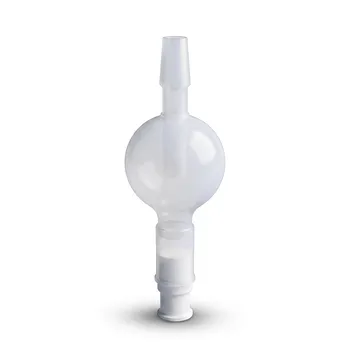
- PFA Anti Splash Ball High Temperature HF Resistant Laboratory Buffer Vessel for Distillation and Trace Analysis
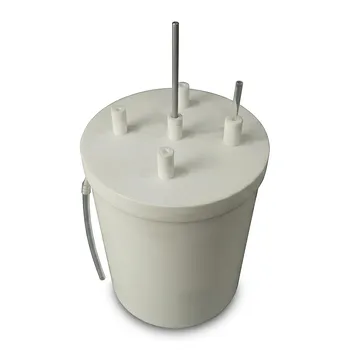
- High Pressure Custom TFM Reactor Stainless Steel Outer Vessel PTFE Inner Cup for Corrosive Synthesis
- Heat Resistant Custom PTFE Laboratory Beaker for Hot Plate Heating and Trace Analysis
- Custom PTFE Beaker 350ml High Purity Laboratory Vessel with Optional Lid for Hot Plate Heating Applications
People Also Ask
- What are the benefits of using a PTFE-lined vessel for carbon-sulfur cathode treatment? Maximize Purity & Performance
- Why are PTFE-lined pressure digestion vessels required for the preparation of Ag/CeO2 catalysts? Purity & Performance
- What safety features are typically incorporated into high-pressure PTFE digestion vessel designs? Ensure Lab Safety
- What is the function of PTFE lined high-pressure vessels in g-C3N4 synthesis? Achieve High-Purity Material Growth
- Role of High-Pressure Digestion Tanks in Perovskite Synthesis: Achieve Superior Stability and Latent Heat