Chain transfer agents deliberately set the molecular-weight ceiling, while surfactant compatibility prevents that control from being disrupted. In aqueous free-radical polymerization, a growing PTFE or PFA chain can abstract a labile atom, commonly hydrogen, from a chain transfer agent such as methanol. This terminates the active chain and creates a new radical; increasing transfer activity generally lowers average molecular weight and can narrow or reshape the molecular-weight distribution. Surfactants must therefore stabilize the aqueous dispersion without containing groups that unintentionally transfer atoms to growing fluoropolymer radicals.
The central manufacturing problem is balance: intentional chain transfer improves control and processability, but unintended transfer from an incompatible surfactant can produce lower-molecular-weight resin with reduced mechanical strength, dimensional stability, flex life, and purity.
How Chain Transfer Controls Molecular Weight
The Radical Chain Mechanism
TFE polymerizes through a free-radical addition mechanism in water. An initiator creates a reactive species that adds to TFE, and the resulting polymer radical continues adding monomer to extend the fluoropolymer chain.
A chain transfer reaction interrupts this growth. The polymer radical abstracts a labile atom from the transfer agent, capping the original chain and generating a new radical that may initiate another chain.
The Effect on Average Chain Length
The more readily transfer occurs, the shorter the average polymer chains become. This gives manufacturers a practical way to adjust molecular weight and molecular-weight distribution without changing the monomer itself.
Methanol is an example of an intentional transfer agent described for fluoropolymer synthesis. In PFA production, agents such as methanol or cyclohexane can also be used to reduce melt viscosity and make the resin easier to process.
Why Molecular Weight Matters
High-molecular-weight PTFE generally provides the strength, dimensional stability, wear resistance, and long service life expected from machined laboratory components. These properties are important in trace-analysis containers, microwave digestion vessels, tubing, and other parts exposed to aggressive chemicals or repeated mechanical stress.
For PFA, molecular weight must be balanced with comonomer content, including PPVE content. Excessively reducing molecular weight may improve melt processing but can reduce flex fatigue resistance and crack resistance in components such as flexible tubing and valve diaphragms.
Why Surfactant Compatibility Is a Molecular-Weight Issue
Surfactants Do More Than Stabilize Particles
In aqueous polymerization, surfactants help disperse TFE-derived particles and maintain a stable reaction environment. Their chemical behavior can also influence the radical reaction taking place at or near those particles.
A surfactant is compatible only if it performs its dispersion function without inhibiting polymerization or participating in unwanted chain transfer.
Labile Atoms Create Unintended Transfer
If a surfactant contains easily abstracted hydrogen atoms or other reactive atoms, a growing fluoropolymer radical may remove one from the surfactant. The polymer chain is then terminated earlier than intended, and a new radical is produced.
This unintended reaction effectively acts like an uncontrolled dose of chain transfer agent. It can lower molecular weight, alter the molecular-weight distribution, and create low-molecular-weight species that compromise the resin.
The Resulting Quality Problems
A poorly selected surfactant can cause inconsistent resin properties even when initiator level, temperature, pressure, and deliberate transfer-agent concentration are held constant. The resulting material may show lower strength, poorer dimensional stability, reduced durability, or less predictable processing behavior.
For high-purity laboratory equipment, surfactant selection also affects extractables. Residual surfactant or organic impurities can leach into reagents and samples, creating background contamination or false elevated readings during trace elemental analysis.
How Manufacturers Evaluate the Outcome
Molecular Weight Is Not Easily Measured Directly for PTFE
PTFE does not dissolve in conventional solvents, so standard solution-based molecular-weight measurements are generally unavailable. Manufacturers instead rely on indirect indicators and controlled processing tests.
Standard Specific Gravity, or SSG, is one important proxy for PTFE molecular structure under standardized molding, sintering, and cooling conditions.
SSG Provides a Process-Dependent Signal
During controlled cooling, shorter chains have greater mobility and crystallize more readily. Because crystalline PTFE is denser than the amorphous phase, a specimen with more crystallization can show higher SSG.
SSG should therefore be interpreted as an indirect, process-dependent indicator rather than a universal direct measurement of molecular weight. Consistent SSG helps verify that chain-transfer conditions and polymerization quality are staying within the intended range.
PFA Uses Processability and Durability Metrics
For PFA, melt viscosity is a practical indicator of how molecular-weight control affects processing. Lower viscosity can support molding of complex shapes, but the resin must retain enough molecular weight and appropriate PPVE content to provide mechanical endurance.
MIT flex life and related durability testing help determine whether a chosen molecular-weight and comonomer balance is suitable for repeated bending or dynamic service.
Understanding the Trade-offs
Too Little Chain Transfer
Suppressing chain transfer supports the formation of very high-molecular-weight resin, which is generally favorable for PTFE strength and chemical-service performance. However, very high molecular weight can increase processing difficulty, particularly for melt-processable fluoropolymers such as PFA.
Too Much Chain Transfer
Excessive transfer lowers molecular weight and can make processing easier, but the trade-off may include reduced strength, wear resistance, dimensional stability, and fatigue life. The resin may also contain a broader or otherwise altered population of chain lengths that affects consistency.
Surfactant Stabilization Versus Chemical Inertness
Surfactants are necessary for effective dispersion polymerization, yet a surfactant with transfer-active chemistry can undermine molecular-weight control. Fully halogenated or otherwise carefully designed surfactants are preferred when they provide stabilization without readily abstracted atoms or polymerization-inhibiting functionality.
Purity Versus Legacy Additives
Historically used perfluorinated surfactants, including APFO/PFOA-related materials, can leave residual contamination in polymer and aqueous dispersion products. Modern high-purity applications may use alternative non-bioaccumulative surfactants or granular suspension methods to reduce extractables.
Process Conditions Still Matter
Chain transfer and surfactant chemistry operate within a broader reaction system. Initiator concentration, temperature, pressure, monomer concentration, and heat removal all affect radical concentration and polymer growth.
Because TFE polymerization is highly exothermic, inadequate heat control can change reaction conditions rapidly and produce inconsistent molecular weight even when the additive formulation is correct.
Making the Right Choice for Your Goal
The correct formulation depends on whether the priority is maximum molecular weight, melt processability, fatigue life, or analytical cleanliness.
- If your primary focus is maximum PTFE strength and chemical-service life: Minimize unintended chain transfer, use a surfactant with no readily abstracted atoms, and maintain tightly controlled polymerization conditions.
- If your primary focus is PFA melt processability: Use an intentional chain transfer agent to achieve the required melt viscosity while preserving sufficient molecular weight and suitable PPVE content.
- If your primary focus is flex fatigue resistance: Avoid excessive molecular-weight reduction and evaluate the resin with durability testing such as MIT flex life measurements.
- If your primary focus is trace-analysis purity: Select low-extractable surfactant systems or suitable suspension-polymerization routes, and verify residual contamination rather than relying only on nominal formulation.
- If your primary focus is batch-to-batch consistency: Monitor indirect indicators such as PTFE SSG, PFA melt viscosity, and relevant mechanical tests alongside reaction variables.
Reliable fluoropolymer quality comes from treating chain transfer as a controlled design variable and surfactant compatibility as part of molecular-weight control, not merely as a dispersion concern.
Summary Table:
| Factor | Role | Impact on Molecular Weight | Impact on Quality |
|---|---|---|---|
| Chain Transfer Agents | Deliberately terminate polymer chains by atom transfer | Lower average MW; control distribution | Improved processability; risk of reduced strength if overused |
| Surfactant Compatibility | Stabilize dispersion without unintended transfer | Prevent uncontrolled MW reduction | Ensure consistent mechanical, thermal, and purity properties |
| Polymerization Conditions | Temperature, pressure, initiator, and monomer feed | Affect radical concentration and chain growth | Critical for reproducibility and performance |
| Purity Considerations | Low-extractable surfactants or suspension methods | Avoid contaminants that affect MW | Essential for trace-analysis and high-purity applications |
Looking for high-purity PTFE and PFA labware with precisely controlled molecular weight? KINTEK's advanced fluoropolymer manufacturing and custom CNC machining deliver the reliability and performance your demanding applications require. From trace-analysis vessels to custom machined parts, we provide end-to-end solutions. Contact us today to discuss your specifications and discover how we can enhance your lab's productivity.
Related Products
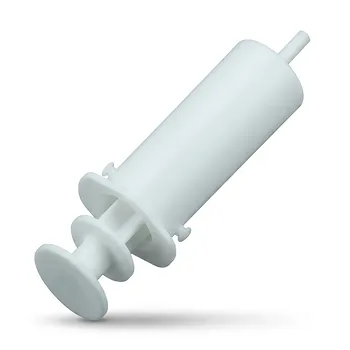
- High Purity Laboratory Grade PTFE Syringe Chemical Resistant Fluoropolymer Injector for Trace Analysis
- High Temperature Resistant PTFE Thermal Insulation Board Corrosion Resistant Metal Free Fluoropolymer Stand for Ultra Clean Laboratories
- Custom PTFE Filtration System Acid Resistant Chemical Semiconductor Fluoropolymer Filter Assembly
- Custom PTFE Insulating Gaskets and Corrosion Resistant Fluoropolymer Seals for Industrial Electrical Applications
- Custom PTFE Reaction Tank Corrosion Resistant Fluoropolymer Chemical Processing Barrel 10L 20L 30L
People Also Ask
- In what medical devices is PTFE commonly used? Essential Components for Safety and Reliability
- What are the benefits of PTFE's chemical resistance? Achieve Unmatched Reliability in Corrosive Environments
- What chemicals is PTFE resistant to? Discover Its Near-Universal Chemical Inertness
- How do surfactants like APFO impact TFE polymerization, and why are alternatives essential?
- How does the surrounding atmosphere affect the thermal decomposition mechanism of PTFE fluoropolymer used in high-temperature laboratory reaction apparatus? Discover Key Insights for Safe and Reliable High-Temp Lab Operations