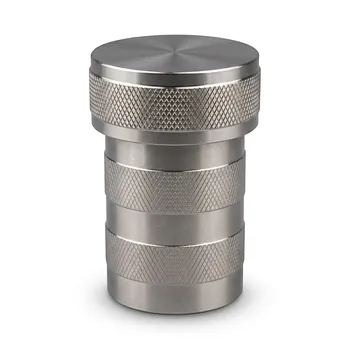
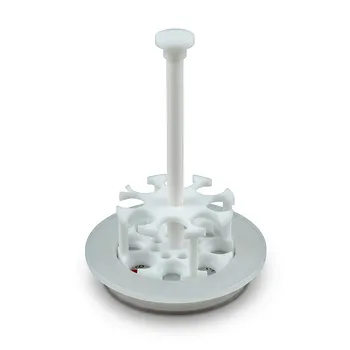
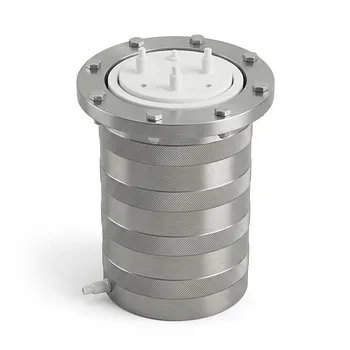
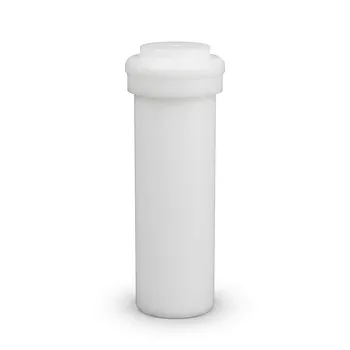
A high-pressure hydrothermal autoclave creates a specialized "subcritical" environment characterized by a sealed, high-temperature, and high-pressure liquid phase. This system allows aqueous solutions to reach temperatures significantly above their normal boiling points—often exceeding 150°C—while remaining liquid. This unique state facilitates the dissolution-recrystallization of zinc precursors into high-purity Zinc Oxide (ZnO) with precise control over crystal structure and particle size.
Core Takeaway: The autoclave environment transforms ordinary solvents into highly reactive fluids that drive the oriented growth of ZnO crystals. By maintaining a sealed system at high pressure, it enables the synthesis of advanced morphologies and high-crystallinity phases that are impossible to achieve under ambient conditions.
Thermodynamic Conditions of the Autoclave
Superheated Liquid States
The primary function of the autoclave is to maintain solvents in a liquid state at temperatures where they would normally exist as vapor. By preventing evaporation, the system generates internal pressure that significantly increases the solubility and reaction activity of the zinc precursors.
Kinetic Stability and Heat Distribution
The sealed environment ensures a constant temperature throughout the reaction vessel. This thermal stability is critical for the kinetic regulation of crystal growth, allowing for the formation of hierarchical structures with uniform diameters and lengths.
Chemical Mechanisms and Crystal Growth
The Dissolution-Recrystallization Process
In this environment, zinc hydroxide or other precursor salts undergo a continuous dissolution-recrystallization cycle. As the precursors dissolve into the high-activity solvent, they reach a state of supersaturation, leading to the precipitation of ZnO nanoparticles with a stable wurtzite structure.
Facet Engineering and Morphology Control
The high-pressure environment allows for programmatic control over which crystal planes grow fastest. By regulating nucleation and growth kinetics, researchers can favor specific planes—such as 101, 103, and 112—to create various shapes like nanowires, nanotubes, or nanoflowers.
Self-Assembly and Purity
The thermodynamic pressure within the autoclave drives the self-assembly of metal complexes into complex stable morphologies. This process also facilitates the incorporation of dopants (like manganese) into the zinc oxide lattice, resulting in fine crystal grains with high purity and crystallinity.
Understanding the Trade-offs
Equipment and Safety Constraints
Operating at high temperatures and pressures requires specialized stainless steel autoclaves capable of withstanding extreme mechanical stress. This increases the initial capital cost and necessitates strict safety protocols to prevent explosive decompression.
The "Black Box" Nature of Synthesis
Because the reaction occurs inside a sealed, opaque pressure vessel, it is impossible to observe the crystal growth in real-time without highly specialized and expensive in-situ equipment. This makes the process dependent on precise "trial and error" adjustments of initial concentrations and temperature settings.
Scalability vs. Energy Consumption
While hydrothermal synthesis is a low-cost foundation for industrial production compared to vacuum-based methods, maintaining high temperatures for extended periods can be energy-intensive. Finding the balance between growth time and crystal quality is a constant optimization challenge.
How to Apply This to Your Project
Making the Right Choice for Your Goal
To achieve the best results with hydrothermal ZnO synthesis, align your autoclave parameters with your specific material requirements:
- If your primary focus is high crystallinity: Set the autoclave to a higher temperature (e.g., 150°C) to ensure a complete dissolution-recrystallization process and a stable wurtzite phase.
- If your primary focus is morphology control (e.g., nanorods): Utilize lower temperatures (approx. 90°C) and focus on oriented heteroepitaxial growth using pre-existing seed layers.
- If your primary focus is facet engineering: Adjust the chemical precursors and pressure settings to preferentially grow specific crystal planes like 101 or 112.
- If your primary focus is industrial scale: Optimize the solvent-to-precursor ratio to maximize yield within a single batch while maintaining uniform heat distribution.
The hydrothermal autoclave remains the definitive tool for transforming simple zinc salts into highly engineered, high-performance ZnO nanostructures through controlled pressure and temperature.
Summary Table:
| Parameter | Environment Condition | Impact on ZnO Synthesis |
|---|---|---|
| Phase State | Subcritical Liquid | Prevents solvent evaporation; increases precursor solubility and reaction activity. |
| Thermal Profile | High Temperature (>150°C) | Drives the dissolution-recrystallization cycle for high-purity wurtzite structures. |
| Pressure Level | High Internal Pressure | Facilitates facet engineering and the growth of complex hierarchical shapes. |
| System Type | Sealed/Isothermal | Ensures uniform heat distribution and stable kinetic regulation of crystal growth. |
Elevate Your Nanomaterial Synthesis with KINTEK
Precision in hydrothermal synthesis requires equipment that can withstand extreme chemical and thermal stress. KINTEK specializes in high-performance fluoropolymer solutions designed specifically for demanding laboratory environments. From essential PTFE and PFA labware (beakers, digestion tubes, and reagent bottles) to specialized hydrothermal synthesis liners and microwave digestion vessels, our products ensure the high-purity trace analysis and chemical inertness your research demands.
We offer a comprehensive range of supplies, including:
- Fluid Transfer: Tubing, fittings, and valves.
- Sample Prep: Separatory funnels, filters, and high-precision pipettes.
- Advanced Apparatus: Custom electrochemical cells, battery testing fixtures, and microchannel reactors.
Backed by end-to-end custom CNC fabrication, KINTEK is equipped to deliver everything from complex non-standard machined parts to high-volume orders with an absolute focus on high-performance materials. Optimize your lab’s efficiency and achieve superior crystal morphology control today.
Contact our experts for a bespoke solution
References
- K. Manikandan, M. Khalid Hossain. Enhanced efficiency of zinc oxide hydroxyapatite nanocomposite in photodegradation of methylene blue, ciprofloxacin, and in wastewater treatment. DOI: 10.1038/s41598-025-14310-7
This article is also based on technical information from Kintek Knowledge Base .
Related Products
- High Temperature Corrosion Resistant Hydrothermal Synthesis Reactor with TFM Inner Liner and Straight Cylinder Design
- PTFE Lined High Pressure Digestion Vessel 50ml High Temperature Hydrothermal Synthesis Tank
- Custom TFM Reaction Vessel with Stainless Steel Jacket and PTFE Inner Cup for High Corrosion Resistance
- High Performance TFM Microwave Digestion Vessel Rack 15 Position Customizable Sample Preparation Support
- High Pressure Custom TFM Reactor Stainless Steel Outer Vessel PTFE Inner Cup for Corrosive Synthesis
People Also Ask
- What is the role of a corrosion-resistant reactor in the synthesis of lignin-based carbon dots? Ensure Maximum Purity
- What are the technical advantages of using hydrothermal synthesis reactors for advanced electronic & optical nanomaterials?
- How does a hydrothermal synthesis reactor facilitate the production of crystalline materials with tailored morphologies? Precision Crystal Growth
- Why is the sealing reliability of a hydrothermal synthesis reactor critical for 24-hour cycles? Ensure Nano-Precision
- What role do hydrothermal synthesis reactors play in CQD preparation? Achieve High-Purity Nanomaterial Synthesis