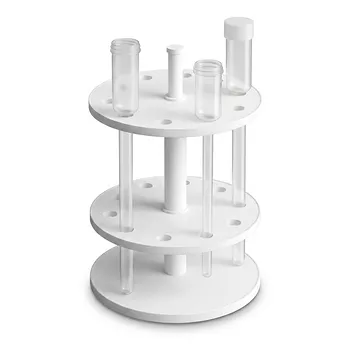
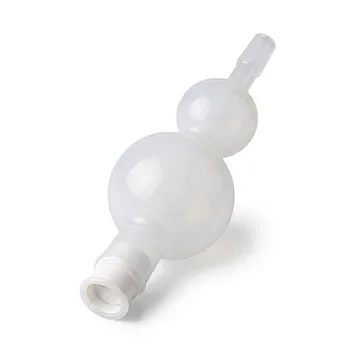
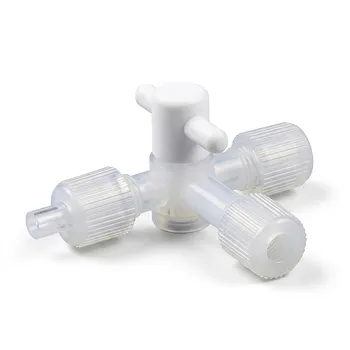
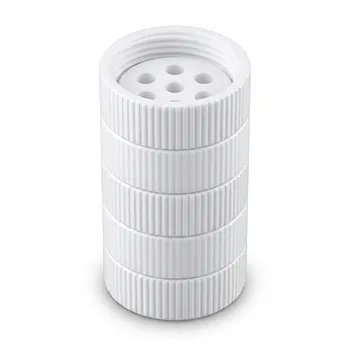
Porous fluoropolymer separator membranes are prepared by controlling how polymer-rich and polymer-lean regions form. Common techniques include thermally induced phase separation, broader phase-inversion methods, electrospinning, template synthesis, self-assembly, sintering, and track etching. High-purity PTFE and PFA laboratory supplies support these processes by resisting aggressive solvents, heat, acids, and abrasive fillers while minimizing ionic leaching and sample loss.
The membrane technique determines the pore structure, while the processing hardware helps preserve that structure and the purity of the material. PTFE and PFA vessels are especially valuable during polymer dissolution, nanofiller dispersion, chemical functionalization, and membrane casting.
How Porous Fluoropolymer Membranes Are Prepared
Thermally Induced Phase Separation
Thermally induced phase separation, or TIPS, forms pores by changing the temperature of a polymer solution or polymer-solvent mixture. Cooling or heating drives the system into an unstable region, separating it into polymer-rich and polymer-lean phases.
The polymer-rich phase solidifies into the membrane framework, while the polymer-lean phase becomes the pore space after solvent removal. TIPS is useful when manufacturers need to tune pore size, porosity, and mechanical strength through temperature and composition control.
Solvent-Induced Phase Inversion
Phase inversion is a widely used membrane-fabrication approach. A polymer solution is deliberately brought from a stable state into an unstable one, causing liquid-liquid separation and the formation of polymer-rich and polymer-lean regions.
The polymer-rich phase vitrifies or solidifies into the continuous structure. The polymer-lean phase is removed or exchanged, leaving behind a porous network.
TIPS is one form of phase-inversion processing, while other variants may use nonsolvent exchange, evaporation, or combinations of these mechanisms. The choice affects pore geometry, skin-layer formation, permeability, and separation performance.
Electrospinning
In electrospinning, a high electric field draws a charged polymer solution from a Taylor cone. The resulting fine jet stretches, loses solvent, and deposits as fibers on a collector.
The deposited fibers form a nonwoven membrane with high surface area and interconnected voids. Electrospinning is particularly useful for producing nanofibrous separators, although fiber diameter, pore size, and membrane uniformity depend strongly on solution viscosity, conductivity, solvent volatility, and operating conditions.
Template Synthesis
Template synthesis uses a removable solid, liquid, or particulate template to define the final pore structure. The fluoropolymer or precursor material is formed around or through the template, after which the template is removed.
This approach can produce more deliberately controlled pore dimensions than some spontaneous phase-separation methods. It is useful when the application requires a defined pore shape, distribution, or connectivity.
Self-Assembly
Self-assembly relies on the spontaneous organization of polymer chains, copolymers, additives, or nanostructured components into an ordered morphology. Selective interactions between different components can create domains that later become pores or functional regions.
The technique can produce finely structured membranes, but the resulting morphology is sensitive to formulation, solvent selection, concentration, temperature, and drying conditions.
Sintering
Thermal or laser sintering consolidates fine fluoropolymer powder near its softening or melting range. The particles bond at contact points while voids between them remain as pores.
Sintering avoids some solution-processing challenges and can form robust porous structures. However, excessive heat can collapse pores or alter the polymer, so temperature control and thermal uniformity are important.
Track Etching
Track etching begins with a dense polymer film exposed to heavy ions. The ions create damaged linear tracks through the film, which are then chemically etched to form cylindrical pores.
This method is suited to membranes requiring highly uniform, straight-through pores. Its pore geometry is precise, but the process requires specialized irradiation and chemical-etching equipment.
How Fillers and Surface Treatments Modify Membranes
Inorganic Functional Fillers
PVDF and related fluoropolymer membranes may incorporate fillers such as barium titanate, zeolites, clays, or carbon nanotubes. These materials can alter porosity, wettability, mechanical stability, conductivity, and other functional properties.
Filler dispersion must be controlled carefully. Agglomerated particles can create defects, obstruct pores, weaken the membrane, or produce inconsistent separation performance.
Surface Functionalization
Fluoropolymer surfaces can be modified after fabrication to change their interaction with liquids or biological materials. Plasma treatment can create hydrophobic and hydrophilic patterns, while strong-base treatments can introduce surface hydroxyl groups for subsequent immobilization chemistry.
Other chemical modifications can increase resistance to organic liquids by replacing surface groups with longer-chain fluoroalkoxy structures. These treatments require vessels and fluid-handling components that can tolerate strong reagents without contributing contamination.
Why High-Purity PTFE and PFA Supplies Matter
Compatibility With Aggressive Solvents
PVDF and copolymer dope solutions commonly use strong polar solvents such as NMP or DMF. During filler treatment and surface modification, the process may also involve concentrated acids, strong bases, or other aggressive chemicals.
PTFE and PFA are highly resistant to these environments. Beakers, reagent bottles, mixing dishes, reaction vessels, and delivery components made from these materials are less likely to degrade or introduce extractable contaminants than unsuitable plastics or reactive vessels.
Protection Against Trace Contamination
Membrane research and analytical filtration can be sensitive to low-level ionic or elemental contamination. A container that leaches metals or other species can change the chemistry of the polymer solution, filler surface, or functionalization reaction.
High-purity fluoropolymer labware helps reduce this risk by providing chemically inert contact surfaces. It cannot replace validated cleaning, handling, and process-control procedures, but it can remove a significant source of contamination.
Better Handling of Nanofillers
The low surface energy of PTFE and PFA reduces adhesion of nanopowders to vessel walls. This can improve material recovery and make filler loading more reproducible.
Reduced wall adhesion also helps limit cross-contamination between batches. This is valuable when working with abrasive or expensive fillers such as carbon nanotubes, zeolites, clays, and ceramic particles.
Thermal and Mechanical Process Stability
Some membrane-preparation steps involve heating, controlled cooling, solvent evaporation, or thermal consolidation. Fluoropolymer vessels provide broad thermal stability and non-stick surfaces that support these operations.
Custom-machined PTFE or PFA reaction vessels can also be configured for particular casting, mixing, etching, or fluid-delivery workflows. The vessel design still needs to match the process temperature, pressure, agitation, and chemical exposure.
Understanding the Trade-offs
No Single Technique Fits Every Membrane
Phase inversion and TIPS are versatile for solution-based production, while electrospinning favors high-surface-area fibrous structures. Sintering and track etching offer different forms of pore control but involve specialized thermal, irradiation, or etching requirements.
Selecting a method requires balancing pore uniformity, throughput, mechanical strength, permeability, equipment complexity, and the intended separation task.
Fluoropolymer Labware Is Not Automatically Contamination-Free
PTFE and PFA reduce chemical attack and leaching, but purity depends on the grade, manufacturing history, surface condition, cleaning method, and handling practice. Poorly cleaned or damaged equipment can still compromise a membrane formulation.
High-purity supplies should therefore be paired with documented cleaning, compatible seals and tubing, controlled storage, and batch-specific contamination checks.
Aggressive Processing Can Affect Membrane Quality
Strong solvents, bases, acids, heat, and energetic surface treatments can change polymer morphology or damage sensitive functional groups. Abrasive fillers can also scratch equipment or remain trapped in dead spaces.
Process vessels should be selected not only for chemical compatibility but also for cleanability, mixing behavior, thermal control, and the ability to recover the full formulation.
Choosing the Right Preparation and Processing Setup
The best combination depends on the membrane structure required and the level of chemical control the process demands.
- If your primary focus is controlled pore geometry: Use template synthesis or track etching when uniform, defined pore structures are more important than simple scale-up.
- If your primary focus is scalable solution processing: Use phase inversion or TIPS with carefully controlled polymer concentration, temperature, solvent exchange, and drying.
- If your primary focus is high surface area: Use electrospinning to create nanofibrous membranes, while tightly controlling solution and electrical-processing conditions.
- If your primary focus is mechanical reinforcement or specialized functionality: Disperse fillers such as BaTiO3, zeolites, clays, or CNTs using high-purity, low-adhesion PTFE or PFA vessels.
- If your primary focus is trace purity: Use validated high-purity PTFE or PFA beakers, reagent bottles, reaction vessels, and fluid-contact components throughout dissolution, dispersion, casting, and functionalization.
- If your primary focus is chemical surface modification: Select fluoropolymer reaction and etching equipment that withstands the planned acids, bases, solvents, and treatment temperatures without contributing extractables.
A reliable membrane process combines the right pore-forming technique with chemically compatible, contamination-controlled equipment.
Summary Table:
| Technique | Key Feature | Typical Use |
|---|---|---|
| TIPS | Temperature-induced phase separation | Tuning pore size and porosity |
| Phase Inversion | Solvent/nonsolvent exchange | Versatile porous matrix formation |
| Electrospinning | Fiber deposition under electric field | High-surface-area nonwoven membranes |
| Template Synthesis | Removable template for pore definition | Controlled pore size and shape |
| Self-Assembly | Spontaneous organization of polymers | Finely structured membranes |
| Sintering | Thermal bonding of powder particles | Robust porous structures |
| Track Etching | Ion tracks etched to form pores | Uniform straight-through pores |
Elevate Your Membrane Research with KINTEK's High-Purity PTFE/PFA Labware
Our exclusively dedicated fluoropolymer products—from beakers and reaction vessels to custom-machined parts—ensure chemical resistance, thermal stability, and minimal contamination, protecting your membrane preparation from dissolution to functionalization. Whether you need bespoke setups for TIPS, electrospinning, or surface modification, our solutions enhance reproducibility and material recovery. For distributors, we offer OEM/ODM support, competitive margins, and reliable supply.
Contact us today to discuss your requirements and discover how KINTEK can support your membrane processing needs.
Related Products
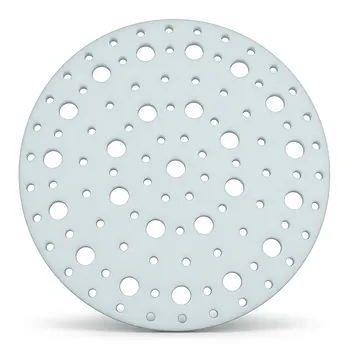
- High Temperature Resistant Insulating TFM Separator and Ultra Clean Laboratory PTFE Baffle Plate with Customizable Pore Size and Hole Configuration
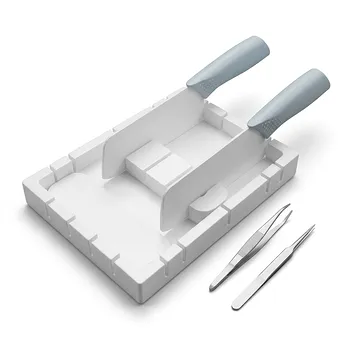
- High Purity PTFE Square Membrane Cutter and Filter Aliquot Device for Trace Analysis and Cleanroom Laboratory Applications
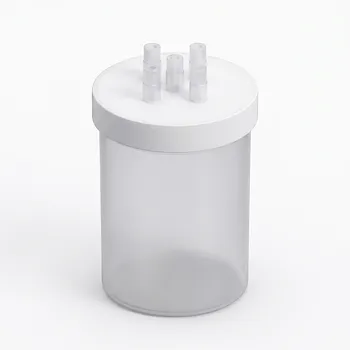
- High Purity 4L PFA Reaction Tank for Proton Exchange Membrane Electrolysis Water Oxygen Separation Systems
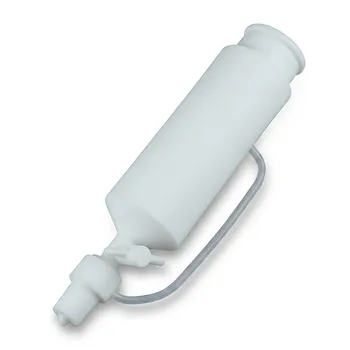
- Custom PTFE Constant Pressure Separatory Funnel 100ml Fluoropolymer Labware for Corrosive Chemical Transfer
- PTFE Membrane Filter Holder for Aerosol Environmental Monitoring and Low Concentration Particulate Matter Sampling Chemical Resistant Air Quality Analysis Component
People Also Ask
- What are the limitations of pure PTFE in high temperature applications? Understanding the 200°C Ceiling
- Are Teflon parts capable of withstanding high temperatures? Understanding the 260°C Limit for Performance
- What future advancements are expected in temperature-resistant PTFE seals? Discover Smarter, Tougher Sealing Solutions
- What is porous PTFE used for? Advanced Filtration for Harsh Chemical & High-Temp Environments
- What are the benefits of porous PTFE? Unlock Superior Filtration and Chemical Resistance