PTFE rotary shaft seals are engineered for high-velocity environments where traditional elastomeric seals typically fail due to heat and friction. They provide an ultra-low coefficient of friction—typically between 0.05 and 0.10—which significantly reduces breakout torque and power losses on high-speed shafts. These seals are capable of handling peripheral speeds up to 35 m/s and pressure differentials exceeding 35 bar, while remaining chemically inert to aggressive hydrocarbons and sour gas.
PTFE rotary shaft seals serve as a critical interface in high-speed machinery by combining self-lubricating properties with extreme thermal stability. This allows systems like turbines and compressors to operate at peak efficiency with minimal wear and high reliability under volatile conditions.
Friction Management and Mechanical Efficiency
Minimizing Breakout Torque and Power Loss
The coefficient of friction for PTFE is among the lowest of any solid material, which prevents the "stick-slip" behavior common in high-speed startups. By reducing the energy required to overcome initial friction, these seals lower the total power consumption of the mechanical system.
Advantages of Self-Lubrication
PTFE is inherently self-lubricating due to its molecular structure, allowing it to function effectively in dry-running or "starved" lubrication conditions. This characteristic is vital for compressors or turbines where emergency dry-running may occur, preventing catastrophic seal failure.
Reducing Heat Generation at the Interface
Because the material generates minimal friction, it produces less heat at the point of contact with the shaft. This contributes to the overall thermal management of the system, preventing the seal from hardening or the shaft from suffering thermal damage.
Durability in Extreme Environments
Thermal Stability Across Wide Gradients
These seals maintain their physical properties across a vast temperature range, typically from -200°C to +260°C (-328°F to +500°F). Unlike standard rubber seals, PTFE does not become brittle in extreme cold or soften significantly at high operating temperatures.
Total Chemical Inertness
PTFE is virtually non-reactive, providing exceptional resistance to aggressive chemicals, synthetic lubricants, and sour gas. This makes it the preferred material for oil and gas applications and chemical processing where fluid compatibility is a primary concern.
High-Pressure Integrity
When properly energized or reinforced, PTFE seals can withstand differential pressures exceeding 35 bar. Their dimensional stability ensures that the sealing lip maintains contact and integrity even when subjected to significant pressure fluctuations.
Understanding the Trade-offs
Sensitivity to Shaft Finish
Because PTFE is less "forgiving" than softer elastomers, the shaft surface finish must be precision-engineered. If the shaft is too rough, it will abrade the PTFE lip; if it is too smooth, the seal may fail to develop the necessary transfer film for optimal performance.
Lack of Elastic Memory
PTFE has poor elastic memory compared to nitrile or Viton, meaning it does not "bounce back" to its original shape as easily. To compensate for this, many high-speed PTFE seals require a secondary energizer, such as a metal spring, to maintain consistent lip tension.
Handling and Installation Risks
The sealing lips are relatively fragile and can be easily damaged during installation. Specialized installation tools and sleeves are often required to ensure the seal is not nicked or folded, which would lead to immediate leakage in high-speed service.
Optimizing Seal Selection for Your System
Selecting the right PTFE seal requires balancing the specific demands of your rotational environment with the material's unique physical properties.
- If your primary focus is maximum mechanical efficiency: Prioritize seals with unfilled or low-friction filled PTFE to minimize parasitic power loss and heat generation.
- If your primary focus is high-pressure gas compression: Utilize spring-energized PTFE seals designed to maintain a tight interface even under significant pressure differentials.
- If your primary focus is longevity in abrasive media: Select reinforced PTFE compounds containing glass or carbon fillers to enhance wear resistance and extend the service life of the sealing lip.
By leveraging the unique friction and thermal properties of PTFE, engineers can ensure that high-speed mechanical systems operate with the highest levels of reliability and efficiency.
Summary Table:
| Feature | Performance Characteristic | Key Benefit |
|---|---|---|
| Coefficient of Friction | 0.05 – 0.10 | Reduces breakout torque and power loss |
| Max Peripheral Speed | Up to 35 m/s | Ensures reliability in high-velocity turbines |
| Temperature Range | -200°C to +260°C | Maintains stability in extreme thermal gradients |
| Pressure Differential | Exceeding 35 bar | High integrity under pressure fluctuations |
| Chemical Resistance | Virtually Inert | Resists aggressive hydrocarbons and sour gas |
Optimize Your Performance with KINTEK’s Precision PTFE Solutions
Are you looking to enhance the reliability of your high-speed mechanical systems or specialized laboratory setups? KINTEK is your premier partner for high-performance fluoropolymer components. We manufacture virtually all imaginable laboratory supplies crafted from PTFE and PFA, ensuring your operations remain efficient and chemically resistant.
From everyday basic labware (beakers, crucibles, reagent bottles) and high-purity trace analysis instruments to comprehensive fluid transfer components (tubing, valves) and advanced reaction apparatus like electrochemical cells and microwave digestion vessels, KINTEK delivers unmatched quality. Backed by end-to-end custom CNC fabrication, we provide everything from complex non-standard machined parts to high-volume orders tailored to your exact specifications.
Ready to upgrade your equipment with the world's most durable materials? Contact us today to discuss your project!
Related Products
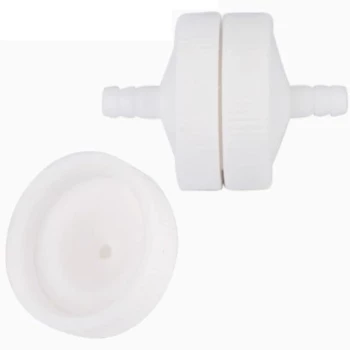
- Customizable PTFE Seals Filter Holders for Versatile Applications
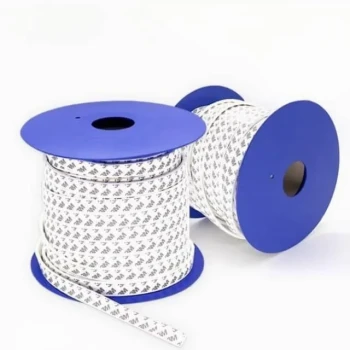
- Custom PTFE Sealing Tapes for Industrial and High Tech Applications
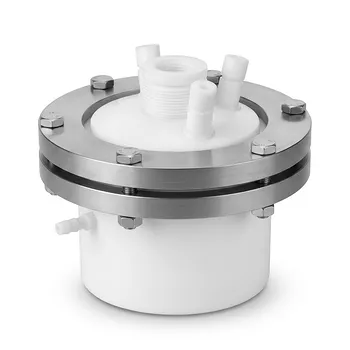
- Custom PTFE Reaction Apparatus Flange Sealed Corrosion Resistant Jacketed Vessel with Stirring Bar and Thermometer Ports
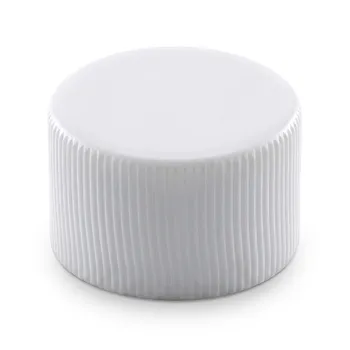
- Custom PTFE Sealing Caps and Corrosion Resistant Low Background Teflon Adapters
- Custom PTFE Insulating Gaskets and Corrosion Resistant Fluoropolymer Seals for Industrial Electrical Applications
People Also Ask
- How are custom PTFE parts used in the automotive sector? Enhance Vehicle Performance & Durability
- Why are PTFE seals ideal for the chemical and petrochemical industries? Unmatched Chemical & Thermal Resistance
- What are the drawbacks of PTFE seals? Key Limitations and Design Considerations
- What aerospace applications utilize PTFE seals? Ensure Reliability in Extreme Conditions
- What are the benefits of PTFE seals in terms of prototyping and production? Accelerate R&D and Ensure Elite Performance